Mountains and parks
Khun Nan and the hills by the Lao border
In the far north of Nan province, forested ridges run into Laos. Khun Nan National Park offers wide views, cold dawns and a long, winding road to reach them.
- Getting there
- Long mountain roads into the far north
- Bring
- Warm layer, rain jacket, torch, snacks
- Dress and manners
- Ridge viewpoints are cold at dawn and exposed. Wear warm layers and sturdy shoes, and keep back from unfenced edges.
- From the old town
- Three hours or more north by road
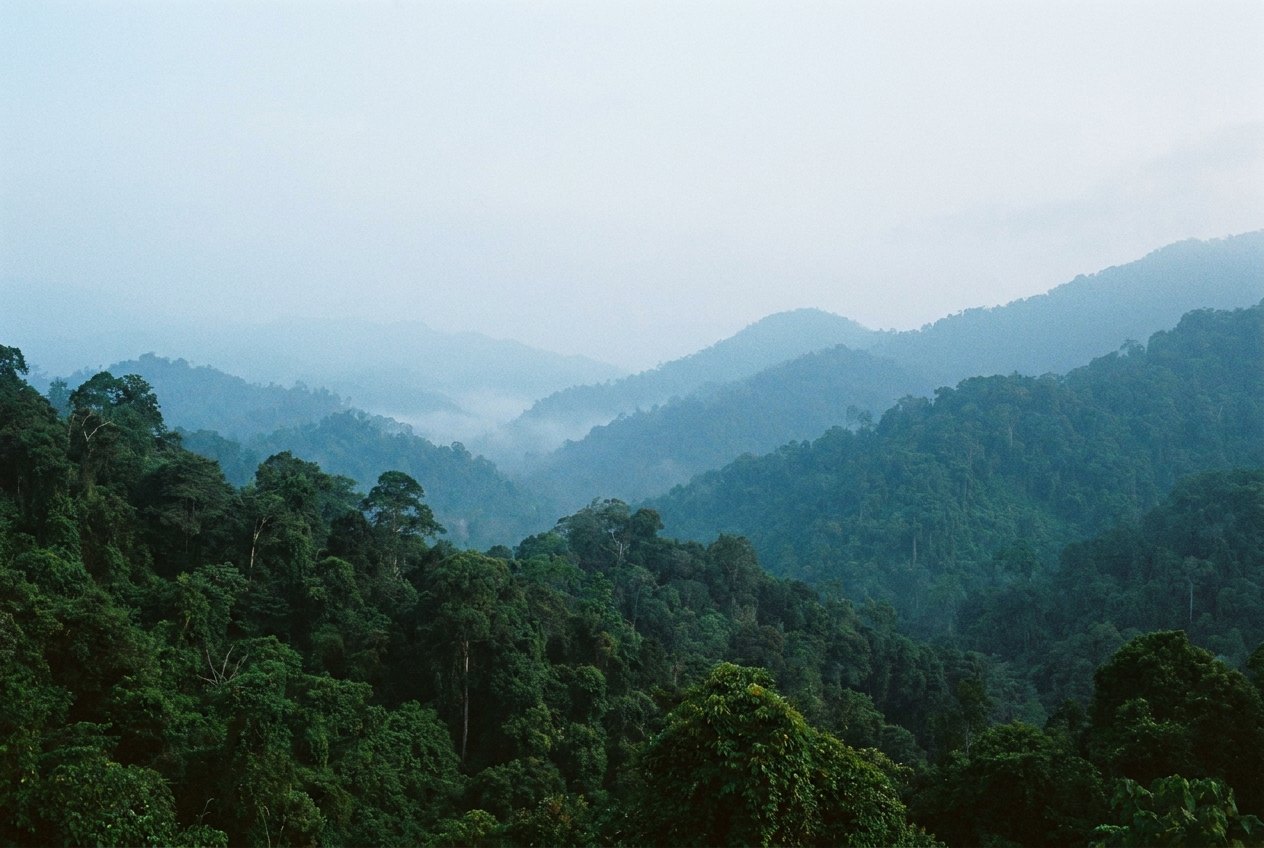
Khun Nan National Park lies in the far north of Nan province, in the high country of Bo Kluea district close to the border with Laos. It is one of the more remote parks in the province, reached by long roads through the mountains, and it sees far fewer visitors than parks closer to town. Those who make the trip come for the views: ridge after ridge of forest, rolling away into Lao mountains on the horizon.
This guide gives an outline of the park, its seasons and the road.
A park at the edge of the province
Khun Nan protects forest on the upper slopes of the mountains that form the border between Thailand and Laos. The name links it with the headwaters of the Nan River, which rises in the mountains of the far north before flowing south past Nan town.
The land here is steep and high, with deep valleys and long ridges. Forest covers much of it, from mixed deciduous woods on lower slopes to evergreen forest higher up. Upland villages lie in the valleys and on the slopes around the park, and farming has shaped parts of the land. Treat fields and village areas as private places.
The viewpoints
The main reason to visit is the view from the ridges. On a clear day you look out over layers of forested hills, with the mountains of Laos stretching away to the north and east. In the cool season, mist often fills the valleys at dawn, leaving the ridgetops standing above it.
The viewpoints are reached by road and short walks, and some are at the park headquarters area. Ask the park staff which are open and how to reach them, as access can change with the season and the state of the roads.
Because this is a border area, keep to roads, viewpoints and marked paths. Do not try to approach the border or wander far off marked routes. Respect any signs or instructions from park staff or officials.
Also in Nan: Doi Phu Kha and the mountain road
Forest and wildlife
Like other parks in Nan's mountains, Khun Nan has a rich small-animal life. Frogs, lizards and snakes live in the damp forest and along streams, and some are rarely recorded anywhere else in Thailand. Night walks with a torch along stream edges are when you are most likely to see them.

Birds are easier to watch in the early morning, especially at forest edges and around open areas. Larger mammals are present but shy, and you are unlikely to see them on a short visit.
If you walk in the forest, watch where you put your hands and feet, carry a torch after dark, and expect leeches after rain.
Staying overnight
Because the park is so far from town, a night nearby makes the visit far easier. Sleeping close to the viewpoints means you can be on the ridge for sunrise without a long drive in the dark on mountain roads.
If you camp, bring a warm sleeping bag and a mat, as the ground and the air turn cold after dark in the cool season.
Seasons
The cool season, roughly November to February, is the best time to visit. Skies are clearer, the air is crisp, and views stretch furthest. Nights and early mornings on the ridges can be cold, sometimes very cold, so bring proper warm clothes.
The hot season from March to May often brings smoke haze from fires across the region, which can hide the distant mountains entirely. The rainy season turns the forest a deep green, but cloud often covers the ridges, and the roads become slippery and prone to landslides.
The road north
Reaching Khun Nan means a long drive. Roads run up through the mountains of the far north, and many travellers come by way of Bo Kluea, crossing from Pua through Doi Phu Kha National Park. Ask in Nan town which road suits current conditions.
The roads are paved for the most part, but steep and winding, with many bends and long climbs and descents. Use a low gear on the way down rather than leaning on the brakes. In the rains, drive with great care, as mud, landslides and fallen trees can affect the road. Avoid driving after dark if you can, and fuel up in the larger towns before you set off.
The journey is part of the reward. Along the way you can stop at the salt wells of Bo Kluea, where brine is still boiled over wood fires, and at Sapan, a quiet village beside a stream.
Khun Nan is a national park, and entry fees apply, with different rates for Thai nationals and foreigners.
- Plan at least two days for the trip from Nan town.
- Bring warm layers, a rain jacket and a torch.
- Carry cash, snacks and water; shops are few.
- Keep to roads and marked paths near the border.
The park rewards a slow pace. Spend a night in the area, wake early, and watch the light come up over the hills of two countries.
Before: Si Nan National Park · Next: Pua · Same topic: Doi Phu Kha National Park, Sao Din Na Noi, Si Nan National Park
Images: Rushen, CC BY-SA 2.0.
