Mountains and parks
Sao Din Na Noi, the earth pillars
In a small valley south of Nan, rain has carved soft ground into towers, fins and spires. Come early or late, when the light is low and the heat has eased.
- Getting there
- By road south to Na Noi
- Bring
- Hat, water, sun cream, grippy shoes
- Dress and manners
- There is little shade and the ground reflects heat. Wear a hat and shoes with grip, carry water, and stay on walkways and paths.
- From the old town
- About an hour south by road
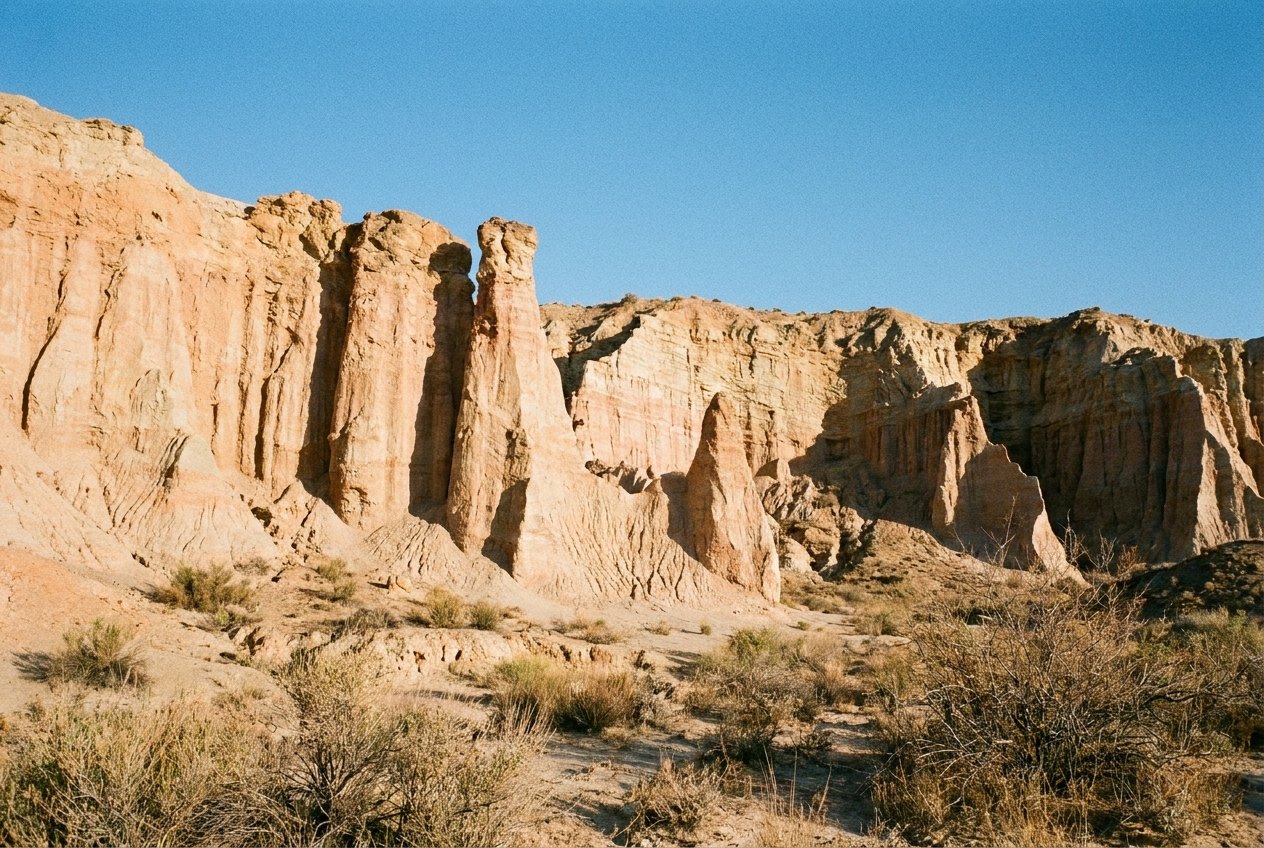
South of Nan town, in the district of Na Noi, the ground drops into a small valley where the soil has been worn into an odd landscape of pillars, fins and pointed towers. This is Sao Din Na Noi, the earth pillars, one of the most unusual sights in the province. From the rim it looks like a model of a ruined city. Down among the columns, it feels more like a maze of soft orange walls.
The site is modest in size and you can see it in an hour or two. It is best combined with other places in the south of the province, and best visited in the early morning or late afternoon.
What the pillars are
The pillars are made of layers of soil, clay, sand and soft sandstone. These layers were laid down long ago and later lifted and exposed. Over time, rain has cut into them, washing away the softer material and leaving the harder parts standing.
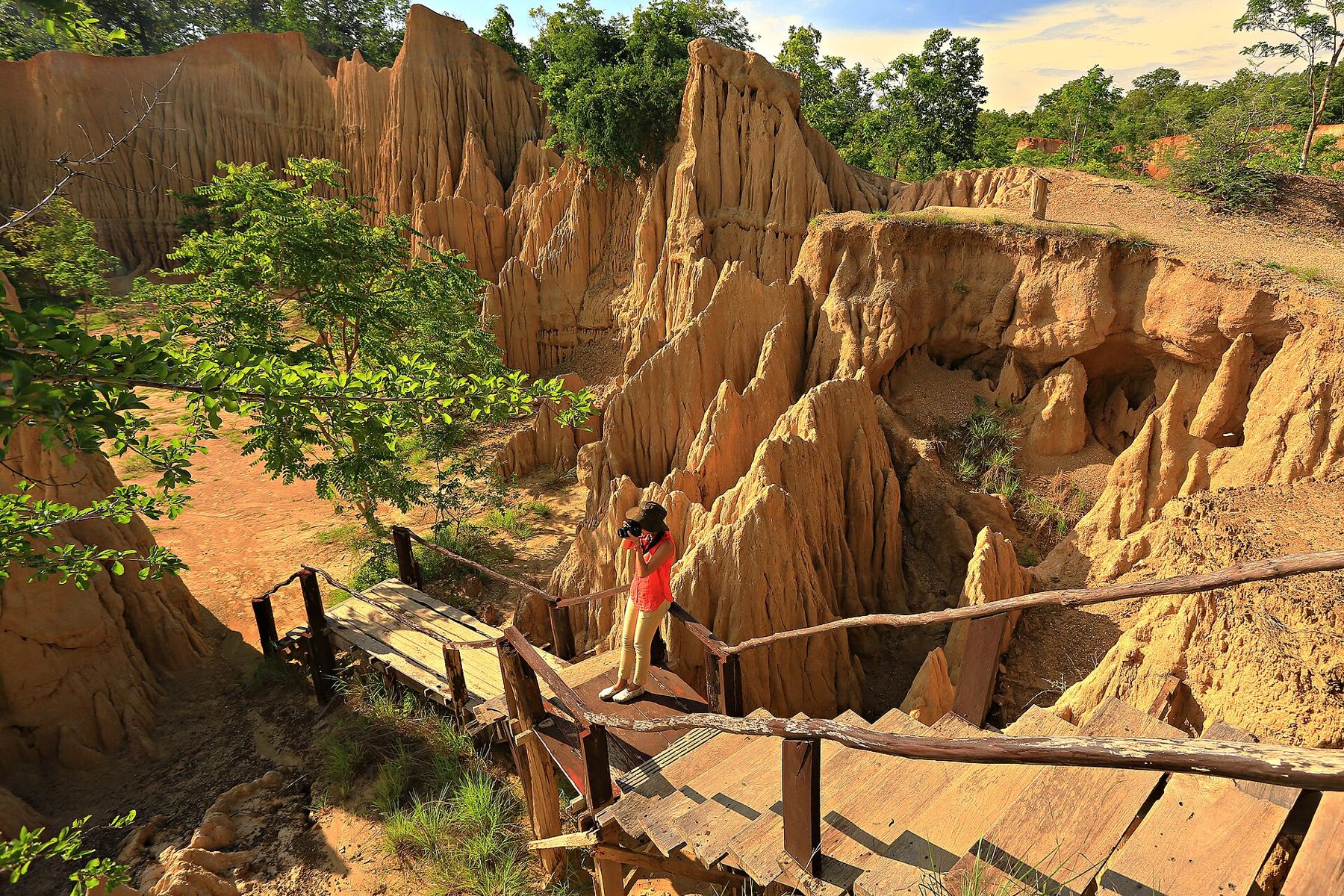
Some pillars carry a cap of harder material on top. The cap shields the column beneath it from the rain, while the ground around it wears away, so the column grows taller as the land drops. Others are thin fins or ridges, cut on both sides by runnels of water. The process continues every rainy season, and the shapes slowly change.
This also means the pillars are fragile. They are not rock in the usual sense, and they crumble when touched or climbed. Stay off them, keep to paths and walkways, and do not carve or scratch the surfaces.
The walk among them
Paths lead from the entrance area down into the valley and between the pillars. In places there are wooden steps and walkways, with railings, that carry you over the softer ground and along the edges of gullies. The route is short but uneven, with steps and slopes, and sandy ground can be slippery.
The most rewarding way to see the site is slowly. Walk down, stop often, and look at how the shapes change as you move. Small side gullies hold their own clusters of spires. The colours shift from pale cream to deep orange and pink depending on the soil and the light.
The site is managed as part of Si Nan National Park, and park rules apply.
Light and heat
Light makes a great difference here. In the early morning and late afternoon, low sun picks out the ridges and grooves of the pillars and warms their colours. In the middle of the day the light flattens the shapes, and the valley becomes very hot.
There is little shade among the pillars, and the bare ground reflects the heat. Even in the cool season, from roughly November to February, midday can be uncomfortable. In the hot season from March to May it can be fierce. Carry plenty of water, wear a hat and sun cream, and plan your visit for the first or last hours of the day.
Also in Nan: Doi Phu Kha and the mountain road
The rainy season brings its own changes. After heavy rain, the ground can be muddy and slippery, and some paths may be closed. The colours often look stronger when the soil is damp, but take great care on the slopes and steps.
Hom Chom and nearby sites
Sao Din Na Noi is not the only spot in the area where the ground has been carved like this. Nearby lies a second area of eroded ground often called Hom Chom, and smaller patches of eroded ground appear elsewhere in the district.
The district of Na Noi is rural and quiet, with rice fields, small villages and temples. The road south from Nan town runs through farmland and low hills, and you can combine a visit to the pillars with a day in the forest and viewpoints of Si Nan National Park further along. Note that the roads into the hills there are steep and winding, so drive with care.
Reading the landscape
Once you know what to look for, the pillars tell a story. Stand back and look at the walls of the valley. You can often see horizontal bands in the soil, darker and lighter, coarser and finer. Each band was laid down at a different time, and each wears away at its own rate. Where a harder band sits above a softer one, the softer layer is cut back and the harder one juts out like a shelf.
Look down at the floor of the gullies and you see the tools that did the work: channels cut by running water, fans of washed sand, small stones left behind as the finer soil was carried off. After a heavy storm, new grooves appear on the faces of the pillars and small falls of soil collect at their feet.
Plants play a part too. Grasses and shrubs root on the tops of some columns and along the rim of the valley, holding the soil together. Where the cover is thin, erosion runs faster. That is one reason the paths and walkways matter: feet on bare soil speed up the wear.
Photographs work best when the light is low and slanting, which brings out these bands and grooves. A wide view from the rim shows the shape of the whole valley; closer shots among the columns show the texture of the soil. Either way, take your pictures from the paths.
Children usually enjoy the site, but keep them on the paths and away from gully edges, which can crumble without warning.
Most visitors drive from Nan town or hire a vehicle with a driver, as public transport to the site is limited. The road is good for most of the way, and the last part is through countryside. Fuel and food are available in Na Noi town.
- Go early in the morning or in the late afternoon.
- Carry water, a hat and sun cream.
- Wear shoes with grip; sandy steps can be slippery.
- Stay on paths and walkways and never climb the pillars.
Back in Nan, a slow evening in the old town makes a good contrast to the bare valley. The temples there, such as Wat Phra That Chae Haeng on its hill east of the river, are best in the soft light of late afternoon too.
The pillars are a reminder that the landscape of Nan is still being shaped. Every rainy season washes away a little more soil, and the shapes you see will not look quite the same in years to come.
Before: Doi Phu Kha National Park · Next: Bo Kluea · Same topic: Doi Phu Kha National Park, Si Nan National Park, Khun Nan National Park · all notes
Images: KOSIN SUKHUM, CC BY-SA 4.0.
