Temples of the old town
Wat Phra That Chae Haeng across the river
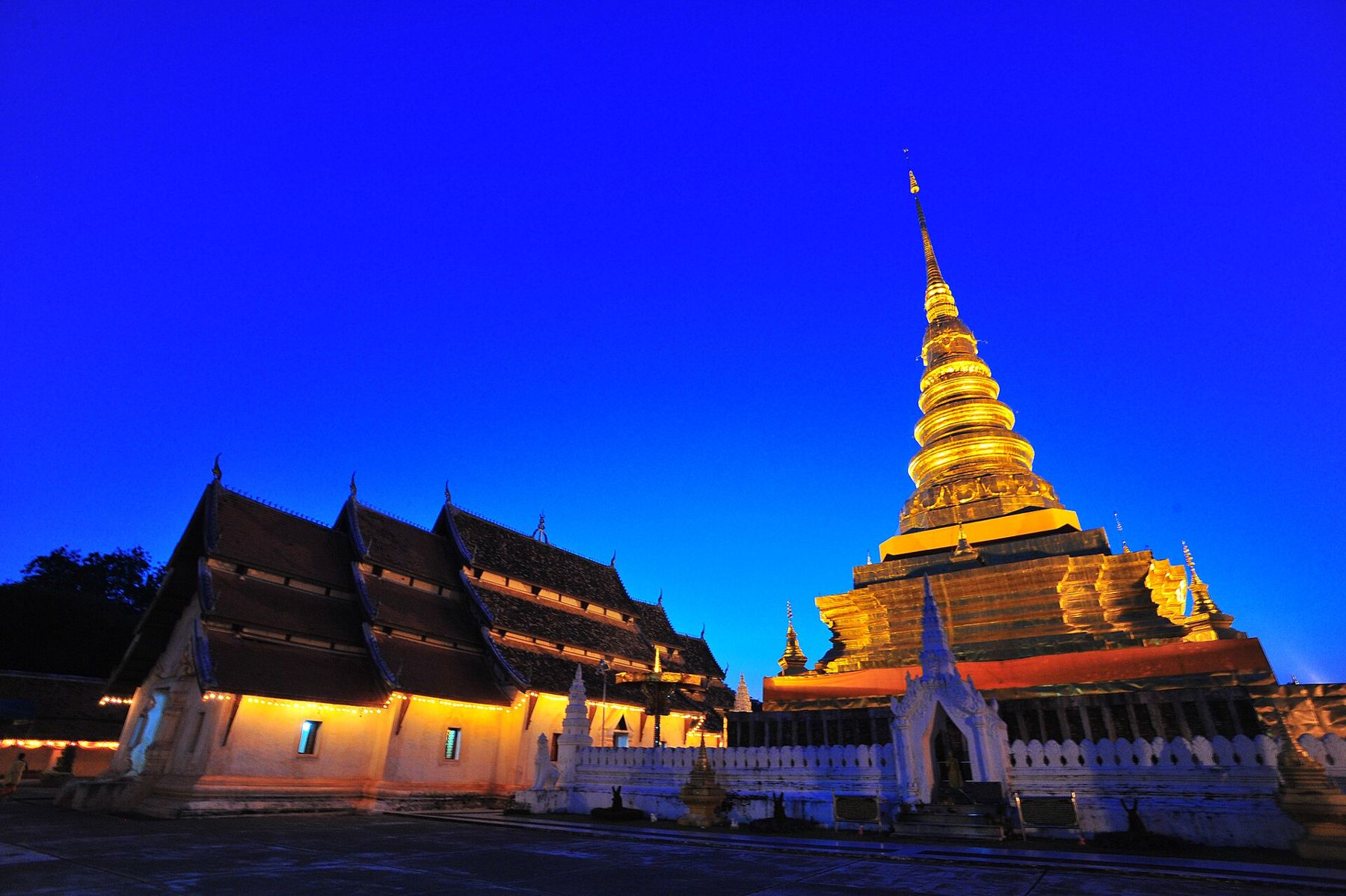
On a low hill east of the Nan River, a gilded chedi rises above a walled courtyard. It is the most revered temple in the province, and a short ride from the old town.
- Getting there
- Short ride south-east, across the Nan River
- Bring
- Sun hat, water, shoulder cover, shoes that slip off
- Dress and manners
- Dress modestly, remove shoes where signs ask, and expect hot paving at midday. Women should follow signs about the inner chedi enclosure.
- From the old town
- About three kilometres south-east, across the river
From the old town of Nan, the river makes a natural boundary. Cross it to the south-east, follow the road up a gentle rise, and the land opens onto a broad hilltop where a golden spire stands above tiled roofs and white walls. Wat Phra That Chae Haeng is the province's most revered temple, and for many people in Nan it is the one that matters most. It is also an easy, rewarding trip from town, best made when the sun is low.
The hill and the old city
Tradition holds that the temple goes back to the early rulers of Nan, who had their seat on this side of the river before the town moved to its present site, and that the chedi enshrines relics of the Buddha. The details vary with the telling, and the temple has been rebuilt and restored many times since, but the sense of age and importance is clear as soon as you arrive. This was a royal foundation, and it remains a place of pilgrimage rather than simply a sight.
In northern Thai custom, certain great chedis are linked to the years of the twelve-year animal cycle, and people try to pay respect at the one tied to their birth year. Phra That Chae Haeng is the chedi associated with the Year of the Rabbit, so you may see visitors from far beyond Nan who have come for that reason alone.
The chedi's importance shows in small ways around the province. Its outline appears on the seal of Nan province, carried on the back of a bull, and you may notice the same image on official buildings around town. For people in Nan, a visit here before a new job, a long journey or an important exam is a natural thing to do, and families often come together on holidays.
The naga stairway and the courtyard
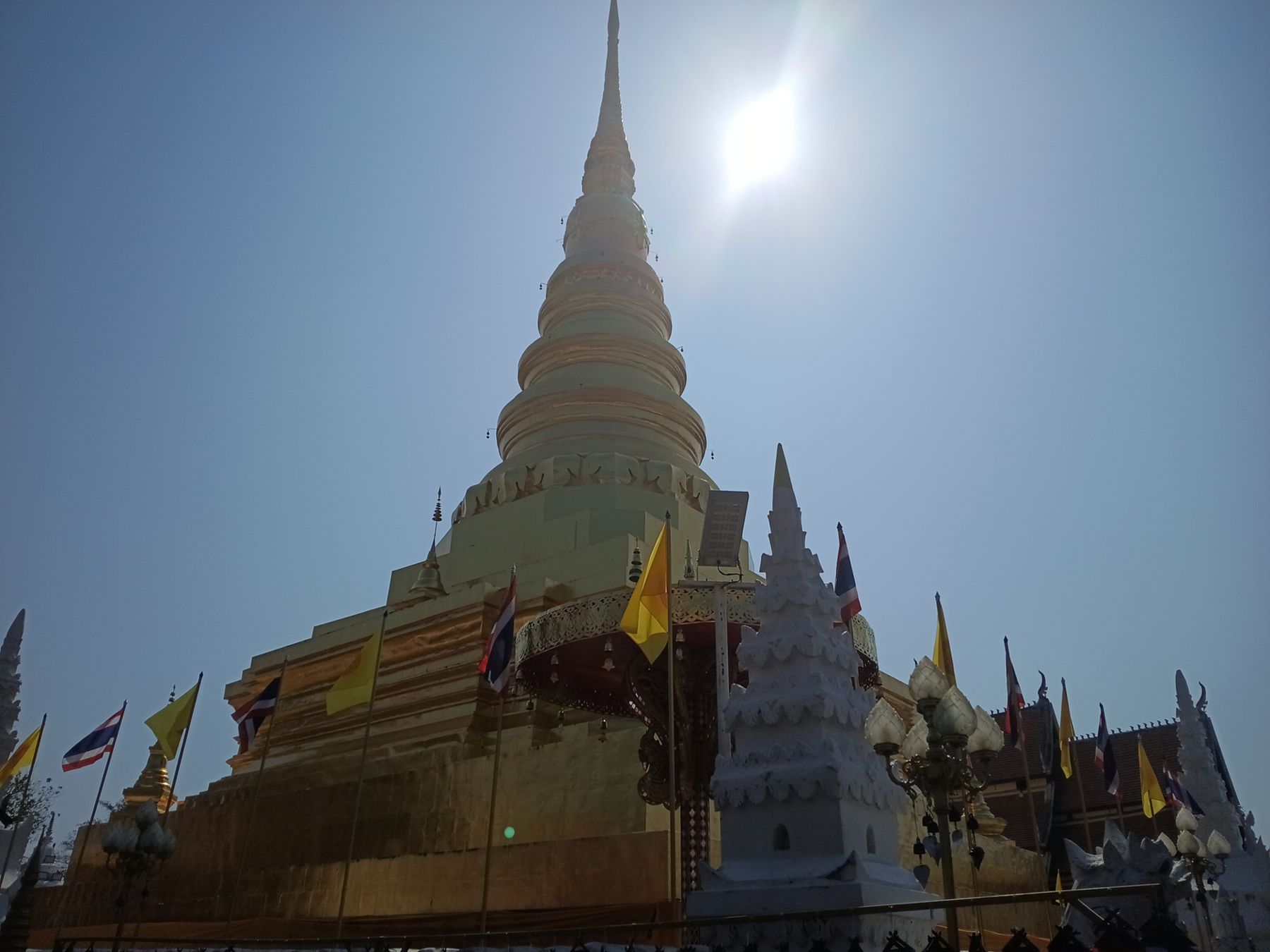
The ceremonial approach climbs from the foot of the hill between long naga balustrades, the serpents' bodies rippling down the slope and their heads rearing at the bottom. Many visitors now arrive by road at the top, but walking at least part of the stairway gives you the sense of arrival the builders intended, with the chedi coming slowly into view above you.
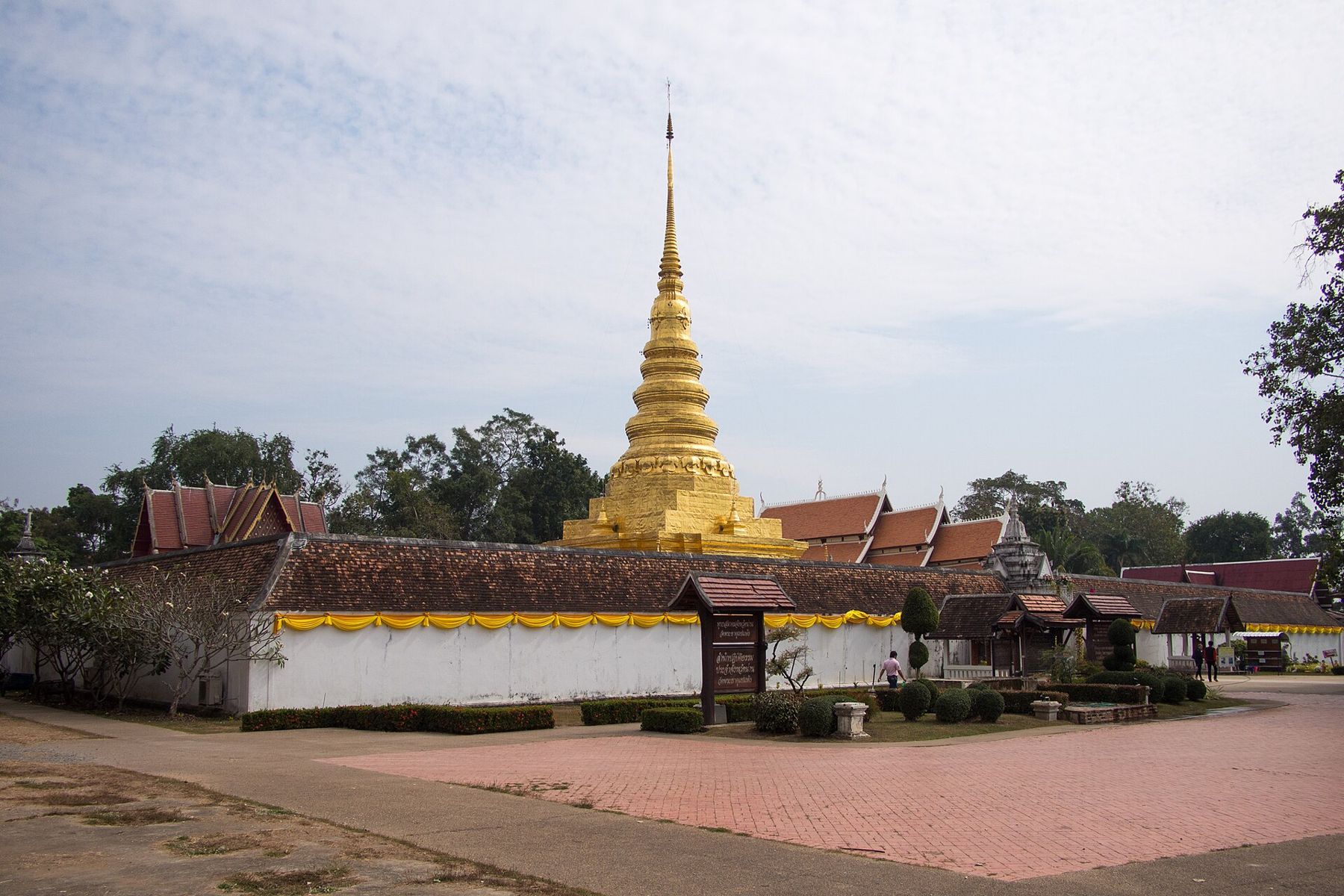
At the top, the chedi stands inside a walled enclosure. It is sheathed in gilded metal plates, rising from a stepped square base through a stack of rings to a slender spire, in the Lanna style seen across northern Thailand. Small white chedis and lamp posts stand around it, and in the dry months the gold flares in the sun. At the inner enclosure, as at many northern chedis, women are asked not to enter the innermost area. Look for the signs and follow them.
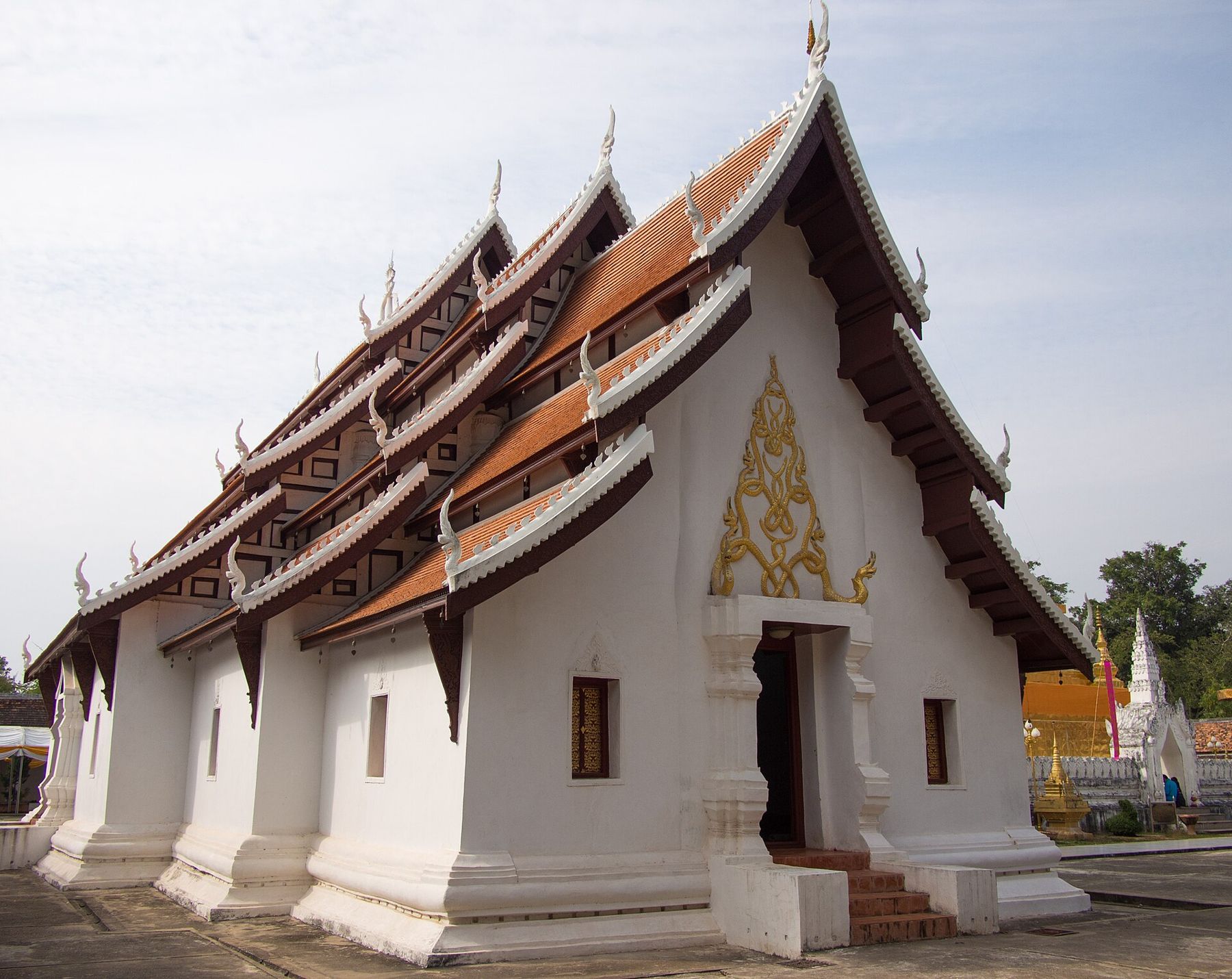
Beside the chedi, the main wihan has a roof built of many short tiers stacked one above another, a form often pointed out as a sign of influence from Lao temple building across the nearby border. Inside, the hall is calm and dim. Take your shoes off at the steps, sit with your feet tucked away from the main image, and keep your voice low.
Also in Nan: Wat Phra That Khao Noi and the view over the valley
Around the grounds
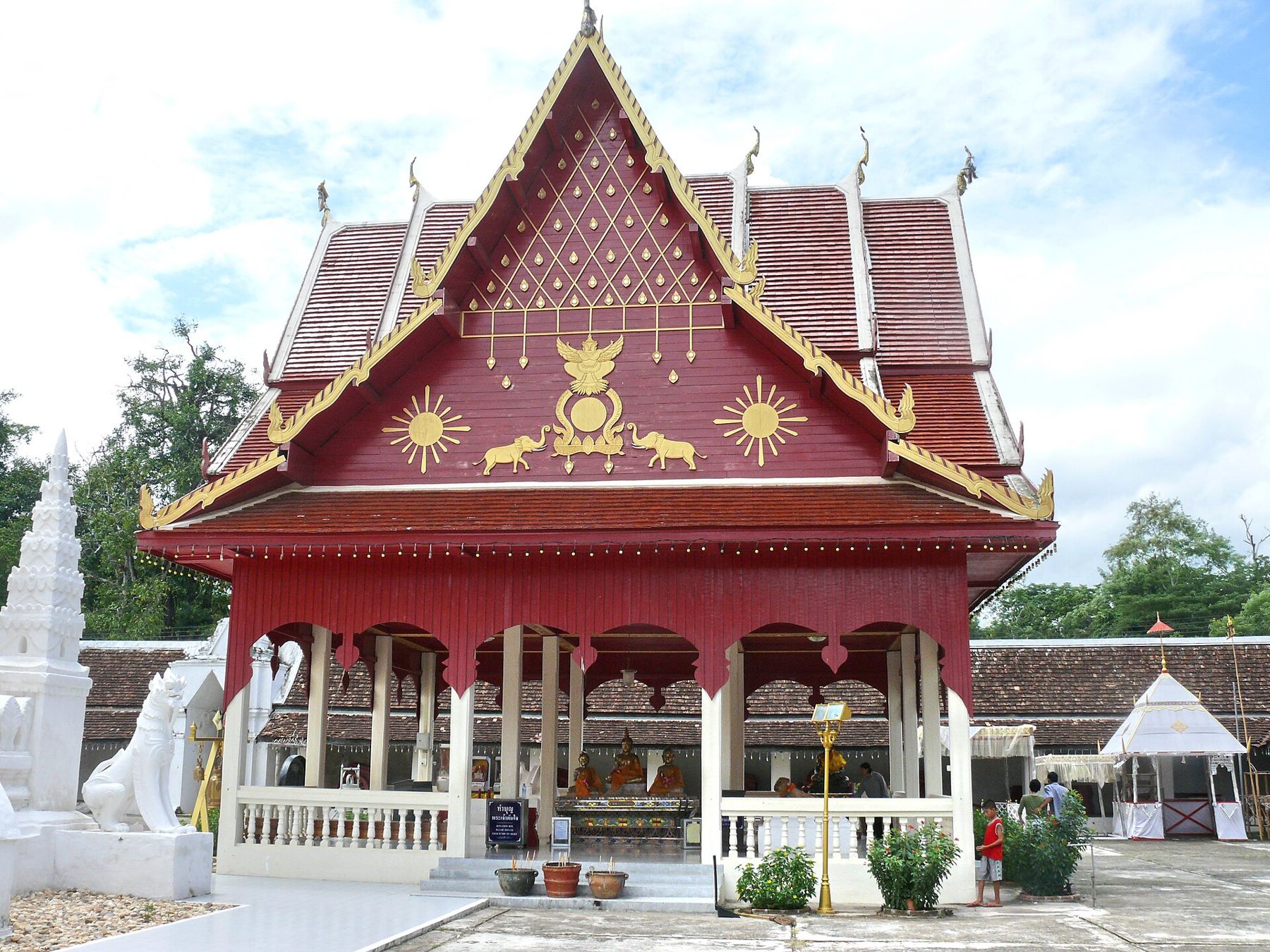
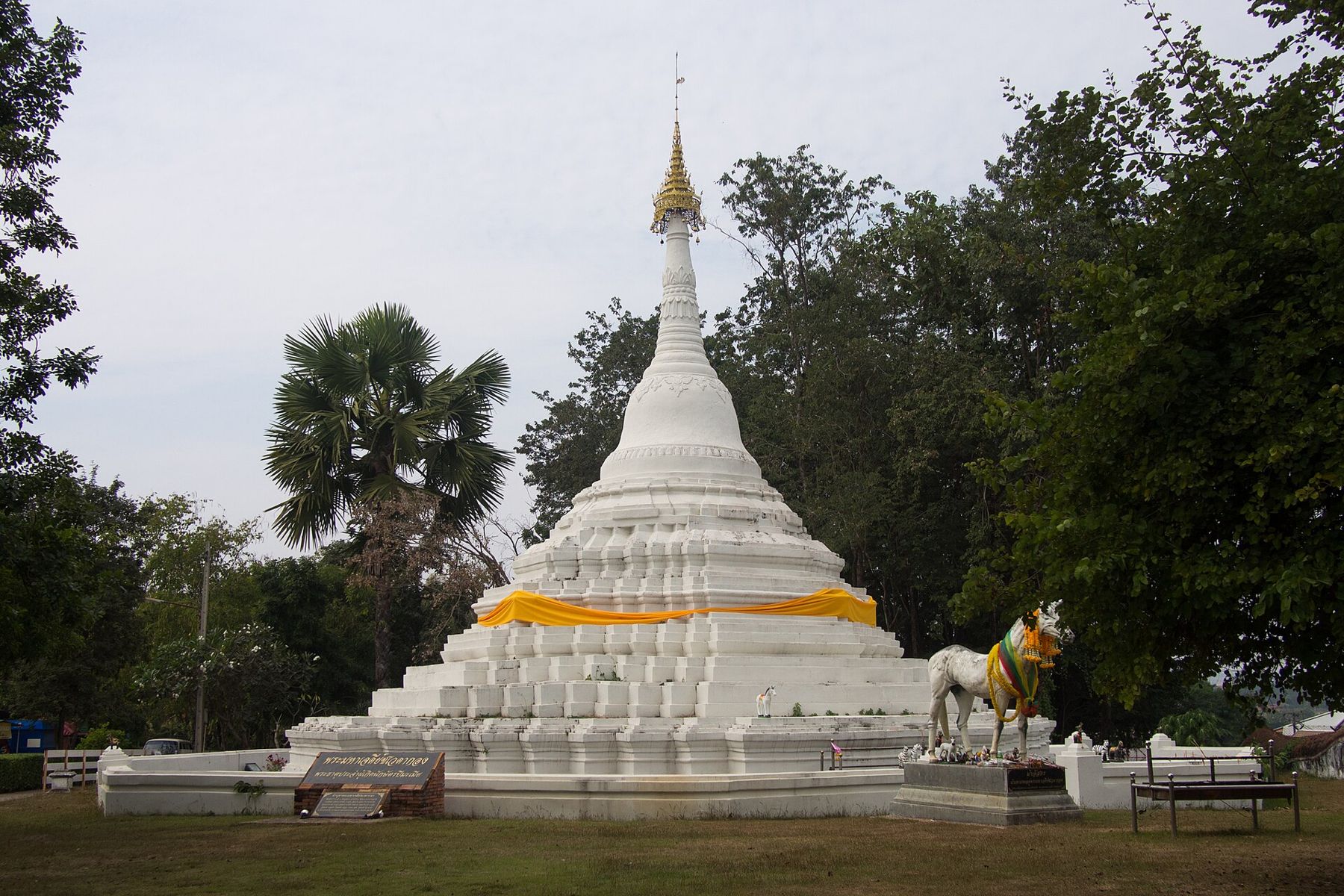
Give yourself time to walk the outer grounds. Beyond the main enclosure stand smaller halls, pavilions and shrines, including a bright red pavilion with a gilded gable where people stop to make offerings. Near the entrance, a whitewashed chedi with a modest gold finial stands on a lawn among trees, quieter and plainer than the great chedi but with a peaceful air of its own.
The hilltop is also a good place to look back across the valley. You see the ridges that close in around Nan on every side, and you understand why the town grew up where the valley floor is wide and flat. The tree cover around the grounds keeps parts of the hill shady even in the hot season, and there are benches where you can sit out the worst of the afternoon heat.
Bring water, a hat and something to cover your shoulders. Footwear comes off in the halls and, in places, on the terraces around the chedi, and the tiles and paving can be painfully hot by midday in the hot season. A pair of shoes that slip on and off easily saves a lot of fuss, and socks are no help on smooth, polished floors.
The temple fair
Each year the temple holds a festival in honour of the chedi, usually in the hot season early in the year and timed by the lunar calendar around a full moon. People come from across the province to pay respect, make offerings and join processions, and the hillside fills with stalls, music and food. It is a lively, crowded time, and a good one to see the temple as a living centre of the community rather than a quiet monument.
The calendar shifts each year; ask in town for this year's dates. If you visit during the fair, dress modestly as you would at any time, be patient with crowds on the stairway, and make way for processions. Photographs of the ceremonies are generally fine from a respectful distance, but ask before photographing anyone up close.
Phra That Chae Haeng is the chedi associated with the Year of the Rabbit, so you may see visitors from far beyond Nan who have come for that reason alone.
The temple is about three kilometres south-east of the old town, across the Nan River. Many people cycle there on the flat roads in the cool of the morning or late afternoon; others take a local songthaew or tuk-tuk, or ride a rented scooter. Agree on a fare before you set off, and arrange a ride back if you go by hired transport, as passing traffic can be thin. The grounds are generally open through the day and there is usually no fee to enter.
Late afternoon is the best time. The heat eases, the gold turns deep amber, and as dusk falls the chedi is lit against the darkening sky. Combine it with a stop on the river on the way back, or with the long view over town from the standing Buddha on Khao Noi, on the other side of the valley. Before you go, it helps to have seen Wat Phumin and the national museum in town, where the history of Nan's rulers makes the hilltop's story easier to follow.
Before: Wat Phumin · Next: Nan National Museum · Same topic: Wat Phumin, Wat Phra That Chang Kham, Wat Ming Mueang, Wat Phra That Khao Noi, Wat Phaya Wat, Wat Suan Tan · all notes
Images: k.phothiwijit, CC BY-SA 3.0; Mekanourak, CC BY 4.0; Takeaway, CC BY-SA 3.0; Ellnik, CC BY-SA 3.0; Takeaway, CC BY-SA 3.0; Takeaway, CC BY-SA 3.0.


