Temples of the old town
Wat Ming Mueang and the city pillar
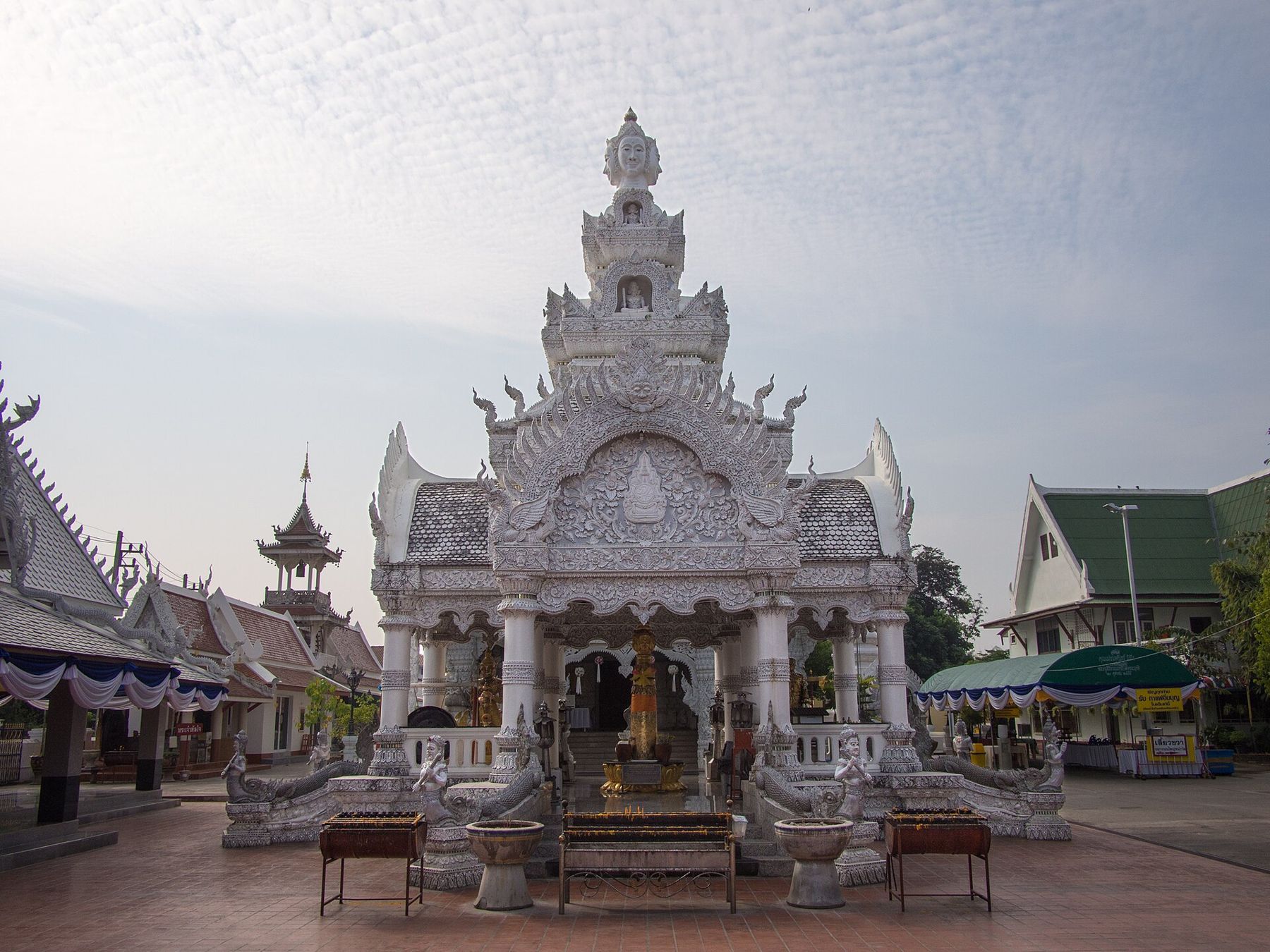
A few minutes' walk from Wat Phumin, a white temple covered in fine stucco moulding guards the pillar that marks the spiritual heart of Nan.
- Getting there
- Short walk from Wat Phumin
- Bring
- Shoulder cover, shoes that slip off easily
- Dress and manners
- Cover shoulders and knees, remove shoes before halls, and keep a respectful distance from people praying at the city pillar shrine.
- From the old town
- A few minutes' walk from Wat Phumin
Every Thai provincial town has a city pillar, the lak mueang, a post that marks the founding of the town and is believed to house its guardian spirit. In Nan, the pillar stands in the grounds of Wat Ming Mueang, a few minutes' walk from Wat Phumin in the centre of the old town. The temple is worth the visit for its own sake, too: its main hall is covered in white stucco so fine it looks like lace.
The city pillar shrine
The city pillar stands in its own pavilion, an ornate white shrine with tiered roofs, carved guardian figures and serpent balustrades at the steps. Local people come here to pray for good fortune, to ask for help with exams, journeys or business, and to give thanks when their wishes are granted. Offerings of flowers, incense and garlands are left on the stands in front.
Treat the shrine as the sacred place it is. Keep to the side if people are praying, do not step over offerings, and ask before photographing anyone at worship. Shoes usually come off before you step up into the pavilion.
A city pillar is set up with ceremony when a town is founded or refounded, and the spirit believed to dwell in it watches over the whole community. That is why the shrine matters so much: people come not only for themselves but for the town, and civic events often begin with offerings here. You may see officials, students in uniform and families with small children all making the same quiet gestures within a few minutes of each other.
The usual pattern is simple. Worshippers buy a small set of flowers, candles and incense, light the candles and incense, kneel or stand before the pillar, make their wish or prayer, and leave the offering on the stand. If you would like to take part, watch first and follow what others do; no one expects visitors to get it perfect, and a respectful attempt is welcome.
The white hall
The temple's main hall is the other reason to come. Its walls, gables and doorways are covered in white stucco moulding, worked into flowers, scrolls, flames and mythical figures so fine and dense that the building seems carved from a single block. The work is modern, made by skilled craftsmen in the northern tradition, and it shows that the art of temple decoration is still very much alive.
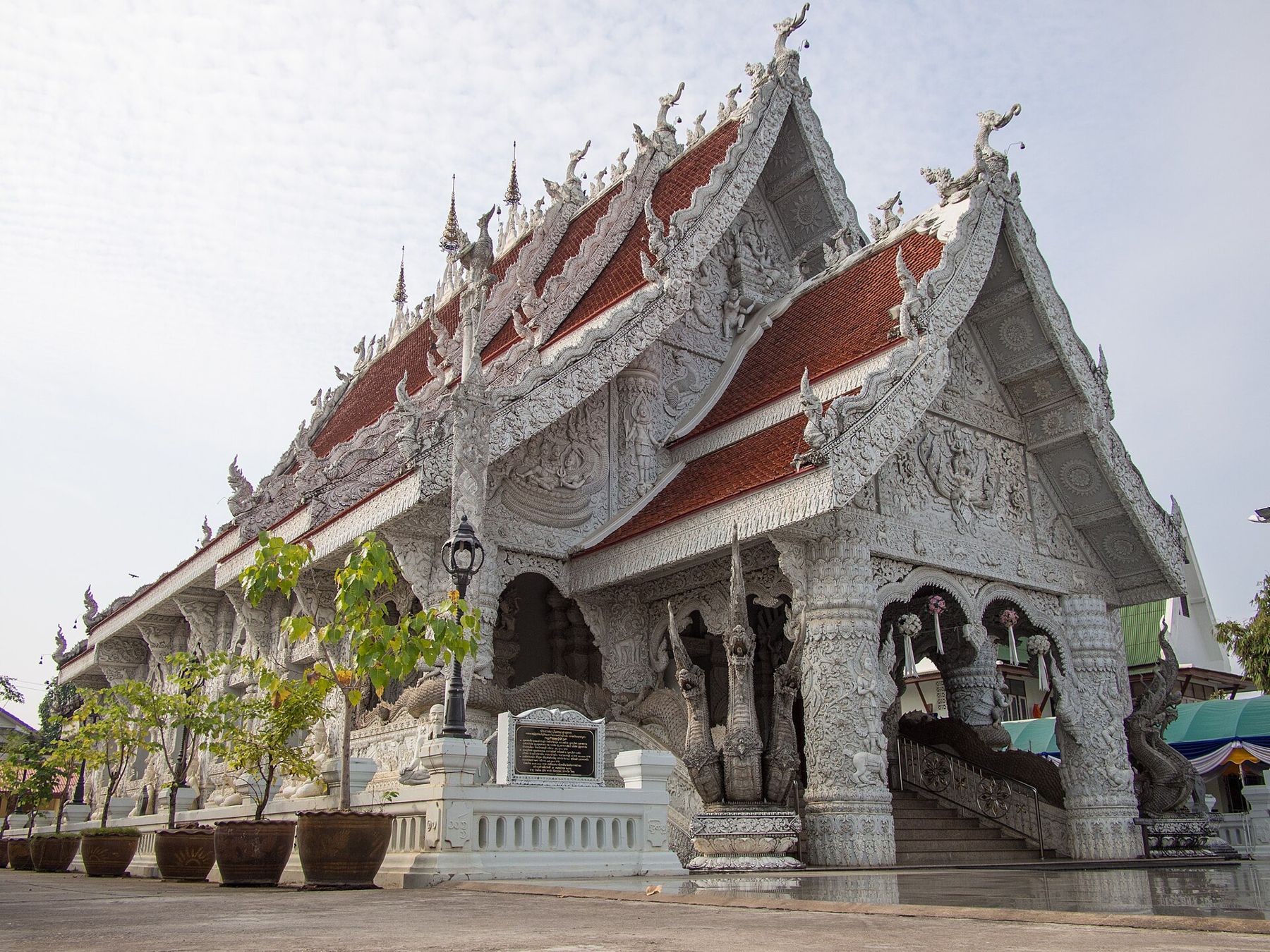
Walk all the way around the building. Each side has its own details, and the shadows change the look of the moulding through the day. Morning and late afternoon bring out the relief best.
Murals of Nan life
Inside, the walls carry modern murals painted by a local artist, showing the life and customs of Nan: farming, festivals, boat races on the river, weaving and the dress of the province's peoples. They follow in the spirit of the older paintings at Wat Phumin, recording the world of their own time, and it is fascinating to compare the two.
Also in Nan: Walking Nan's old town
Look for the scenes of the long-boat races, with naga-headed boats and cheering crowds on the banks; they make a fine introduction to the river festival if you are in town at the end of the rains. Other panels show weaving and dress that you will recognise in the Tai Lue weaving villages.
As in any hall, remove your shoes, keep your voice low, and leave the flash off.
Old and new together
Wat Ming Mueang is a good reminder that Nan's temples are not frozen. Some of the most admired temple art in the town is old; some, like the stucco and murals here, is recent. Both belong to the same living tradition, made by and for the community that worships in these halls. Visiting Wat Ming Mueang alongside the older temples nearby shows how that tradition carries on.
The temple is also a reminder of how small the old town is. Within a short walk you can see the city pillar, the murals of Wat Phumin, the elephant chedi of Wat Phra That Chang Kham and the national museum, and get a strong sense of the town's history in a single morning.
When to come
The temple grounds are generally open through the day and usually free to enter, though hours shift around ceremonies and holy days. Mornings are quiet and cool, and the light suits the white stucco. On important days in the Buddhist calendar and on the town's own festivals, the city pillar shrine is busy with worshippers, which is a fine time to see it in use, as long as you keep to the side.
The cool season, roughly November to February, is the most comfortable time for walking between temples in the old town. In the hot months, go early and carry water; in the rains, showers are usually short, and temple halls offer shelter.
- Cover shoulders and knees, as at every temple in Nan.
- Remove your shoes before entering the hall and the pillar shrine.
- Do not touch the stucco; it is delicate and easily damaged.
- Photography outdoors is generally fine; inside, follow any signs and never use flash.
- Small donations help with the upkeep of the buildings.
Give it half an hour on your walk around the old town. The white hall makes a striking contrast with the red and gold of the temples nearby, and the city pillar is a quiet, important place in the life of Nan.
Before: Wat Phra That Chang Kham · Next: Wat Phra That Khao Noi · Same topic: Wat Phumin, Wat Phra That Chae Haeng, Wat Phra That Chang Kham, Wat Phra That Khao Noi, Wat Phaya Wat, Wat Suan Tan · all notes
Images: Takeaway, CC BY-SA 3.0; Takeaway, CC BY-SA 3.0.

