Temples of the old town
Wat Phumin and its whispering murals
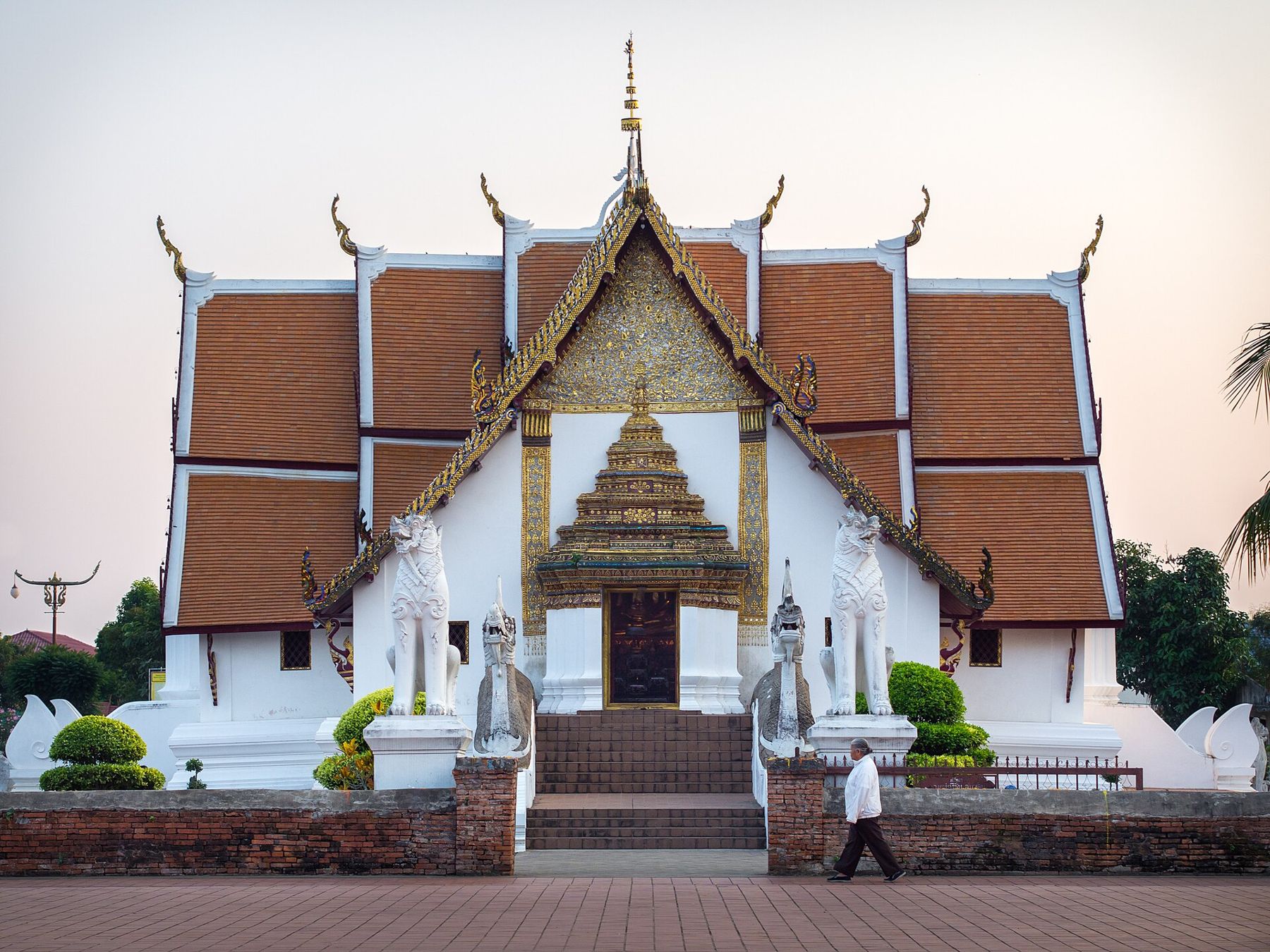
In the middle of Nan's old town, a cross-shaped hall seems to ride on the backs of two great nagas. Inside, four Buddhas sit back to back, and the walls hold some of the north's best-loved paintings.
- Getting there
- Walk from anywhere in the old town
- Bring
- Shoulder cover, slip-on shoes, time for the murals
- Dress and manners
- Cover shoulders and knees, take your shoes off at the door, and sit with your feet tucked away from the Buddha images.
- From the old town
- Right in the centre, near the museum
Most people who come to Nan find their way to Wat Phumin within a few hours of arriving, and many come back more than once. It stands on a corner in the centre of the old town, a short walk from the national museum and Wat Phra That Chang Kham, and it is small enough to take in at a glance. That is part of its strength. There is one main building, one courtyard and one interior, and almost everything that makes the temple famous is inside four painted walls.
A hall on the backs of two nagas
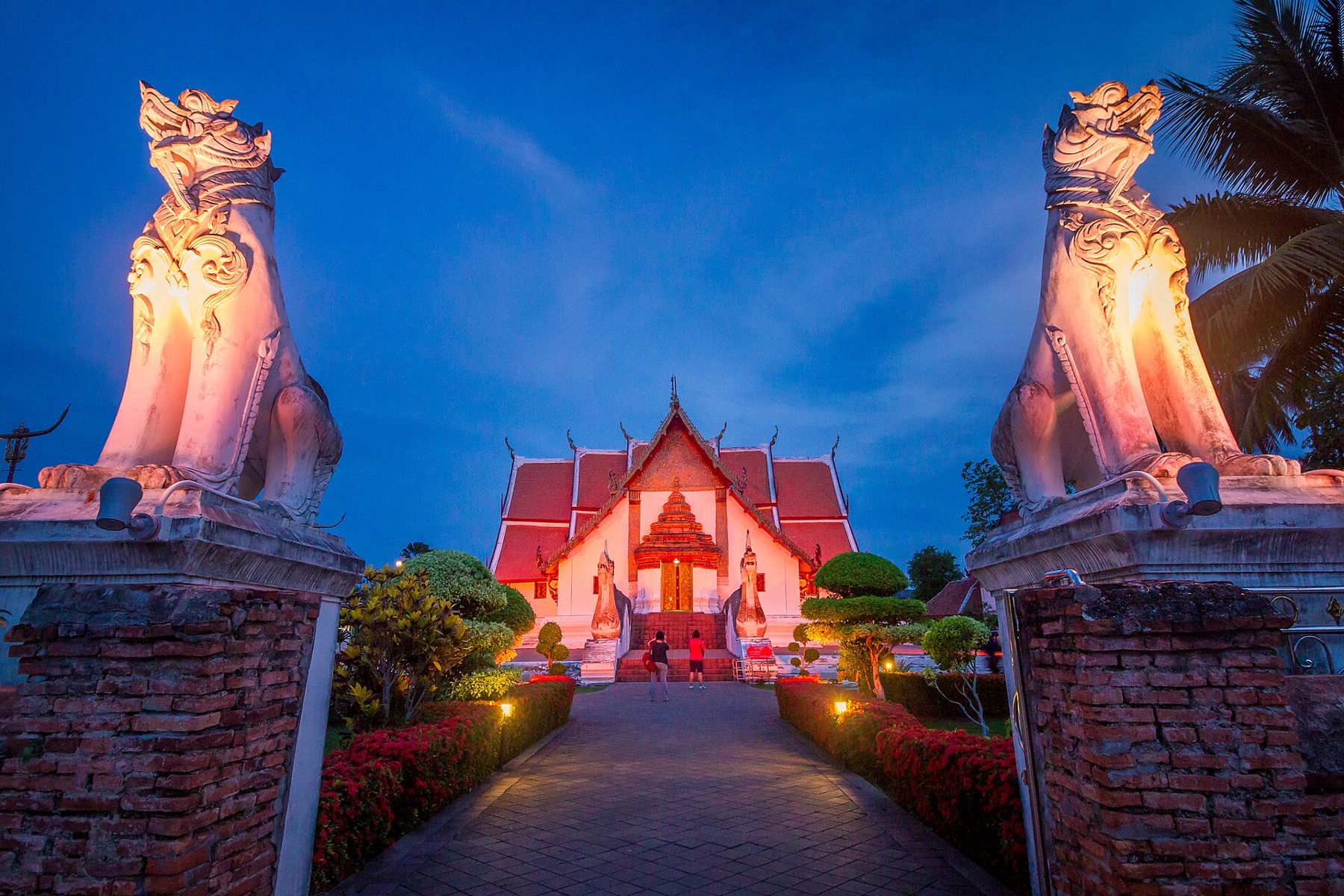
The main building is cruciform: a cross in plan, with a doorway at the end of each arm. It serves as both the ordination hall and the assembly hall, a combination rarely seen in Thai temples, and the layout gives it a compact, balanced look from every side. Two great nagas, the serpent guardians linked with water and rain in Buddhist art, rear up beside one of the doorways with their crested heads raised. Their scaled bodies run along the base of the building, so that the whole hall seems to be carried on their backs, and their tails rise again at the opposite door.
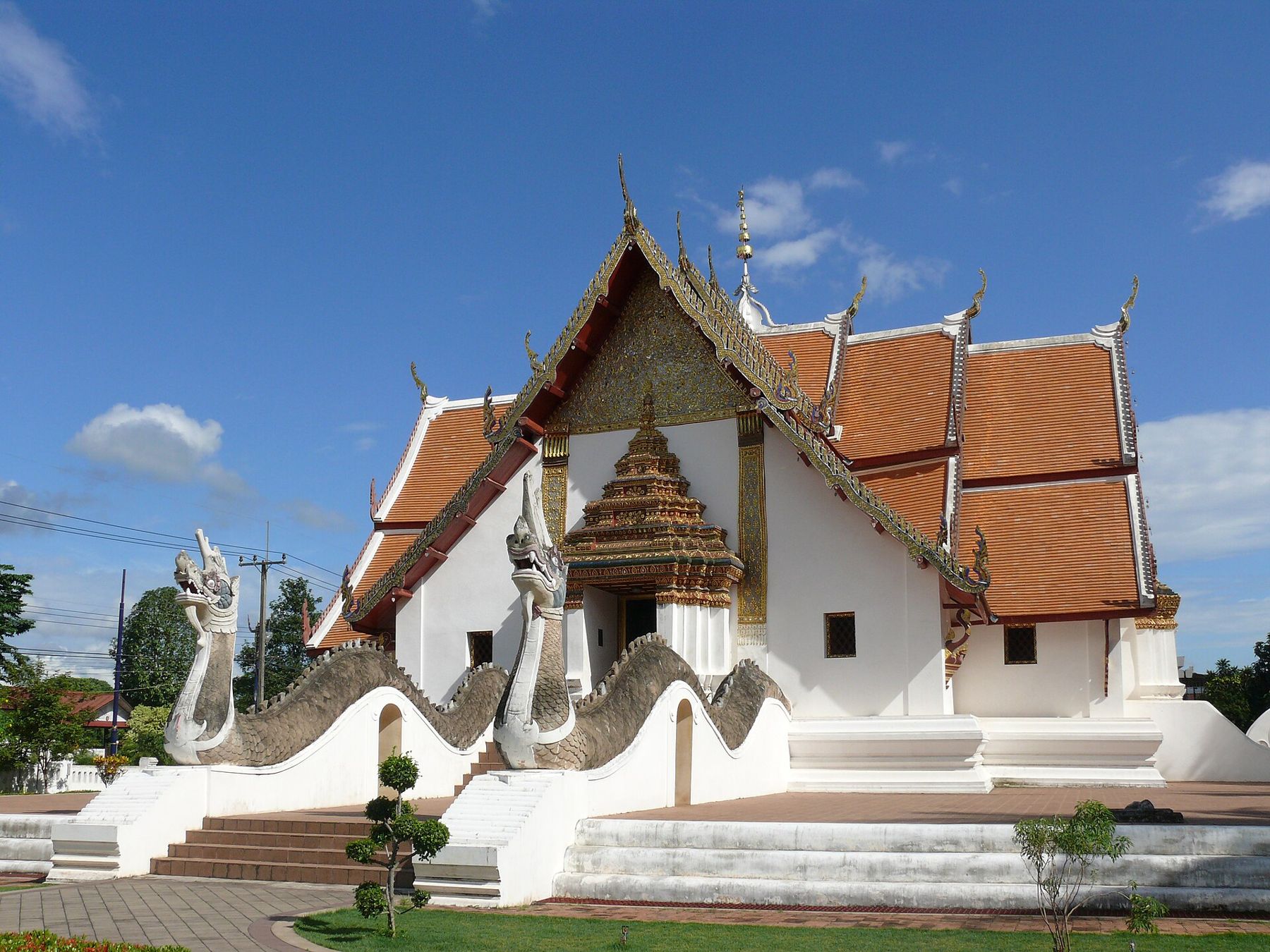
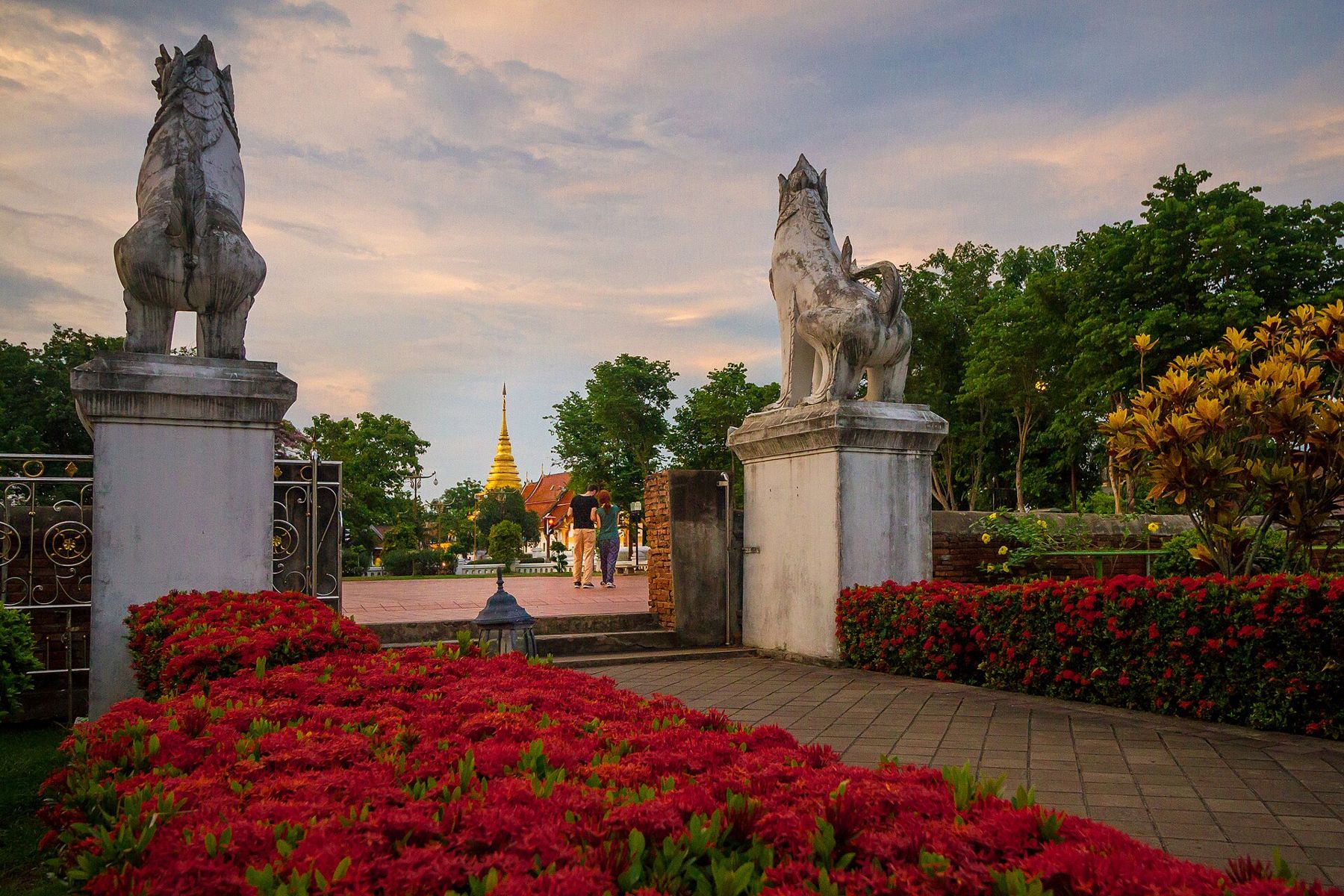
Look up at the roofs. Tiers of orange-brown tiles step down over each arm of the cross, edged with gilded finials, and each doorway carries a carved and gilded pediment that narrows in stacked layers towards a point. White guardian lions stand at the gates facing the street. In the low light of early morning or late afternoon the white walls turn warm, and the gold on the gables catches the sun.
Four Buddhas back to back
Step inside and the four doors make sense. In the centre, on a raised and gilded base, four seated Buddha images sit back to back, each one facing an entrance. Whichever door you come in by, a Buddha faces you. The images sit with the right hand reaching down over the knee to touch the earth, the gesture that recalls the Buddha calling the earth to witness his enlightenment. Above them rise tall red pillars banded with gold and a ceiling set with gilded stars.
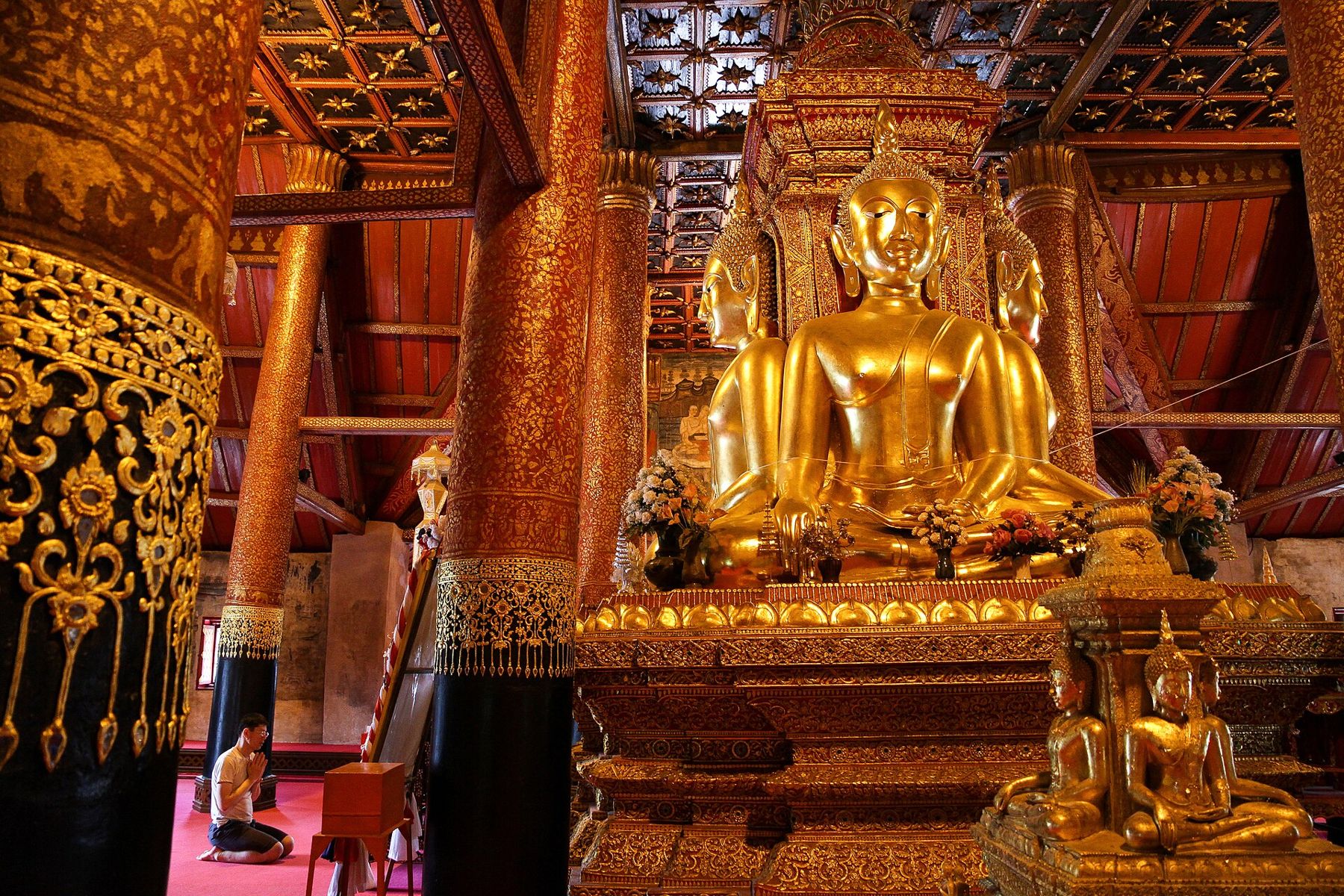
This is a working temple, and people come to pray as well as to look. Take your shoes off before you step up into the hall, keep your voice low, and if you sit down, tuck your feet behind you so the soles do not point towards the images. Photography is usually allowed, but flash is hard on old paint and distracting for anyone at prayer, so leave it off. Rules can change, so follow any signs at the door.
The Tai Lue murals
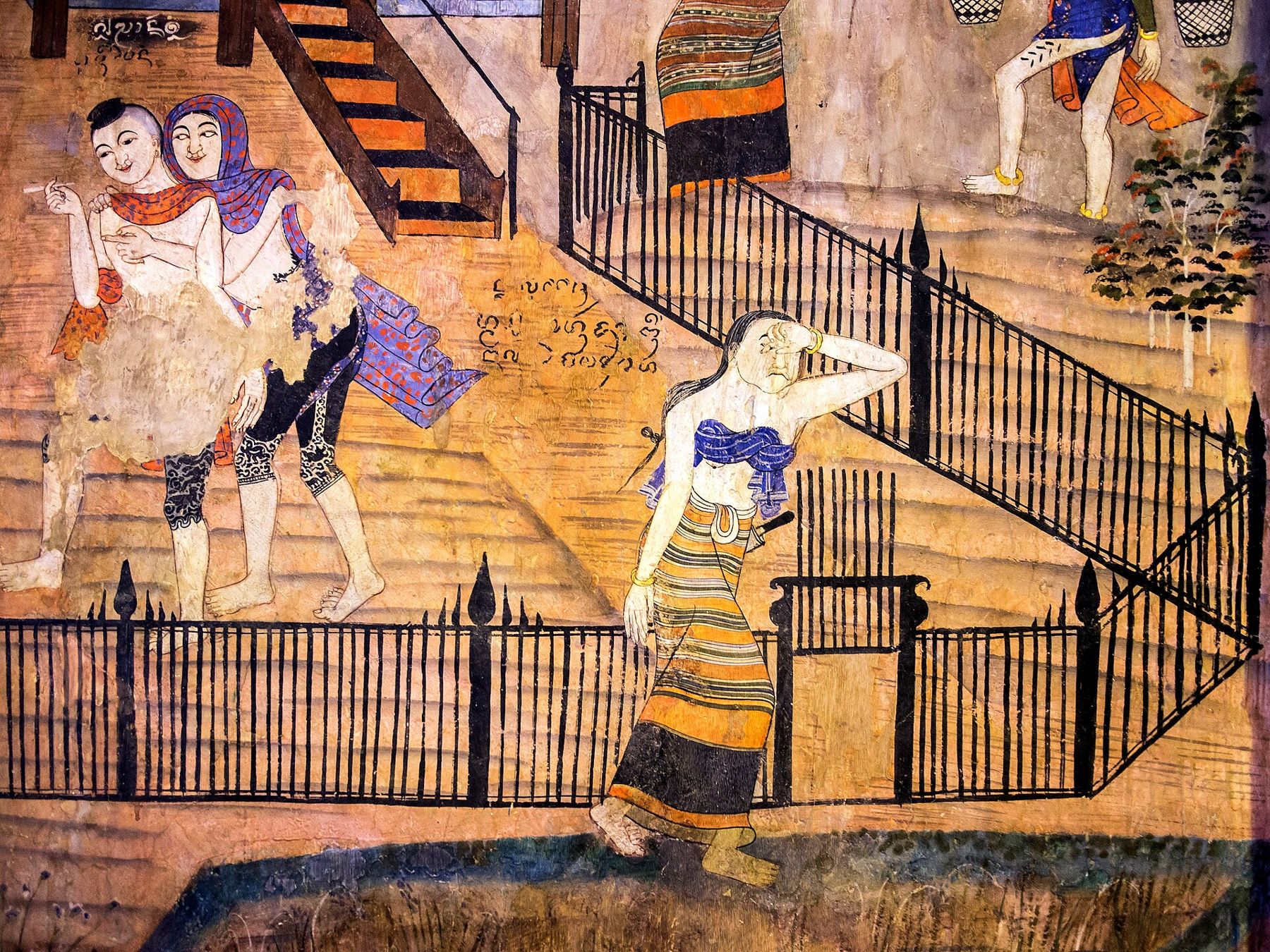
The walls are the reason Wat Phumin is known far beyond Nan. The present building and its murals date from the nineteenth century, when the temple was restored, and the paintings are attributed to Tai Lue artists. The Tai Lue are a Tai people whose weaving, building and village traditions still shape much of Nan province, and the murals are one of the finest records of their art. The colours are soft earth reds, ochres, blues and greens, and they cover the interior walls from waist height to the beams.
Much of the wall space tells stories from the Jataka, the tales of the Buddha's earlier lives. Around and between those stories, the painters filled every gap with the world they knew: people farming, courting, gossiping, smoking, weaving, carrying water and loading boats. Men show tattooed thighs, women wear striped tube skirts of the kind still woven in the province, and here and there appear figures in foreign dress. For anyone curious about how people in this valley looked, dressed and passed their days in the nineteenth century, the walls are a rich and lively record.
Also in Nan: Tai Lue weaving and Nan cloth
The whispering couple
One small scene has become the symbol of the town. A man leans close to a woman and seems to whisper in her ear, the two of them caught in a private moment amid the busy walls. It is often called the whisper of love, and you will see it reproduced all over Nan on posters, fabric, bags and postcards. The original is smaller than most people expect, and it rewards a slow look rather than a quick photograph.
Nobody can say for certain what the painter meant by it, which is part of its appeal. Treat it as part of a religious building rather than a backdrop: stand to one side so others can see, and never touch the wall. Old pigment rubs away easily, and these paintings have survived a long time already.
Whichever door you come in by, a Buddha faces you.
If the murals catch you, the same tradition continues at the Tai Lue temple of Wat Nong Bua in the north of the province, whose wall paintings are often linked to the same school of painters.
Timing your visit
The temple grounds are generally open from early morning until early evening, and there is usually no fee to enter, though donation boxes help with upkeep. Early morning is the quietest time, before groups arrive from out of town, and the light inside is softer. On evenings when the walking street is running, usually at weekends, the streets around the temple fill with stalls and the lit hall becomes a backdrop to the crowds.
Pair the visit with the neighbours. The national museum, in the former residence of Nan's rulers, is a minute or two up the road, and the elephant-ringed chedi of Wat Phra That Chang Kham stands just beyond it. Together they make an easy morning, with time left over to wander the old town's lanes on foot or by bicycle.
The cool season, roughly November to February, is the most comfortable time to walk between the temples, with mild mornings and clear skies. The hot months that follow make midday visits tiring, and the rains bring heavy afternoon showers, though the interior is just as beautiful in any weather. Whatever the month, come with shoulders and knees covered, wear shoes that slip off easily, and give the murals more time than you think you need.
Before: Wat Nong Daeng · Next: Wat Phra That Chae Haeng · Same topic: Wat Phra That Chae Haeng, Wat Phra That Chang Kham, Wat Ming Mueang, Wat Phra That Khao Noi, Wat Phaya Wat, Wat Suan Tan · all notes
Images: Takeaway, CC BY-SA 3.0; (WT-fr) Ellnik at French Wikivoyage, CC BY-SA 1.0; Manoonp, CC BY-SA 4.0; Takeaway, CC BY-SA 3.0; Manoonp, CC BY-SA 4.0; Manoonp, CC BY-SA 4.0.


