Tai Lue weaving and temples
Tai Lue weaving and Nan cloth
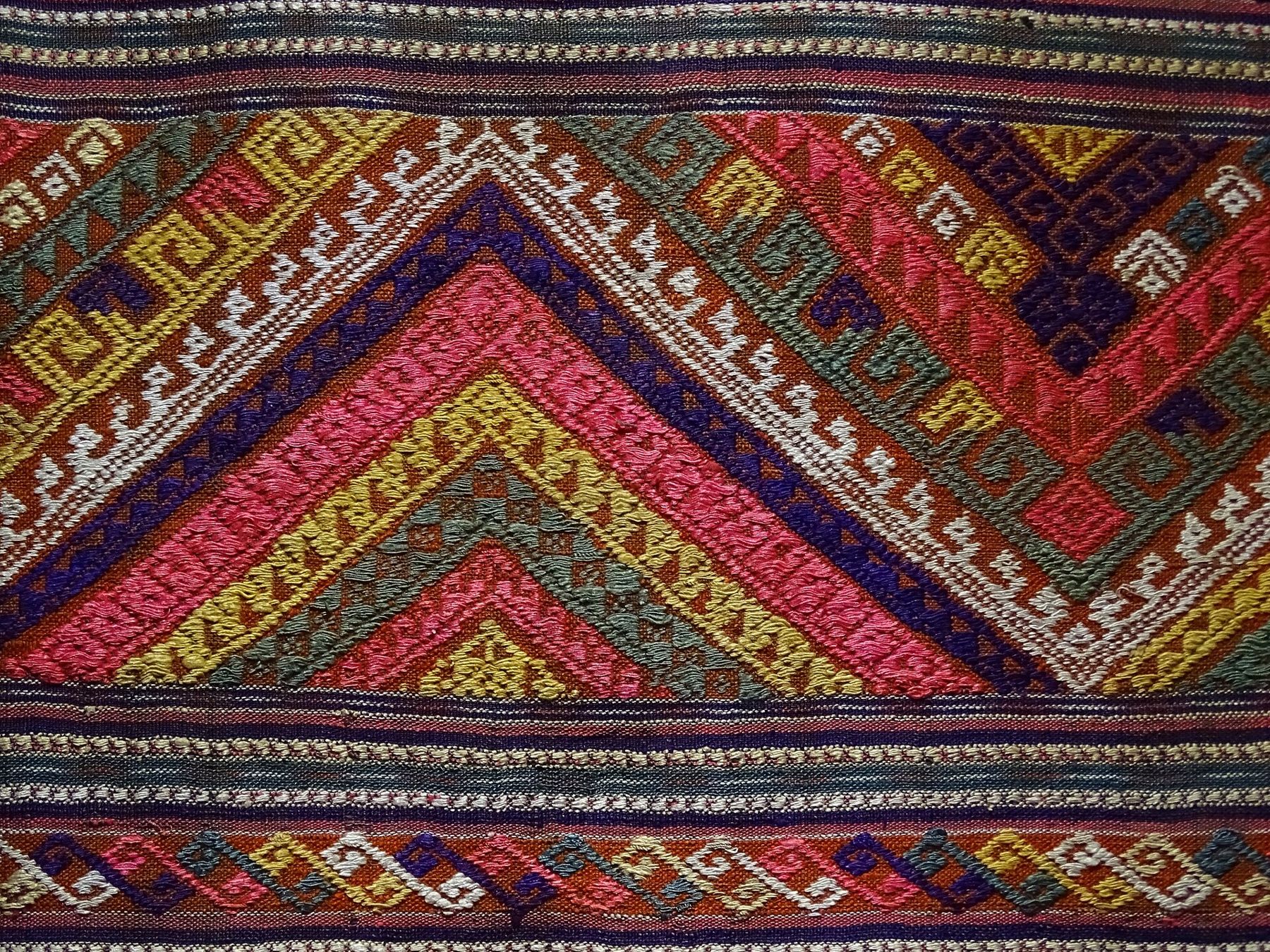
In the villages north of Nan town, looms clack under raised houses. The Tai Lue brought their weaving from far to the north, and their cloth is now part of what Nan means.
- Getting there
- Villages north of Nan, by road
- Bring
- Cash, a bag, time to talk
- Dress and manners
- In villages and temple grounds, cover shoulders and knees. Ask before stepping under a house or photographing a weaver at her loom.
- From the old town
- Villages about an hour north
Cloth is one of the things Nan does best. Walk through the market or along the old streets and you will see skirts, shoulder cloths and bags in bright stripes and zigzags. A good share of that cloth comes from the Tai Lue, a people whose weaving tradition is among the richest in northern Thailand.
This guide explains who the Tai Lue are, what makes their cloth recognisable, where it is made and how to buy it in a way that is fair to the people who weave it.
Who the Tai Lue are
The Tai Lue are a Tai-speaking people whose homeland is Sipsong Panna, in what is now the far south of Yunnan in China. Over several centuries, and especially during the wars and movements of the late eighteenth and nineteenth centuries, many Tai Lue communities settled in what are now northern Laos, Myanmar and Thailand. Nan has some of the largest Tai Lue communities in Thailand, concentrated in the districts north of town, including Tha Wang Pha and Pua.
The Tai Lue kept much of their own culture after they settled: their dialect, their temple style and their textiles. Tai Lue temples have low, sweeping roofs and thick white walls, and the murals in some Nan temples are attributed to Tai Lue artists. You can see that heritage at Wat Nong Bua near Tha Wang Pha, and the same tradition is linked to the paintings at Wat Phumin in town.
The flowing-water pattern
The design most closely linked with Nan is lai nam lai, which means flowing water. It shows bands of zigzags or waves running across the cloth, stepped and repeated in strong colours. To many people the pattern suggests the rivers of the province, especially the Nan River itself, and it has become something like a visual signature for Nan.
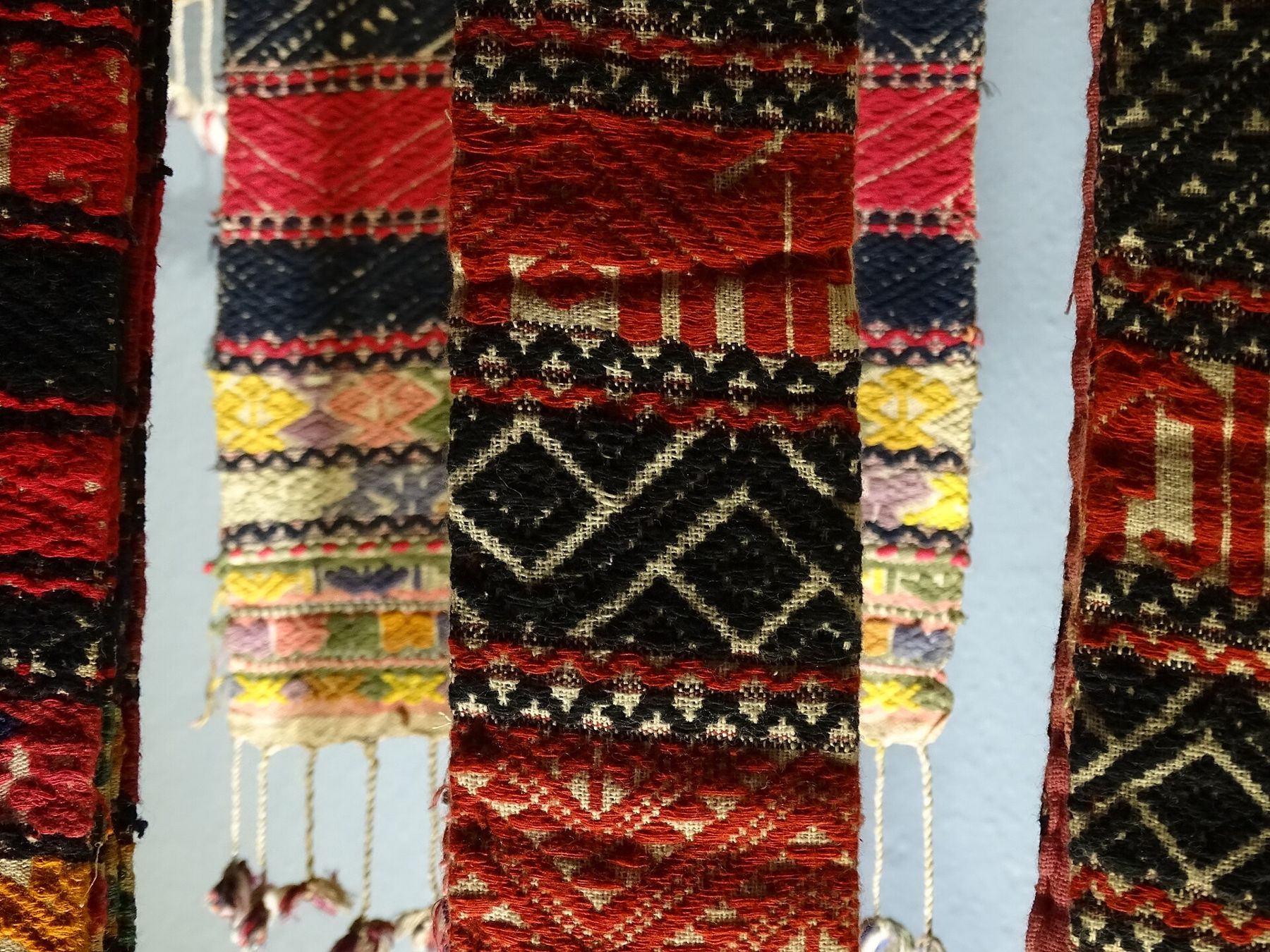
Lai nam lai appears most often on the pha sin, the tube skirt worn by women, either across the main body of the skirt or in bands. Modern weavers use it on shoulder cloths, bags and table runners too, sometimes in muted colours for buyers who prefer them.
Tai Lue weavers use other patterns as well: diamonds, hooks, small animals and birds, temple shapes and dense geometric bands. Some of these come from supplementary weft techniques, where extra threads are woven in to raise a pattern on the surface. Others come from changing the colour of the weft thread across the width.
Also in Nan: Bo Kluea and the mountain salt wells
Looms under the houses
Traditional houses in Tai Lue villages stand on posts, leaving a shaded space underneath. That space is where many households keep their loom. It is cool in the heat of the day, close to the family, and easy to work in between other jobs.
The loom is a wooden frame, often large, worked by hand and foot. The weaver throws the shuttle across, beats each row tight, and changes the pattern threads row by row. A complex skirt length can take many days or weeks of work. The rhythm of the beater is a familiar sound in villages north of town on a working afternoon.
Cotton is the traditional fibre, sometimes grown, spun and dyed locally with natural dyes. Today many weavers buy factory thread in a wider range of colours, and both kinds of cloth are made.
Where to see weaving
Several villages north of Nan town are known for Tai Lue weaving, especially in Tha Wang Pha district, and some have set up community centres or groups where you can watch weavers at work and buy directly. The Tai Lue villages around Pua, on the road north towards the mountains and the rice terraces of Pua, also weave.
In Nan town, the Nan National Museum displays textiles that help you understand the patterns before you buy. The weekend walking street near Wat Phumin and the town's markets also carry local cloth.
Arrangements in villages change, and not every house welcomes drop-in visits. Ask in Nan town where weaving groups are open to visitors.
Buying cloth fairly
Hand-woven cloth takes many hours to make, and good pieces are not cheap. Factory-made copies of Nan patterns are also sold, and they are easy to mistake for handwork. A few things help.
- Look at the back. Hand weaving shows small irregularities and the floats of pattern threads.
- Buy from weavers or community groups where you can, so more of the price stays in the village.
- Ask what the cloth is made of and how it was dyed.
- Do not bargain hard on hand-woven pieces. A modest discount on several items is fine.
Natural-dye cotton may fade a little with washing. Wash it gently in cold water, on its own, and dry it in the shade.
Wearing it with respect
A pha sin is everyday dress for many women in Nan, and it is also worn for temple visits and festivals. You are welcome to wear one, and many visitors do. Wear it as a skirt, not as a scarf or a beach wrap, and avoid placing cloth with religious images on the floor or sitting on it.
A length of Tai Lue cloth is one of the best things you can take home from Nan. It carries the history of a people who moved a long way and kept their craft, and it reminds you of the river country where it was made.
Before: Pua · Next: Wat Suan Tan · Same topic: Wat Nong Bua, Wat Nong Daeng
Images: Adam Jones from Kelowna, BC, Canada, CC BY-SA 2.0; Adam Jones from Kelowna, BC, Canada, CC BY-SA 2.0.

