The town and its river
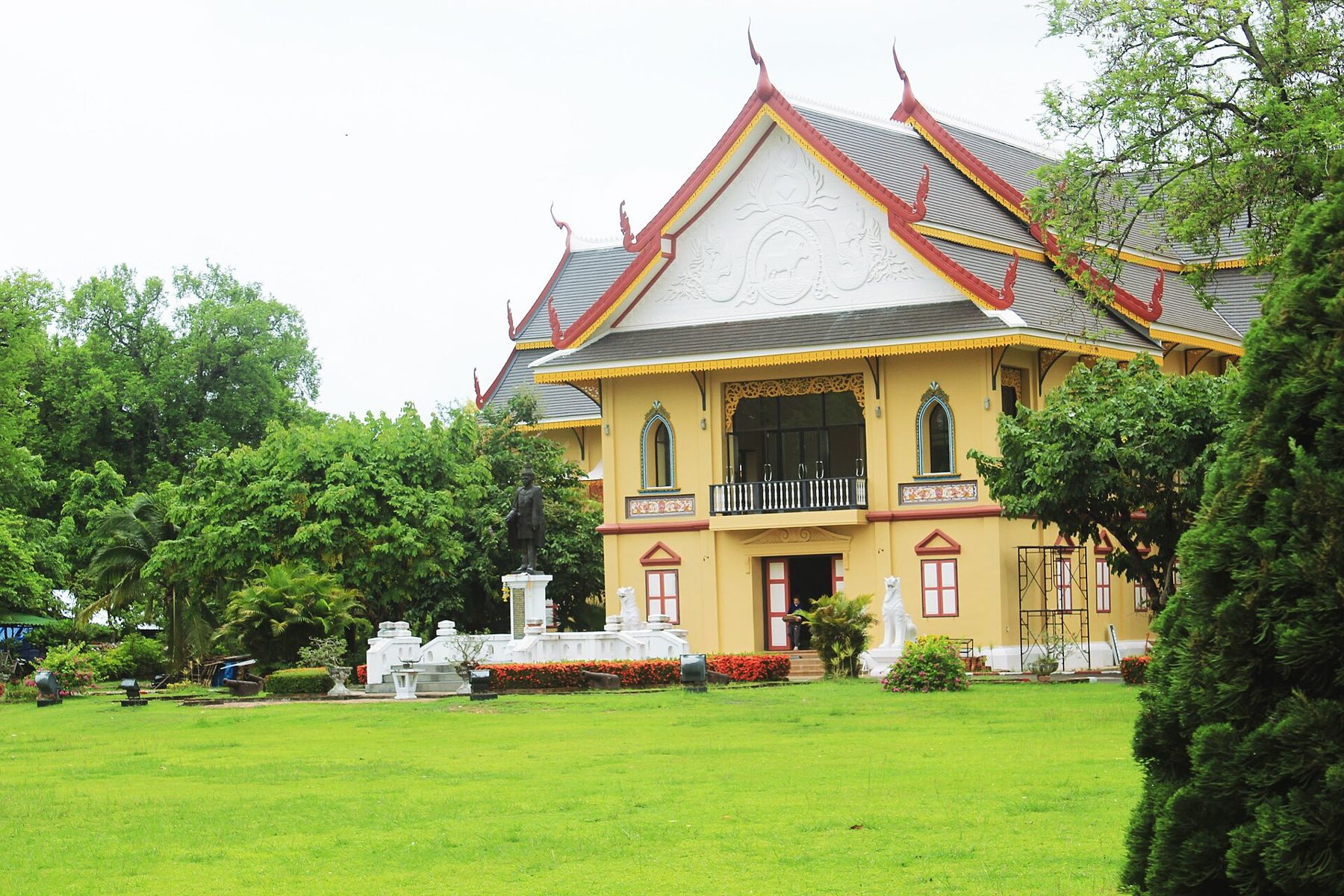
The Nan National Museum in the old palace
The house where Nan's last rulers lived is now the province's museum. Its rooms tell the story of a small northern kingdom and the many peoples who share its mountains.
- Getting there
- In the old town centre, on foot
- Bring
- Shoes that slip off, an hour or two
- Dress and manners
- Dress as for a temple, with covered shoulders and knees. Shoes may come off at the door; floors are cool and polished.
- From the old town
- In the heart of the old town
Nan was not always a province. For centuries it was a small principality with its own ruling family, linked at different times to Lanna, Lan Xang, Burma and Siam, and run from a palace in the middle of town. That palace still stands, and since the later twentieth century it has housed the Nan National Museum. If you see only one thing in Nan besides the temples, make it this. It gives everything else in the valley a context, and it is a calm, cool place to spend the middle of a hot day.
A house for the rulers of Nan
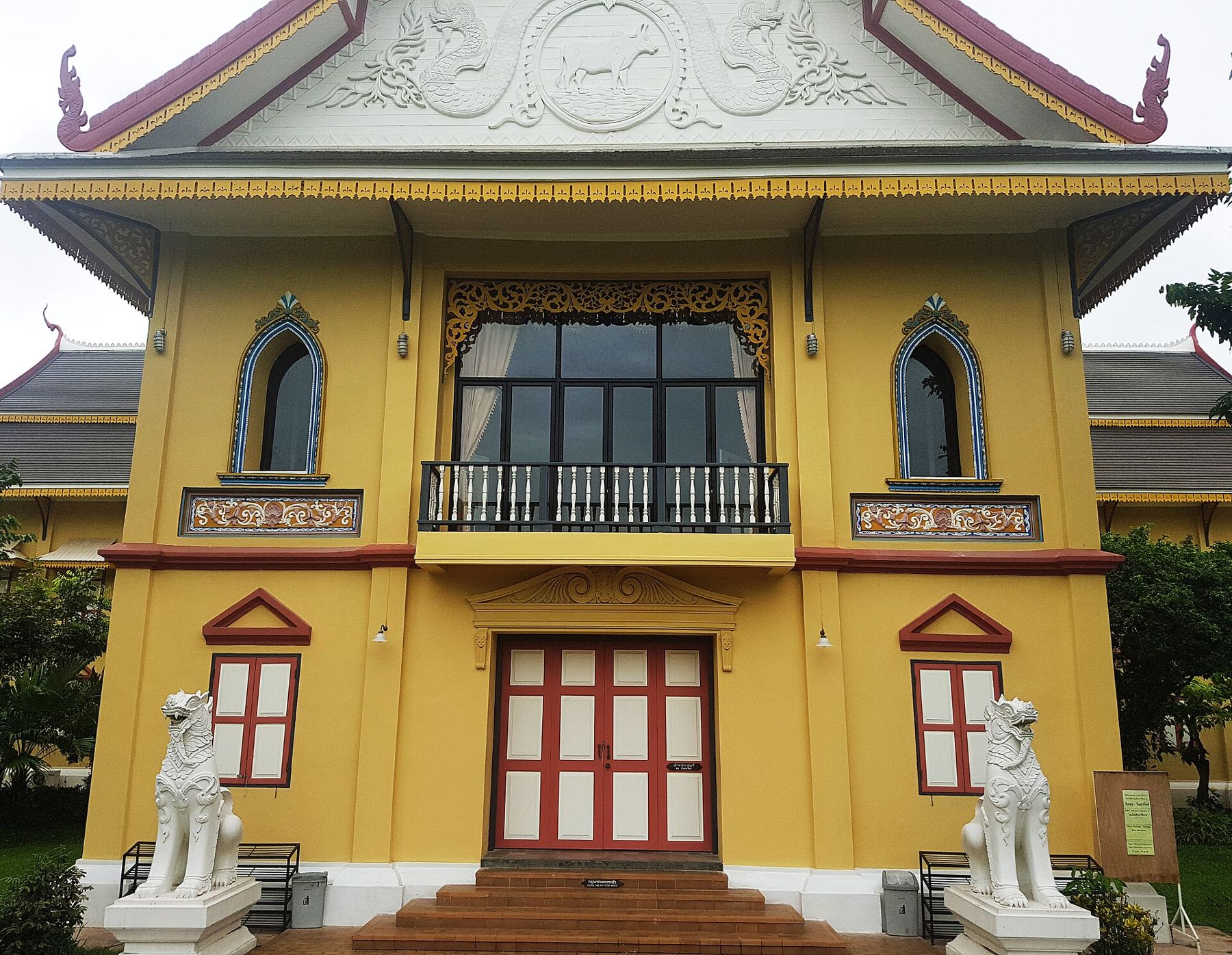
The building was put up at the start of the twentieth century as the residence of the rulers of Nan, during the last decades of the principality. It is a two-storey mansion that mixes Western ideas of the time, such as tall windows and a central balcony, with a Thai roof of overlapping tiers and carved gables finished with curling finials. After the era of the rulers it served the provincial administration for a time before it was handed over to become a museum.
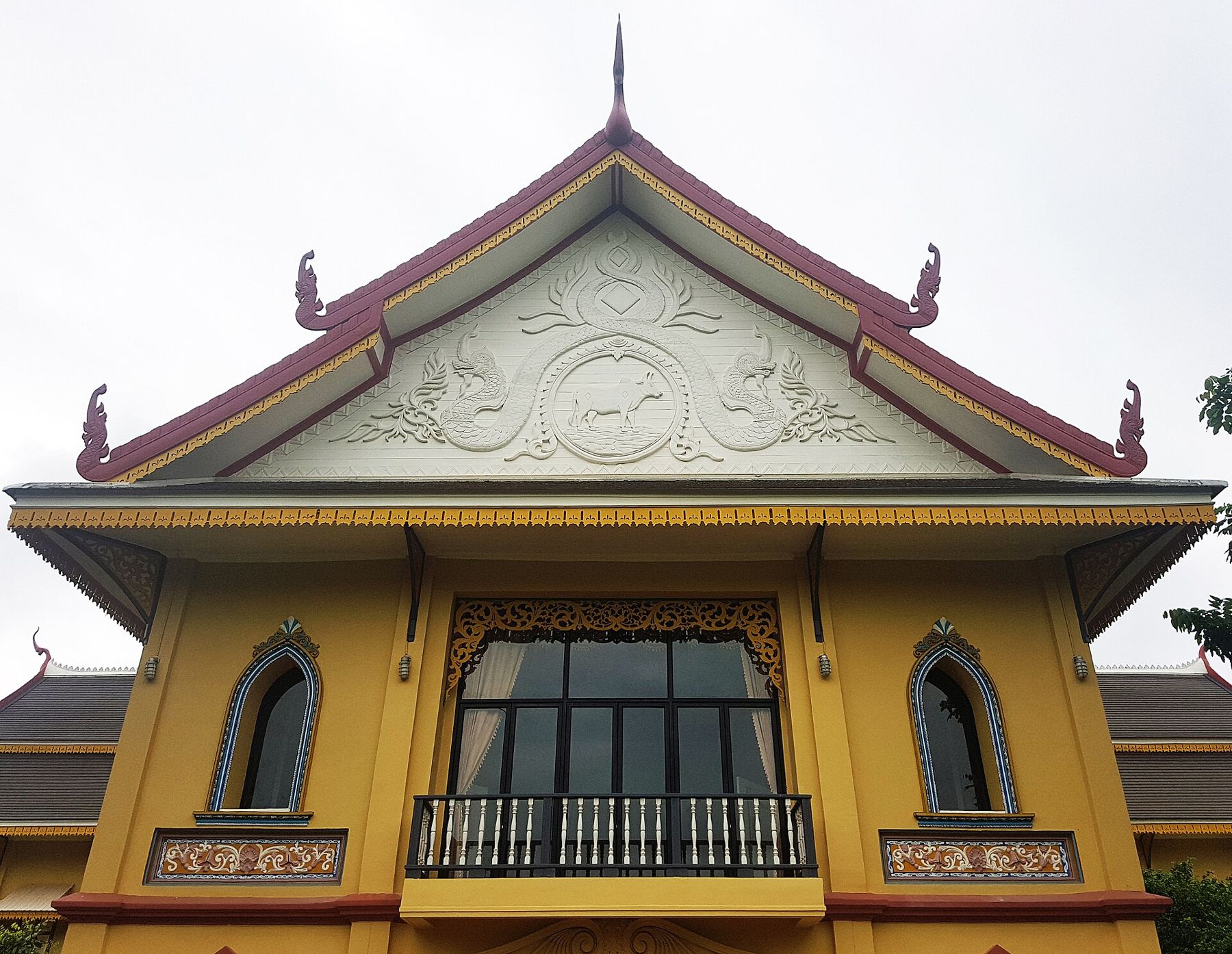
Look at the gables before you go in. The white pediment carries a medallion with a bull, framed by curling serpent forms, and the window frames below are painted with delicate floral bands. The building has been restored, and the paintwork has changed over the years, but the proportions are the same ones the ruling family knew.
The house also marks the end of an era. Through the nineteenth century Nan kept its own rulers while sending tribute to Siam, and in the early twentieth century the principality was brought fully into the Thai provincial system. The museum tells that story with care, and the house itself is one of its best exhibits: a home built for a ruling family in the last years before their role came to an end.
The peoples of the province
The ground floor is usually given over to the people of Nan. The province is home to many groups: the Tai Lue, whose weaving and temples are famous; northern Thais; and hill peoples including the Hmong, the Mien, the Khamu, the Htin and the Mlabri. The displays show houses, tools, fishing traps, farming gear, musical instruments and above all textiles, with costumes and woven cloth from different communities side by side.
It is the best possible introduction to the villages you may visit later. The patterned tube skirts in the cases are the same kind you will see on looms in the Tai Lue weaving villages, and the household objects explain a great deal about life in the hills around Doi Phu Kha. Take time with the maps, which show how the province's peoples spread through its river valleys and uplands.
Pay attention to the textiles in particular. Woven tube skirts, shoulder cloths, blankets and bags carry patterns that differ from one community to the next, and the cases let you compare them side by side in a way that is hard to do anywhere else. The fine horizontal bands of Tai Lue cloth, the embroidery and batik of the Hmong and the bold stitched designs of the Mien are all represented, and once you have seen them here you will start to spot them in markets and villages across the province.
Also in Nan: Tai Lue weaving and Nan cloth
History, art and the black tusk
Upstairs, the story turns to history. Archaeological finds, inscriptions, ceramics, weapons and royal regalia trace Nan from its early settlements through its time as a principality to its place in modern Thailand. Buddhist art fills several rooms, with Buddha images in bronze and wood in the local styles of Nan and the wider north, and you begin to recognise the faces and robes you have seen in the town's temples.
The history rooms are worth reading slowly. They explain how a small mountain state survived between larger neighbours, how its rulers built and restored the temples you see in town, and how trade along the rivers and over the mountain passes linked Nan to Laos, to the other Lanna cities and to the central plain. Ceramics from old kiln sites in the province show that Nan made as well as bought.
The museum's best-known treasure is a dark-coloured elephant tusk, unusual for its colour and long regarded as one of the treasures of Nan. It is displayed with care, and people treat it with respect. Look at it the way you would look at an image in a temple: quietly, and without leaning on the case.
If you see only one thing in Nan besides the temples, make it this.
Labels are mostly in Thai and English, though the English is sometimes brief. The displays are rearranged from time to time, so the order of rooms may differ from what you have read or heard.
The grounds and the neighbours
The museum stands in lawned grounds with old trees, flowerbeds and a statue of one of the former rulers of Nan. It is a pleasant place to sit for a few minutes after the galleries, and the view across the road takes in the golden chedi of Wat Phra That Chang Kham, which is the obvious next stop. Wat Phumin is a short walk to the south along the same road.
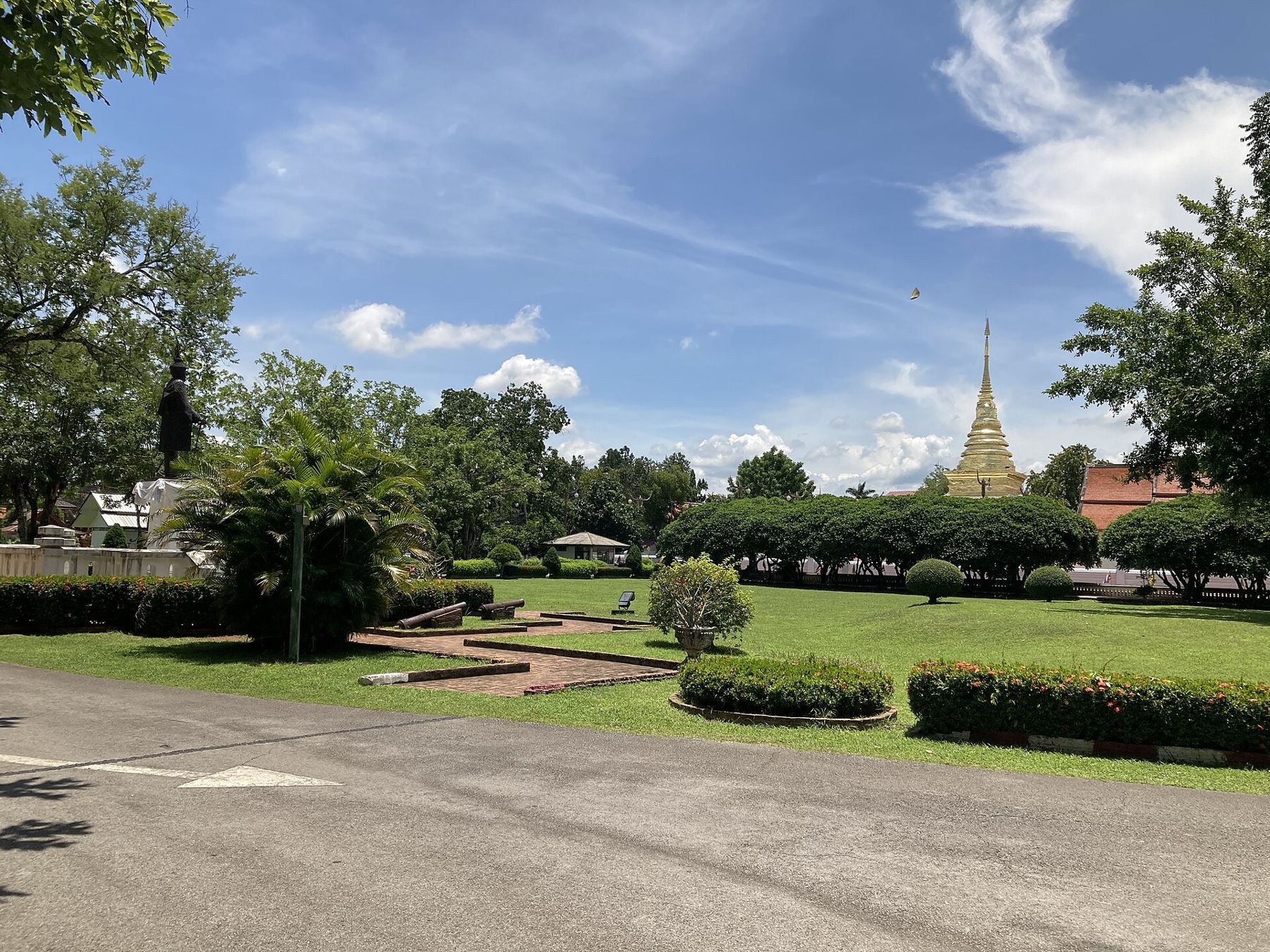
That cluster of three, museum and two temples, makes the core of any visit to Nan. You can see all of them in a single morning, though they reward more time. On evenings when the walking street runs, usually at weekends, the area around the museum fills with food and craft stalls.
Thailand's national museums usually close on certain weekdays and on some public holidays, and they keep daytime hours only. There is normally an entrance fee for foreign visitors, set by the Fine Arts Department and subject to change. Photography rules vary from room to room; look for signs, and never use flash near textiles or paintings.
- Allow at least an hour, or two if you like to read every label.
- Come in the morning or early afternoon, when the rooms are quiet.
- Small bags are easiest; larger ones may need to be left at the desk.
- Remove your shoes if asked at the door, and keep your voice low in the galleries.
The museum is in the old town centre and easy to reach on foot or by bicycle from anywhere within the old walls. It makes a good first stop on your first day, before the temples and villages, and a good last one, when you have seen enough of the province to recognise what is in the cases.
Before: Wat Phra That Chae Haeng · Next: Doi Phu Kha National Park · Same topic: Nan old town · all notes
Images: Opasashi, CC BY-SA 4.0; Index Librorum Permissorum, CC0 1.0; Index Librorum Permissorum, CC0 1.0; Inspiredbynature, CC BY-SA 4.0.


