The town and its river
Walking Nan's old town
Nan's old town is small, flat and quiet enough to explore on foot or by bicycle. Go early, when the streets are cool and the town is just waking up.
- Getting there
- You are already in it
- Bring
- Comfortable shoes, water, a hat, small change
- Dress and manners
- Light, modest clothes for the heat; cover shoulders and knees for temples. Pavements are uneven in places, so wear comfortable shoes.
- From the old town
- The centre itself, on foot
Many Thai provincial towns have lost their old centres to traffic and concrete. Nan has kept much of its own. The old town is a compact area of straight streets on the west bank of the river, with temples on almost every block, wooden houses behind gardens and stretches of the old brick city wall. It is flat, quiet and small enough to cross on foot in half an hour, which makes it one of the best towns in the north for simply walking.
The grid of streets
The streets of the old town are laid out in a rough grid, with a few main roads carrying most of the traffic and quieter lanes between them. The heart of it lies around the national museum and the temples beside it, where the main streets cross. From there, side streets lead off between houses, small markets and more temples.
The grid makes it hard to get lost. Pick a temple roof or a chedi as a landmark, wander until you have had enough, then turn back towards it. Shade is patchy, so walk on the shaded side of the street and carry water.
Wooden houses
Look out for the old wooden houses that still stand among newer buildings. Many are of dark teak or other hardwoods, raised on posts or with shopfronts of folding wooden panels at street level, with living quarters above. Some are well kept; others are fading quietly. They are homes, not museums, so look from the street and do not walk into yards or photograph people at their doors without asking.
The temples are part of the same fabric. On a short walk you can pass Wat Phumin with its famous murals, the elephant chedi of Wat Phra That Chang Kham and several smaller temples where monks sweep the courtyards in the early morning.
The old city wall
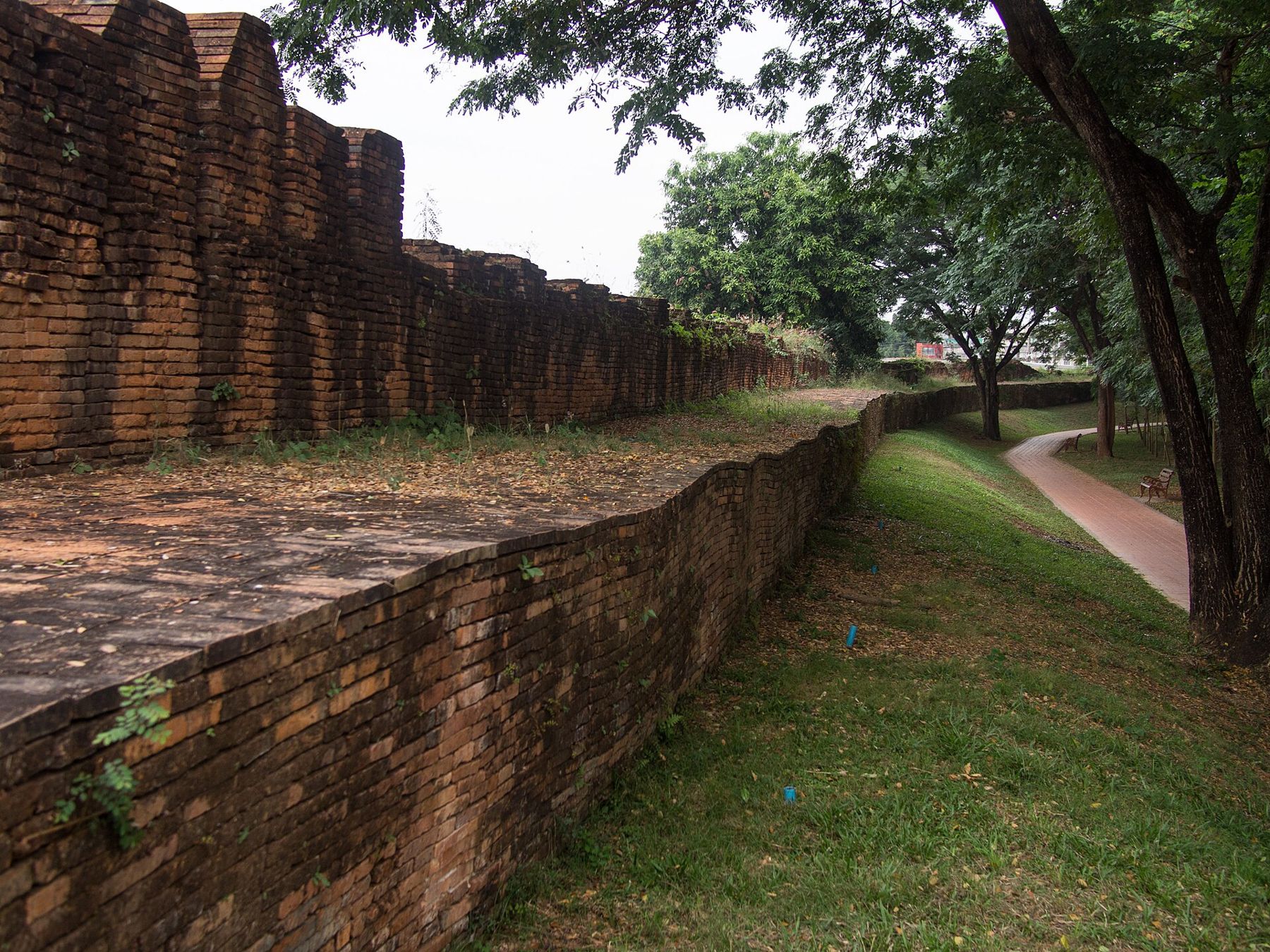
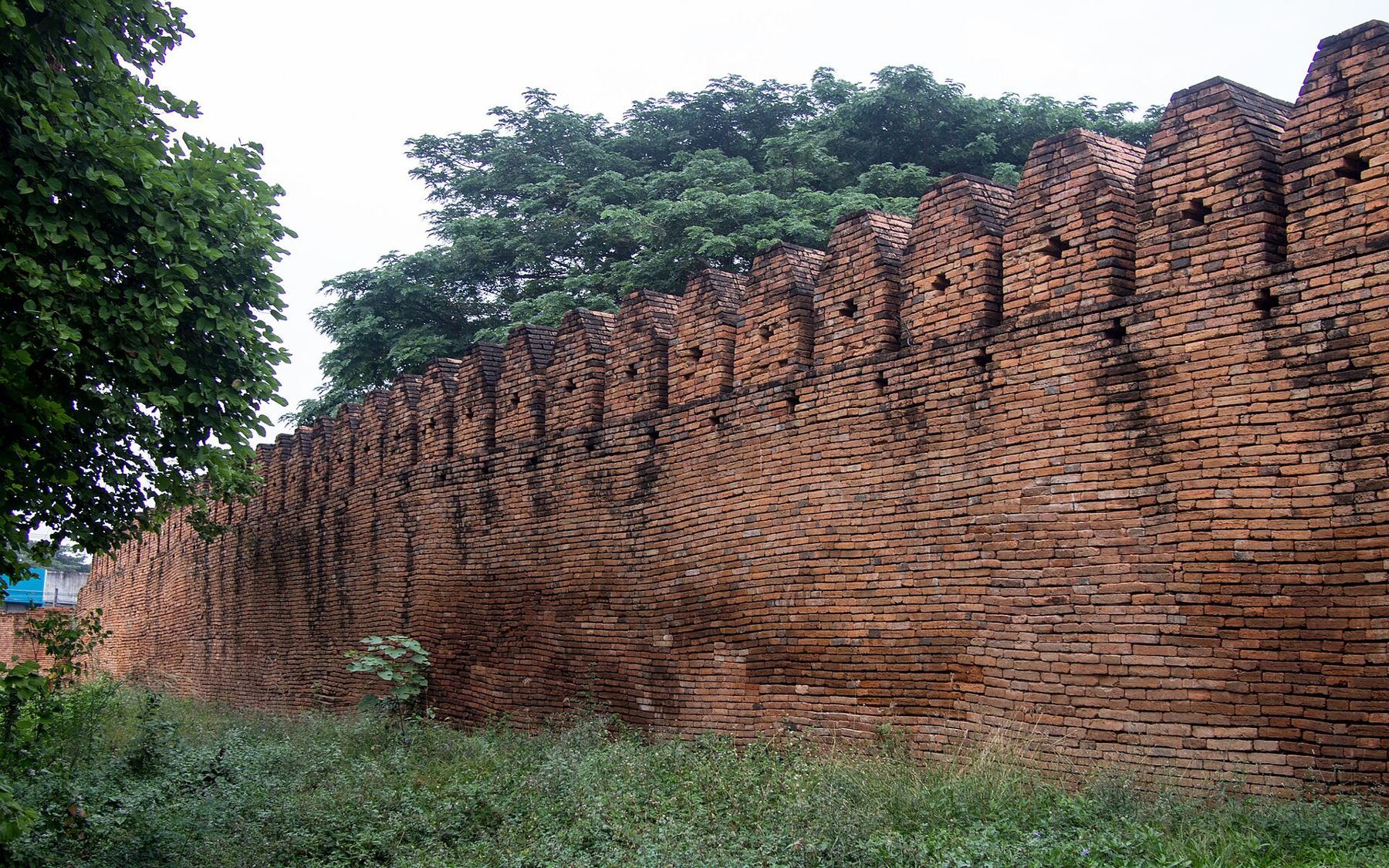
Nan was once a walled town, and stretches of its brick wall survive. Seen from outside, the wall is tall and solid, topped with a row of notched battlements; from inside, an earth rampart runs behind it, and in places a path and lawns now follow the line of the wall.
Also in Nan: The Nan National Museum in the old palace
The wall is a protected monument. Walk beside it, not on it, and do not climb the battlements. Early morning, when the light is low and the paths are cool, is the best time to see it. The wall also shows how much the town has grown: modern Nan spreads well beyond it now, and the old line of defence has become a quiet green edge between the old core and the newer streets.
A simple walk
A loop of the old town takes a morning at an easy pace, and there is no wrong order. One good route runs like this:
- Start at the national museum, ideally soon after it opens, for the story of the town.
- Cross the road to the elephant chedi of Wat Phra That Chang Kham.
- Walk on to Wat Phumin and spend time with its murals.
- Look in at Wat Ming Mueang, home of the city pillar shrine, and at the golden hall of Wat Sri Panton.
- Head to a surviving stretch of the city wall, then on to the river for the last of the morning light.
Each temple is only a few minutes from the next, so the walking itself is light. What takes time is stopping, which is the point. Sit in a temple courtyard for a while, watch the town go about its morning, and let the plan slip if something else catches your eye.
Bicycles and early mornings
The old town is ideal for cycling. The streets are flat, traffic is light outside the main roads, and the distances are short. Bicycles are easy to hire in town. A bicycle also brings the temples on the edge of town, such as Wat Phaya Wat, and the riverside within easy reach.
Go early. Soon after dawn, monks walk the streets on their alms round, and local people wait by their doors to offer food. If you want to watch, stand back quietly and do not get in the way. Morning markets open early too, and the streets are cool and calm before the heat builds.
Evenings in the old town
In the evening the town comes back to life. On walking-street nights, usually at weekends, the area around the museum and Wat Phumin fills with food and craft stalls; the walking street has its own guide on this site. On other nights, the streets are quiet, and a walk to the river at dusk is a fine way to end the day.
Nights in the cool season can be chilly, so bring a light layer. In the hot months, the evening is the most comfortable time to be out; in the rains, carry an umbrella and watch your footing on wet pavements.
- Cover shoulders and knees when you enter temple grounds.
- Remove your shoes before entering temple halls.
- Pavements are uneven in places; look down as well as up.
- Carry water and use shade; the midday sun is strong for much of the year.
- Ask before photographing people, especially monks.
Nan rewards slow walking more than ticking off sights. Give it a morning or two, and the old town will show you far more than any single temple can.
Before: Wat Phaya Wat · Next: Si Nan National Park · Same topic: Nan National Museum
Images: Takeaway, CC BY-SA 3.0; Takeaway, CC BY-SA 3.0.

