Temples of the old town
Wat Phaya Wat and its old brick chedi
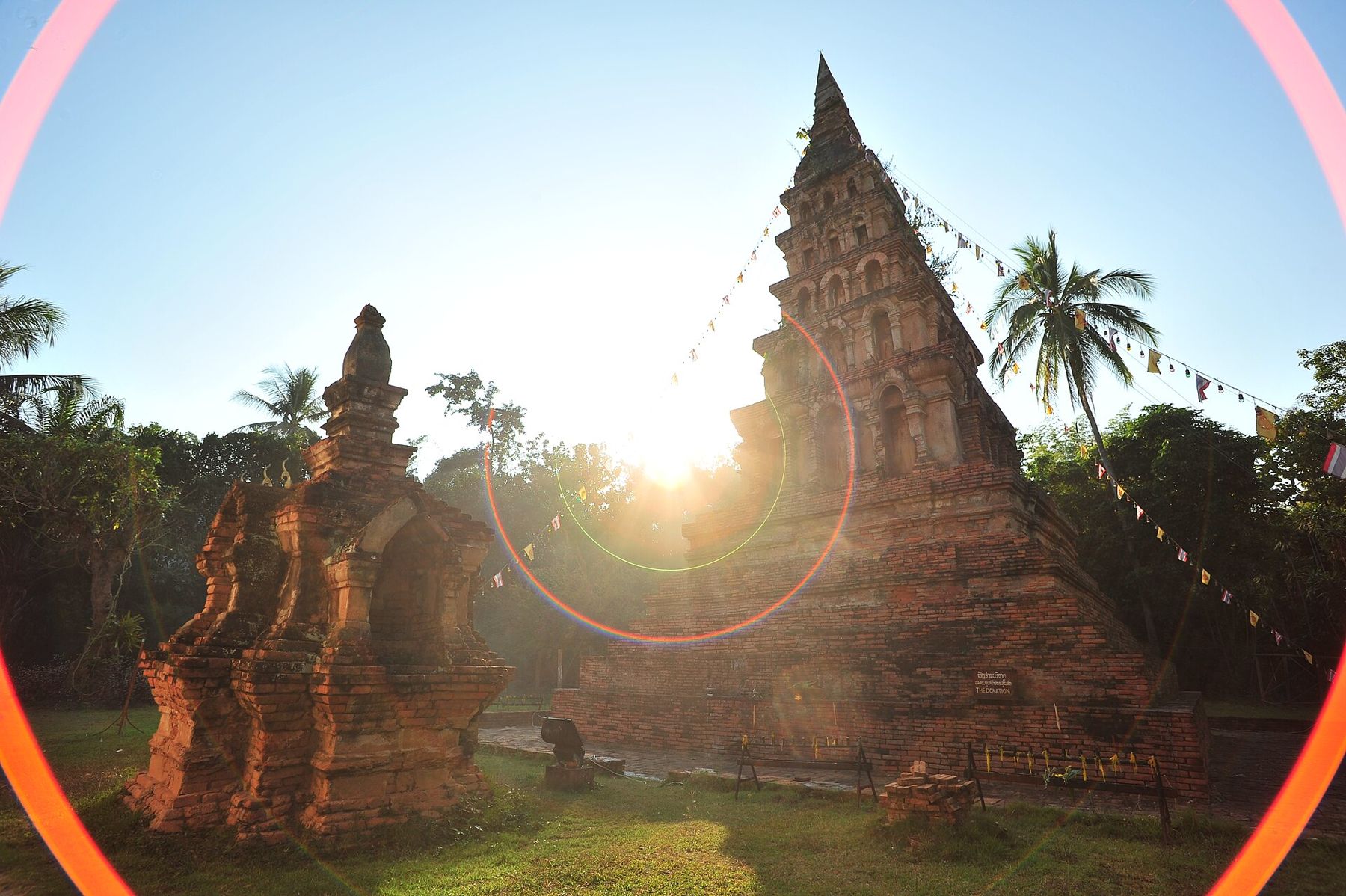
Away from the busy centre, a stepped brick chedi with Buddha images in its niches stands beside a carved white wihan. It is one of the oldest-looking monuments around Nan.
- Getting there
- Short ride south of the old town
- Bring
- Water, shoulder cover, a sun hat
- Dress and manners
- Cover shoulders and knees. The grounds are open and sunny, so bring a hat; remove your shoes before entering the wihan.
- From the old town
- A short ride south of the centre
Most visitors to Nan spend their time in the cluster of temples at the centre of the old town. Wat Phaya Wat asks for a short ride out, and it repays the effort with something quite different: an old brick chedi, unplastered and weathered red, rising in steps like a small mountain, with Buddha images looking out from niches on every level. It is a quiet temple, often almost empty, and it has the feel of great age.
The stepped chedi
The chedi is square in plan and climbs in a series of narrowing tiers to a pointed top. Each tier is set with arched niches, and each niche once held a Buddha image; many still do. The brick is worn and dark with age in places, and plants sometimes take hold in the joints. Coloured prayer flags are often strung from the top, and in the low sun of late afternoon the whole structure glows.
Its form belongs to a family of stepped, niche-lined chedis found in northern Thailand, and people who know the old temples of Lamphun often compare it to them. Nobody needs to know the history of styles to feel its presence, though. Walk around it slowly, and look up at the faces in the niches from each side.
The wihan
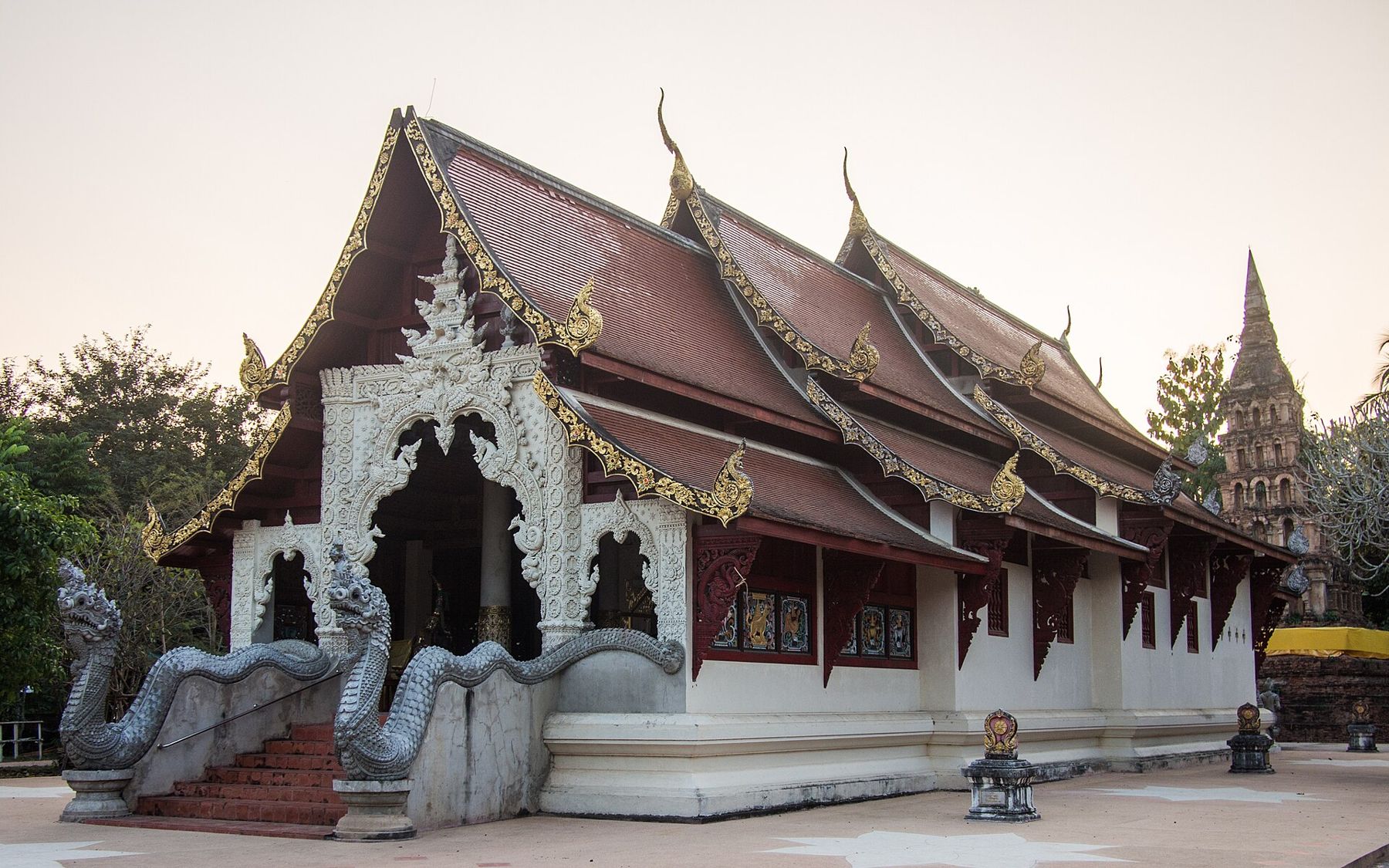
Beside the chedi stands the main wihan, a white hall with a roof of dark tiles in overlapping layers. Its front is richly carved, with a lace-like white stucco arch over the doorway and gilded edging along the gables. Silver-grey nagas run down the balustrades of the front steps, their heads raised at the foot.
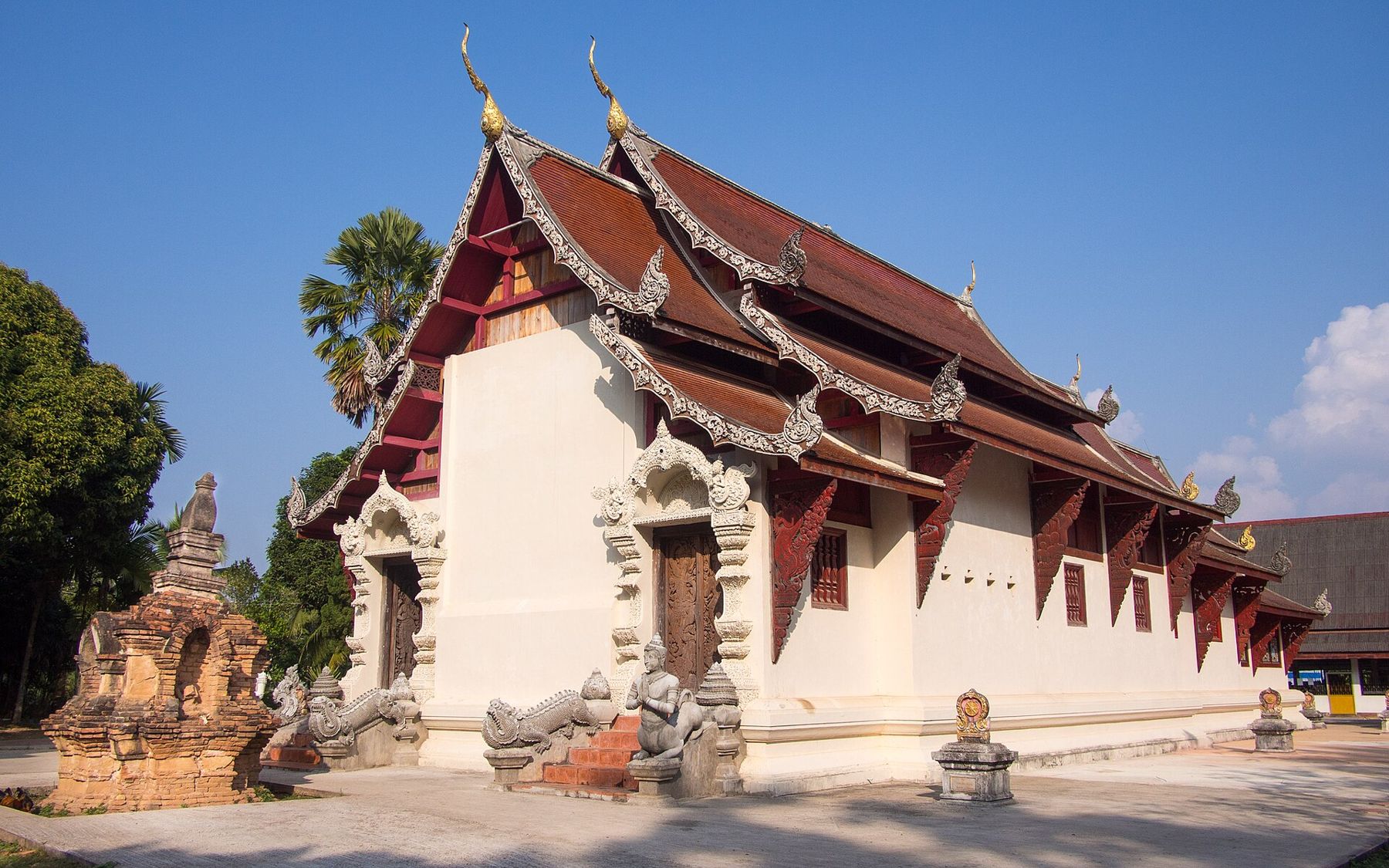
Go round to the back, too. The rear of the hall has its own carved gable and doorways framed with stucco, guarded by small figures and serpents at the steps, and an old brick shrine stands nearby.
Remove your shoes before entering, and keep voices low inside. If monks or local people are at prayer, wait quietly or come back later.
Lanna style in general
Wat Phaya Wat is a good place to learn to read the temple style of Lanna, the old northern kingdom whose culture shaped Nan for centuries. Look for the steep, layered roofs that sweep low over the walls, the carved wooden brackets under the eaves, the curling finials at the ends of the gables, and the nagas that guard the steps. Compare it with the cross-shaped hall of Wat Phumin, built in a different spirit, and with the golden chedi of Wat Phra That Chae Haeng, and you start to see how many influences met in this valley.
Also in Nan: Wat Phra That Chae Haeng across the river
The chedi is the part that sets this temple apart. Where many of Nan's chedis are plastered white or sheathed in gold, here you see the bare brick that lies beneath, and the age of the monument is written on its surface.
Photographs and light
Wat Phaya Wat is one of the most rewarding temples around Nan to photograph, and one of the least crowded. The chedi faces the sun in different ways through the day, and the best light comes late, when it falls low and warm across the brick. Around midday the light is flat and harsh, and the open grounds offer little shade.
Stand back to take in the whole chedi with the wihan beside it, then move in close to the niches, where the Buddha images sit framed by worn brick arches. The wihan's white stucco and gilded gables photograph well against a blue sky. Remember that the images are sacred: photograph them respectfully, never pose with your back to them for a joke, and do not climb any part of the chedi for a better angle.
A working temple
Like every temple in Nan, Wat Phaya Wat is a place of worship first. Monks live here, and local people come to make merit, especially on holy days and during festivals. The grounds are open and calm, and visitors are welcome, but treat the chedi as a sacred monument: do not climb it or touch the images in the niches.
The chedi needs care to survive. Brick and old mortar suffer in the heavy rains and the heat, and the temple and the authorities carry out repairs from time to time, so parts of the monument may be fenced off or under scaffolding when you visit. Respect any barriers.
If you happen to arrive during a ceremony, keep to the edges, dress modestly and ask before you photograph people. Small donations are welcome.
The temple is on the southern side of town, a short ride from the old centre. A bicycle is ideal on the flat roads; a tuk-tuk or songthaew will take you there for a fare agreed in advance. The grounds are generally open through the day and there is usually no entry fee.
Late afternoon is the best time. The heat eases, the brick turns warm red, and the shadows show off the depth of the niches. Combine it with a ride back through the old town, or with a visit to the national museum, where Buddha images in the local styles help you place what you have seen here.
Before: Wat Phra That Khao Noi · Next: Nan old town · Same topic: Wat Phumin, Wat Phra That Chae Haeng, Wat Phra That Chang Kham, Wat Ming Mueang, Wat Phra That Khao Noi, Wat Suan Tan
Images: k.phothiwijit, CC BY-SA 3.0; Takeaway, CC BY-SA 3.0; Takeaway, CC BY-SA 3.0.


