Temples of the old town
Wat Phra That Chang Kham and its elephants
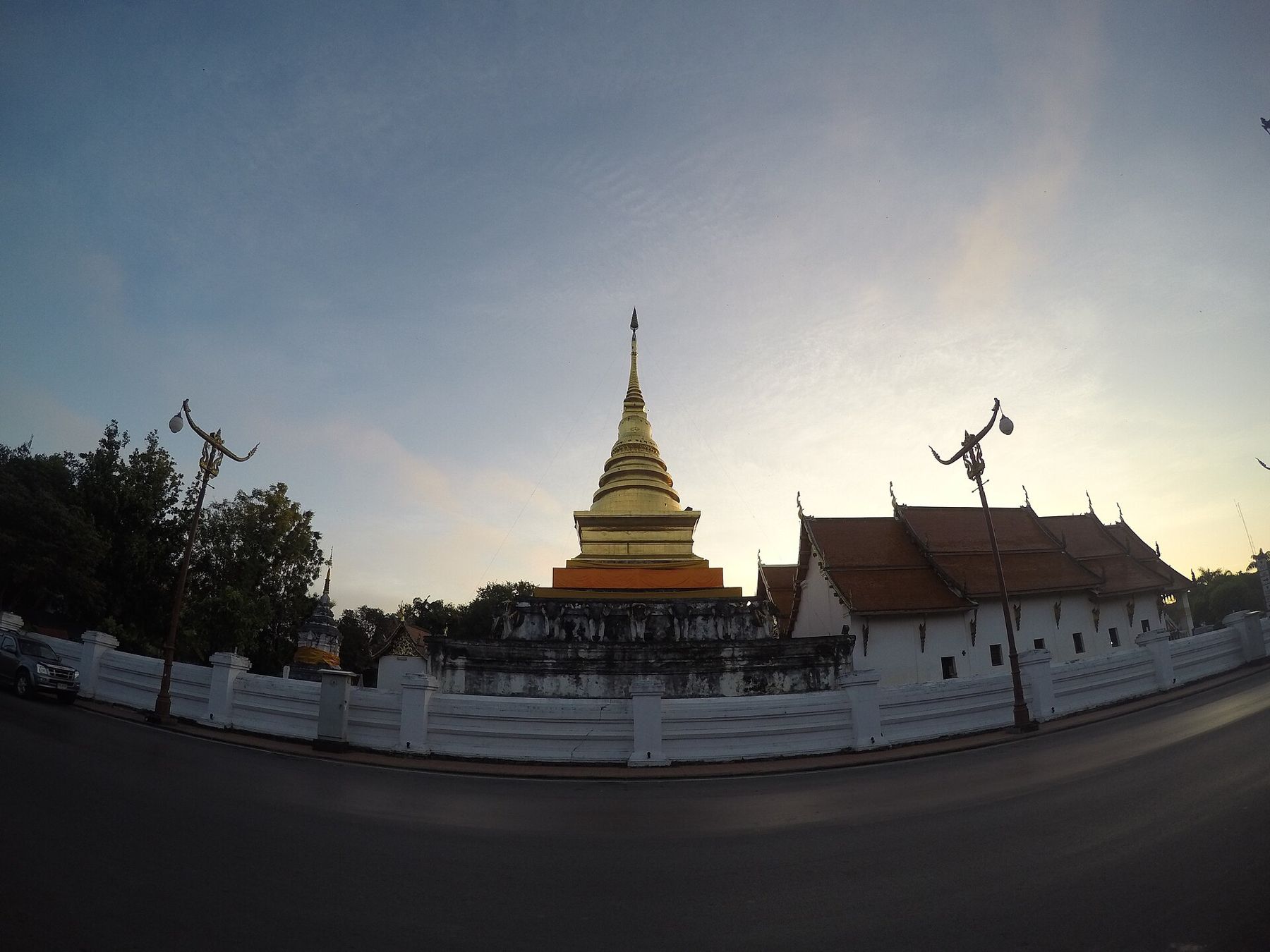
Across the road from the national museum, a golden chedi rises from a base lined with elephants. This royal temple sits at the very centre of Nan's old town.
- Getting there
- Opposite the national museum, on foot
- Bring
- Shoulder cover, shoes that slip off easily
- Dress and manners
- Cover shoulders and knees, remove shoes before entering halls, and walk around the chedi clockwise if you join people paying respect.
- From the old town
- Opposite the museum, in the centre
Some temples announce themselves from far off. Wat Phra That Chang Kham does it from across the road. Its golden chedi rises over a white wall directly opposite the national museum, at the heart of Nan's old town, and the elephants around its base are what give the temple its name. It is one of the most important temples in the province, a royal temple, and one of the easiest to visit.
The elephant chedi
The chedi stands on a high square base. Around that base, elephant figures project from the brickwork as if the animals were holding the monument up on their backs, a form also known from the old cities of Sukhothai and Si Satchanalai. Above the elephants, the chedi rises in rings to a gilded bell and a slender spire. The name Chang Kham refers to the elephants that support the chedi.
Nan had close ties with the kingdom of Sukhothai in its early centuries, and the elephant chedi is often seen as one sign of that link. Whatever the exact history, the design gives the monument a strong, grounded look, as if the great animals were bearing the weight of the relics above them.
Walk slowly around the base to see the elephants from each side. Some are worn with age and repairs; together they make one of the most memorable sights in the town. If people are paying respect, follow their lead and walk clockwise, keeping the chedi on your right.
The halls around it
The grounds hold several buildings. The large wihan beside the chedi has a red tiled roof stepping down in layers, gilded gables and a dim interior with a seated Buddha image, while the ordination hall has a carved and painted gable showing a guardian figure. A ho trai, the library where scriptures were kept, also stands in the grounds.
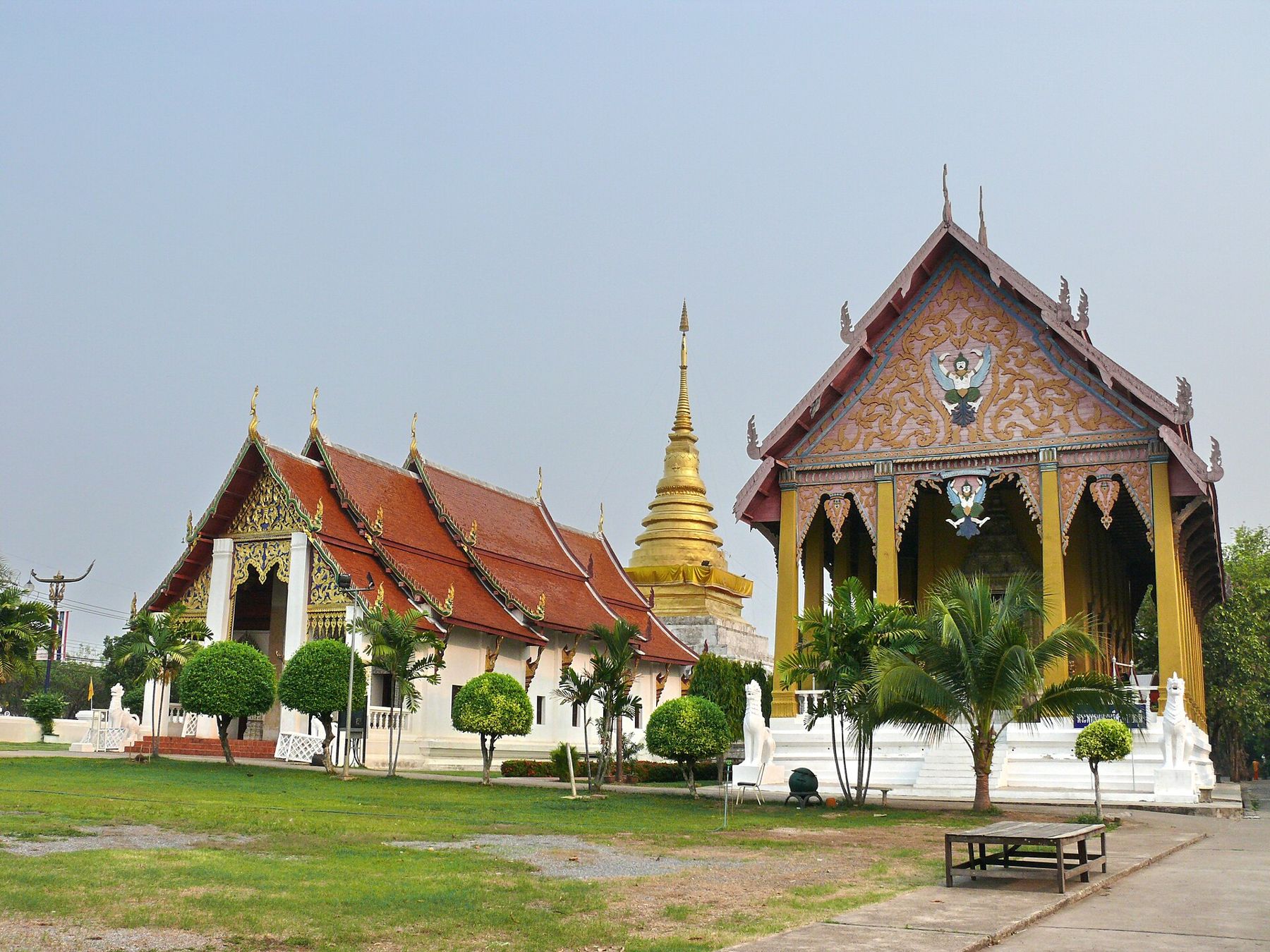
Shoes come off before you enter any hall. Sit with your feet tucked away from the images, and keep your voice low. This is the temple of the town's centre, and local people come in and out through the day to make merit and pray.
The walking Buddha
The temple is known for an old Buddha image in the walking posture, cast in the graceful Sukhothai style, with one foot lifted and one hand raised. The walking posture is one of the most elegant forms in Thai Buddhist art, and it is closely linked with the Sukhothai period. The story usually told is that its precious metal was hidden under a coating of plaster for a long time and revealed only in the twentieth century.
Also in Nan: Wat Phumin and its whispering murals
The image is a sacred object, and it is not always on view; access depends on the temple and on ceremonies. If you are able to see it, do so quietly and without flash.
The temple's place in town
Wat Phra That Chang Kham stands in the space that was the centre of the old ruling town, next to the palace that is now the Nan National Museum. The rulers of Nan lived across the road, and the temple long played a part in the ceremonies of the principality. Today it still hosts important religious events, and the area around it is the hub of the old town.
The best view of the whole ensemble is from the museum side of the road, where you can see the chedi rising above the long white wall with the roofs of the halls beside it. In the evening the chedi is lit, and the gold stands out against the dark sky. It is worth crossing back after dinner for a look.
That makes it easy to combine. Start at the museum, cross the road to the chedi, then walk a short way south to Wat Phumin and its murals. If you are here in the evening when the walking street is running, usually at weekends, the roads around the temple fill with stalls and music.
When to come
The temple grounds are generally open through the day and usually free to enter. Early morning is the quietest time, with monks sweeping the courtyards and the light soft on the gold. Late afternoon, when the low sun turns the chedi amber, is just as good, and the elephants stand out in sharp relief.
The cool season from November to February is the most comfortable time for walking between the old town's temples. In the hot months, carry water and plan your outdoor time for the early morning; in the rains, showers are usually short, and the temple halls make good shelter.
- Cover shoulders and knees, as at every temple in Nan.
- Remove your shoes before entering halls and leave them neatly by the steps.
- Do not climb on the chedi base or touch the elephant figures.
- Photography outdoors is generally fine; inside, follow any signs and never use flash.
- Small donations are welcome and help with the upkeep of the buildings.
Give it half an hour, longer if you like to sit in the shade and watch the town go by. It is a quiet corner at the centre of a quiet town, and its elephants have been standing there far longer than any of the buildings around them.
Before: Wat Nong Bua · Next: Wat Ming Mueang · Same topic: Wat Phumin, Wat Phra That Chae Haeng, Wat Ming Mueang, Wat Phra That Khao Noi, Wat Phaya Wat, Wat Suan Tan · all notes
Images: Ananyut Maneechan, CC BY-SA 4.0; Ellnik, CC BY-SA 3.0.

