Tai Lue weaving and temples
Wat Nong Bua and the Tai Lue village
North of Nan town, a small temple in a Tai Lue village holds murals related to those of Wat Phumin. The village around it still weaves.
- Getting there
- By road north to Tha Wang Pha
- Bring
- Long trousers, small donation, slip-on shoes
- Dress and manners
- This is a working temple. Cover shoulders and knees, remove shoes before entering the hall, and keep voices low inside.
- From the old town
- About forty minutes north by road
Wat Nong Bua stands in a village of the same name in Tha Wang Pha district, north of Nan town. It is a small temple, easy to miss from the main road, but it holds one of the most important sets of murals in the province. The paintings inside its hall are closely related to those at Wat Phumin in town, and the temple itself is a fine example of the Tai Lue style of building.
The village around it is Tai Lue too, and it is known for weaving. A visit to Wat Nong Bua is a chance to see temple, murals and village craft in one place.
A Tai Lue temple
The Tai Lue are a Tai-speaking people whose homeland is Sipsong Panna, in the far south of Yunnan. Many Tai Lue communities settled in Nan in the nineteenth century, and they brought their own style of building with them.
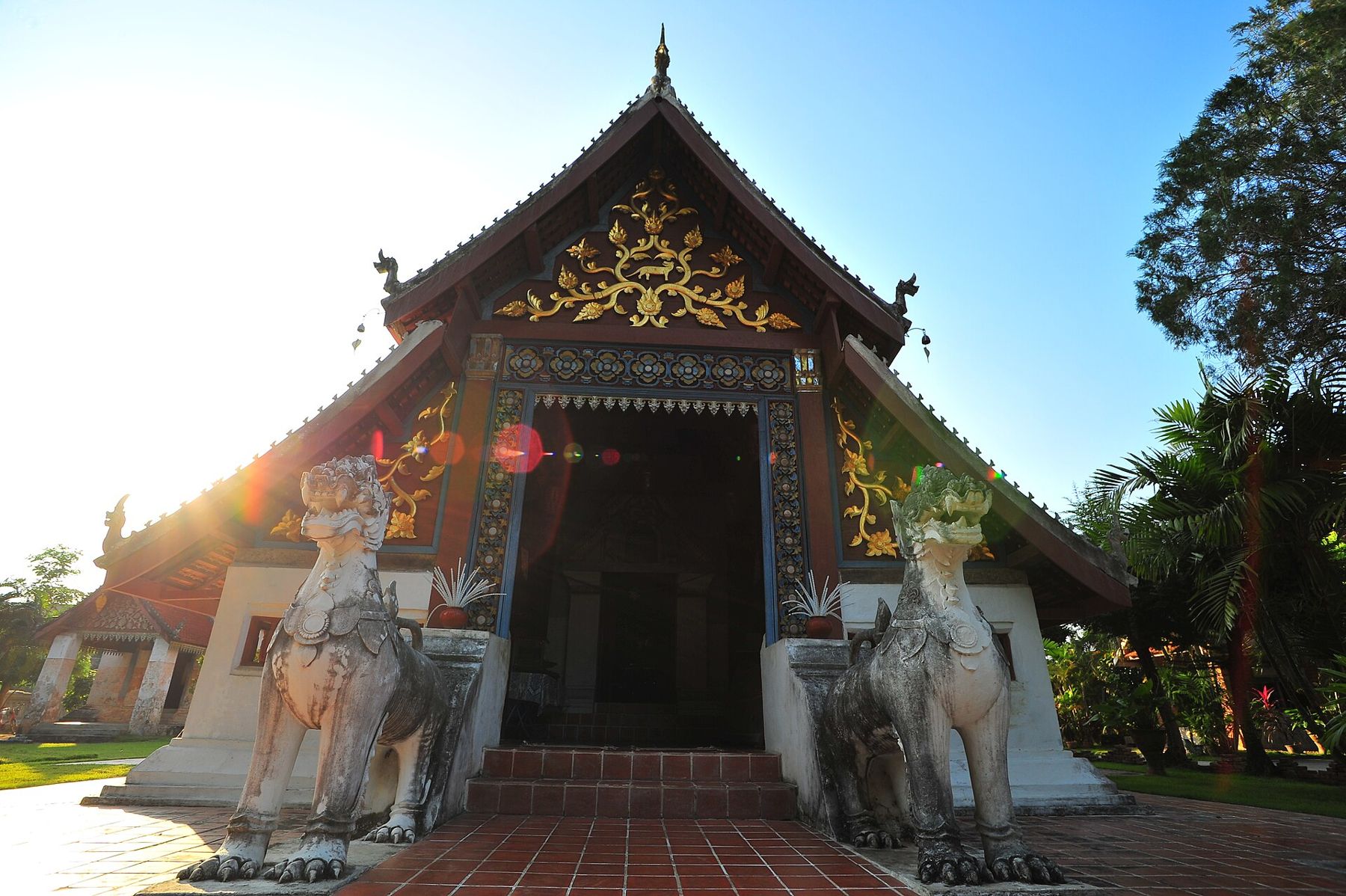
The hall of Wat Nong Bua shows that style clearly. Its roof is layered and low, sweeping down close to the ground, and its walls are thick and white. The entrance is guarded by a pair of mythical lion figures, and the gable above is decorated with gilded carving. Inside, the hall is dim and cool, with light coming through small windows and the open doors.
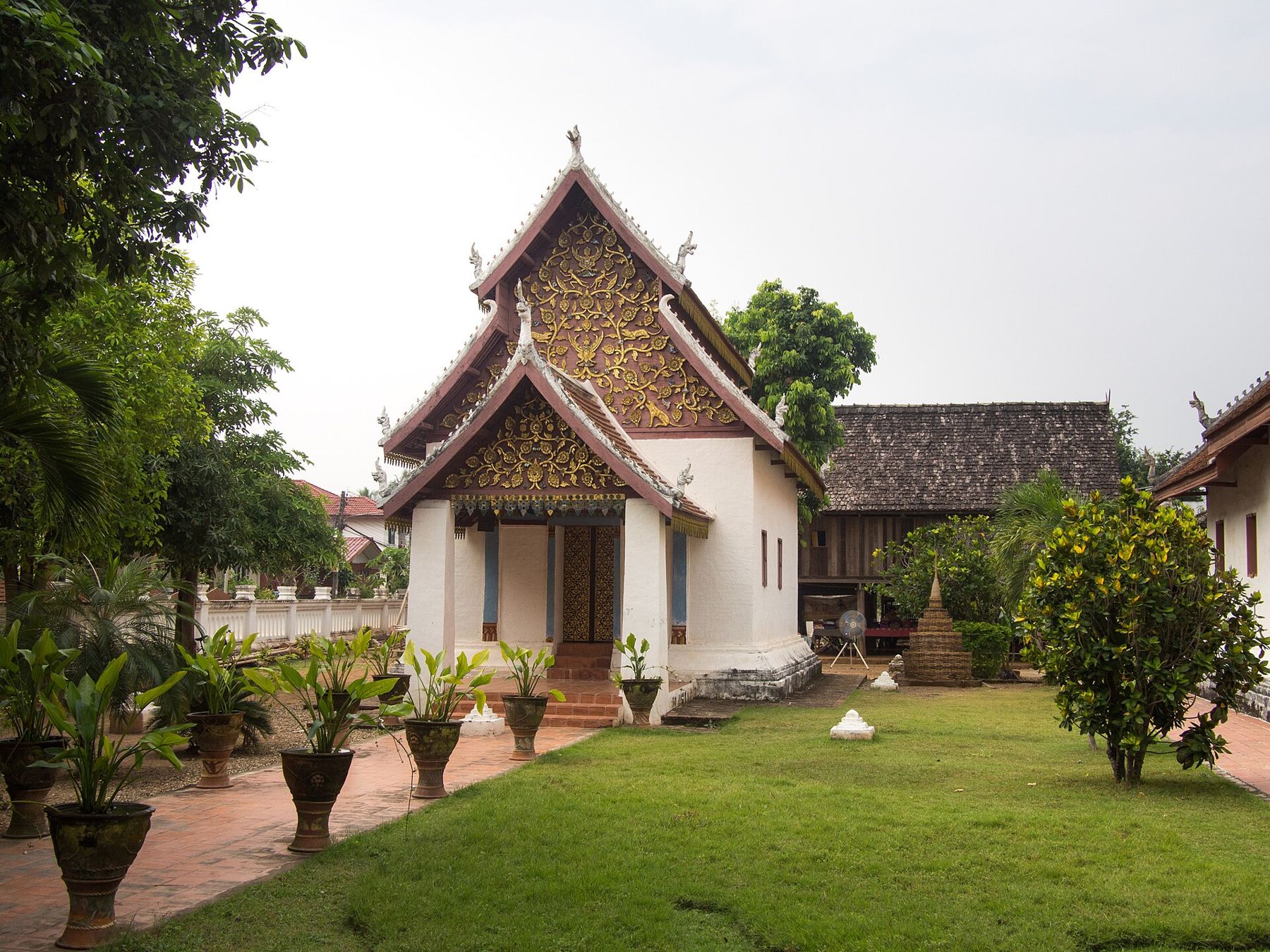
The temple grounds hold other buildings too, used for teaching, ceremonies and the daily life of the monks. Walk around them quietly and keep out of the monks' living quarters.
Compared with the large temples of town, Wat Nong Bua feels intimate. It was built for a village congregation, and it still serves one.
The murals
The murals cover the inside walls of the hall. Like those at Wat Phumin, they are attributed to Tai Lue artists, and they are generally dated to the nineteenth century. The two sets of paintings are often linked to the same tradition of Tai Lue painters.
The main subject is drawn from the Jataka tales, the stories of the Buddha's earlier lives. Around the main story the painters added scenes of daily life: people farming, cooking, travelling and courting, in the dress and hairstyles of their time. Those details make the murals a valuable record of how people in the region lived.
The paintings are old and fragile. Do not touch the walls, do not use flash, and keep bags and elbows clear of the painted surfaces. If the hall is closed, it may be because of a ceremony or for conservation.
Also in Nan: Tai Lue weaving and Nan cloth
How to look at the paintings
Murals like these were never meant to be taken in at a glance. They were painted to teach and to hold attention through long ceremonies, and they reward a slow look. Let your eyes adjust to the dim light of the hall first. Then pick one wall and follow the story along it, from scene to scene.
Look for the small details at the edges and in the gaps between the main episodes. Painters often filled these spaces with ordinary moments: a boat on a river, animals in a forest, people carrying loads on shoulder poles, figures at a loom. The clothes and tattoos of the people, and the shapes of their houses, are as interesting as the main story.
Compare the style with what you know from Wat Phumin if you have already been there. The way faces and figures are drawn, the colours and the lively scenes of daily life show the close link between the two temples. Seeing both helps you understand each one better.
If there are other visitors in the hall, move slowly and give them space. The hall is small, and a crowd near one wall can block the view for everyone.
Wat Nong Bua is an active temple, used by monks and villagers every day. A few customs make your visit smoother.
- Dress modestly: shoulders and knees covered.
- Take off your shoes before entering the hall.
- Sit with your feet tucked away from the Buddha image.
- Women should not touch monks or hand things to them directly.
- Leave a small donation if you wish; a box is usually set out.
If a ceremony is taking place, watch quietly from the side or come back later.
The village and its weaving
The village around the temple is Tai Lue, and like many Tai Lue villages in Nan it has a strong weaving tradition. Looms stand under raised houses, and the cloth produced here includes skirts and shoulder cloths in Tai Lue patterns, among them the flowing-water design associated with Nan.
Some villagers sell their cloth near the temple or from their homes. Buying directly from weavers keeps more of the price in the village. To understand what you are looking at, read about Tai Lue weaving and Nan cloth, and look closely at the back of a piece: hand weaving shows small irregularities that machine copies lack.
Walk the village lanes quietly, keep out of private yards, and ask before photographing anyone.
The district around the temple
Tha Wang Pha is a farming district on the upper reaches of the Nan River valley, with rice fields on the flat land and wooded hills on either side. Several of its villages are Tai Lue, and other temples in the district also show the low roofs and white walls of the Tai Lue style. Driving the small roads between villages, you pass fields, irrigation channels and houses on posts with looms beneath.
The best months for the drive are in the cool season, roughly November to February, when the air is clear and the days are pleasant. In the rains the fields are green and the countryside is at its most lush, though showers can be heavy. The hot season from March to May is often hazy and very warm, so plan temple visits for the morning.
Temple festivals and merit-making days bring the village together, and you may find the grounds busy with food, music and offerings.
Wat Nong Bua lies north of Nan town in Tha Wang Pha district, a short drive off the main road north. Most visitors drive or hire a vehicle with a driver.
The temple pairs well with a day exploring the north of the province. Continue north to Pua and its rice terraces, or return to town to compare the murals with those at Wat Phumin. Seeing both in a single day shows how closely the two are related.
In town, the Nan National Museum helps fill in the history of the Tai Lue and the old kingdom of Nan.
Before: Bo Kluea · Next: Wat Phra That Chang Kham · Same topic: Nan, Wat Nong Daeng · all notes
Images: k.phothiwijit, CC BY-SA 3.0; Takeaway, CC BY-SA 3.0.

