Villages, salt and rice
Bo Kluea and the mountain salt wells
Far from any sea, a small valley in Nan's mountains has salt in its ground. At Bo Kluea, brine is drawn from wells and boiled over wood fires, much as it has been for centuries.
- Getting there
- Long mountain road east from Nan
- Bring
- Small cash, rain jacket, motion-sickness tablets
- Dress and manners
- The boiling sheds are hot, smoky and wet underfoot. Wear closed shoes, keep clear of the pans and fires, and ask before photographing workers.
- From the old town
- Two to three hours by mountain road
Bo Kluea lies in the far east of Nan province, in a deep valley among high, forested mountains close to the Lao border. The name means salt well, and that is exactly what the place is known for. Underneath the village, water rises from the ground carrying salt, and for a very long time people here have drawn it up, boiled it, and traded the white crystals across the hills.
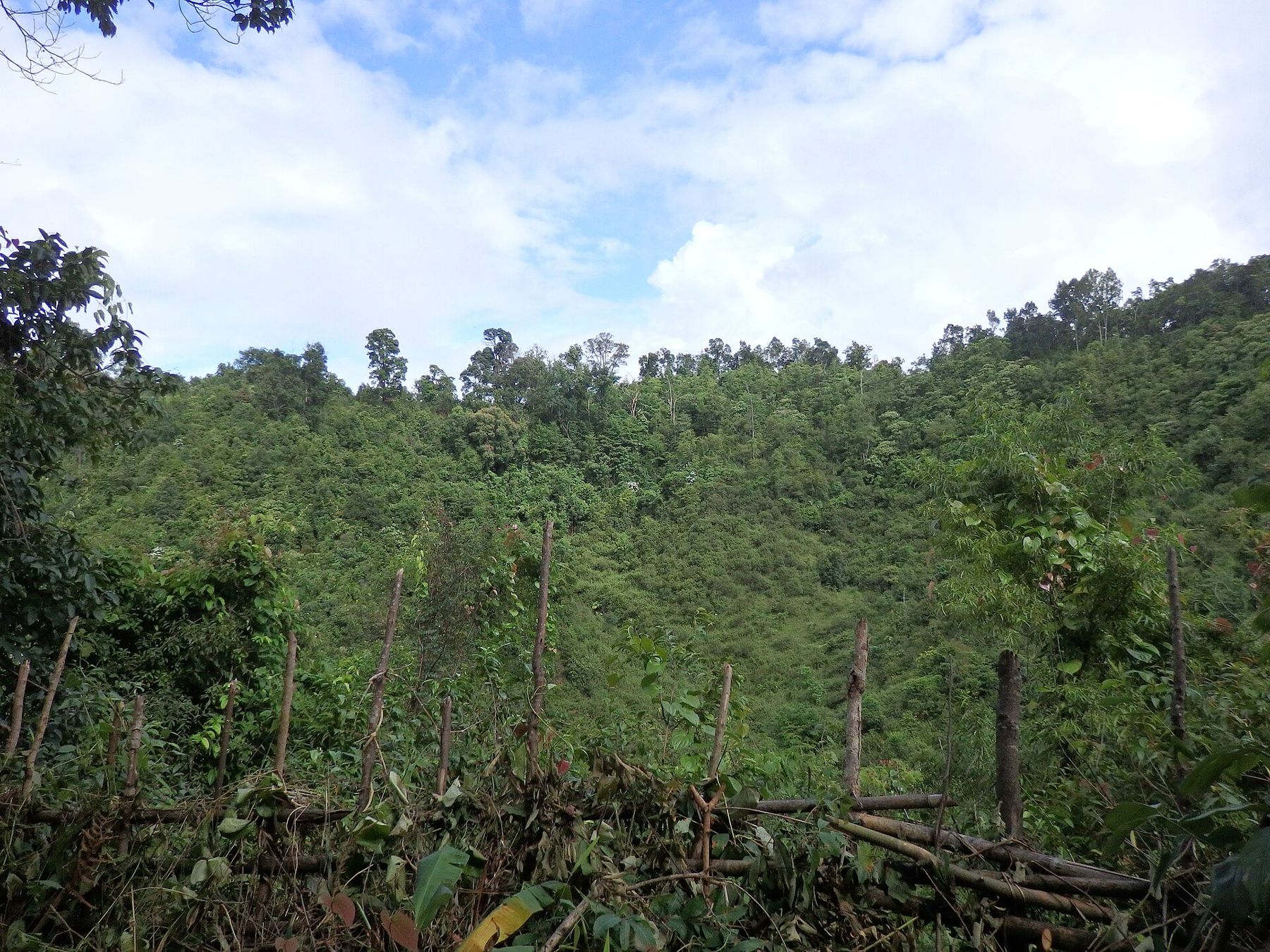
It is an odd sight in country so far from the sea, and part of the pleasure of the trip is the journey there. The road climbs over ranges of hills, dips into narrow valleys and climbs again. By the time you reach the village, Nan town feels a long way behind you.
Salt in the mountains
The salt at Bo Kluea comes from brine, salty water held underground. The common explanation is that layers of rock salt, laid down long ago when this region lay under an ancient sea, are dissolved by water moving through the ground, which then rises in the wells. Whatever the details beneath the surface, the result is a steady supply of salty water in a place where salt was once scarce and valuable.
Salt from these wells has been traded for centuries, and Bo Kluea's salt once mattered to the economy of Nan and its neighbours. The wells sit in the old village of Bo Kluea Tai, by a stream at the bottom of the valley. Some are covered and fitted with simple wooden frames for lowering buckets, and pipes now carry much of the brine to the pans.
Families in the village still work the wells and sell the salt. You can watch the process, and small bags of salt are sold nearby. Buy a bag if you can. It is the most direct way to support the work you have come to see.
From brine to salt
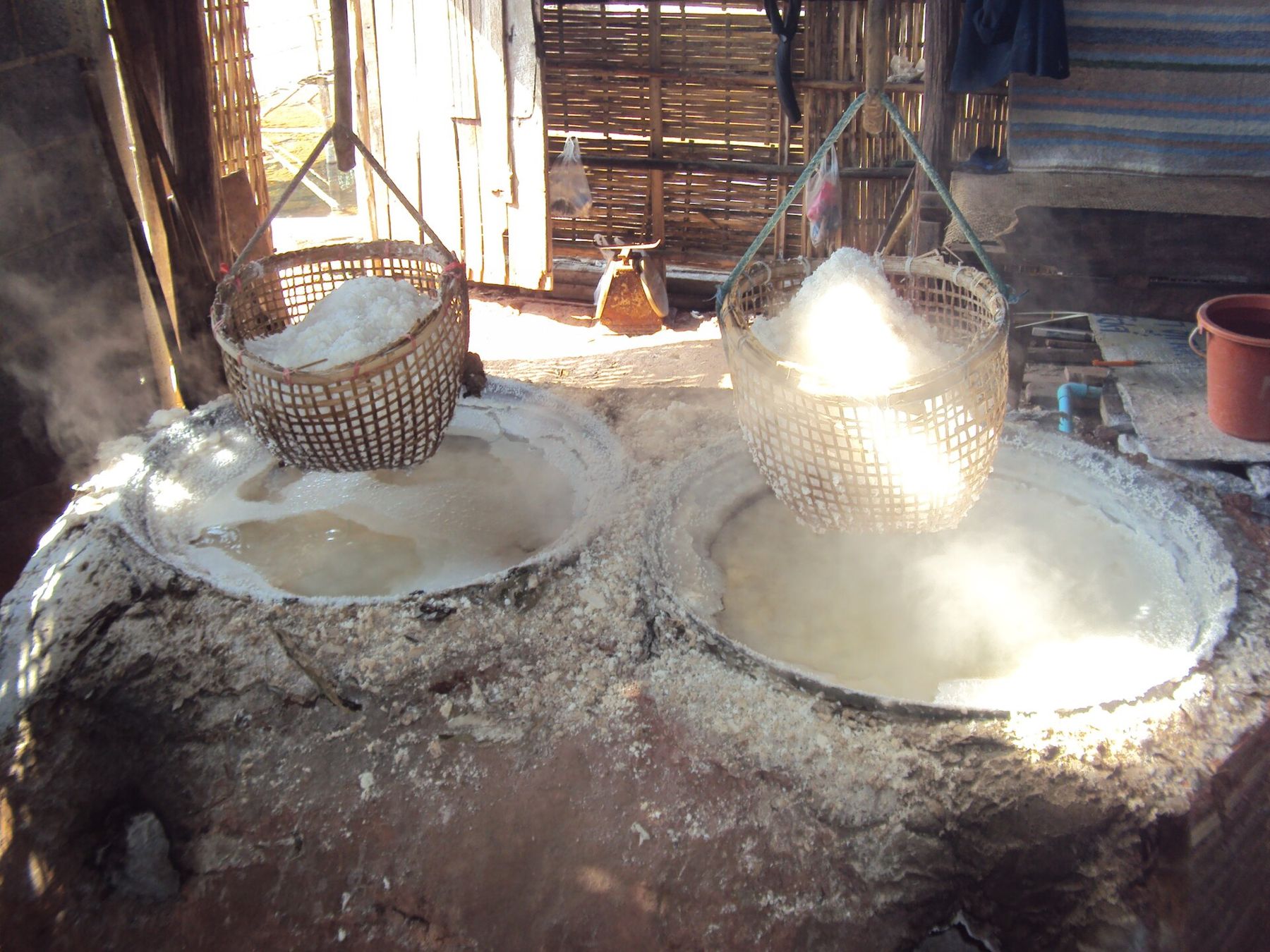
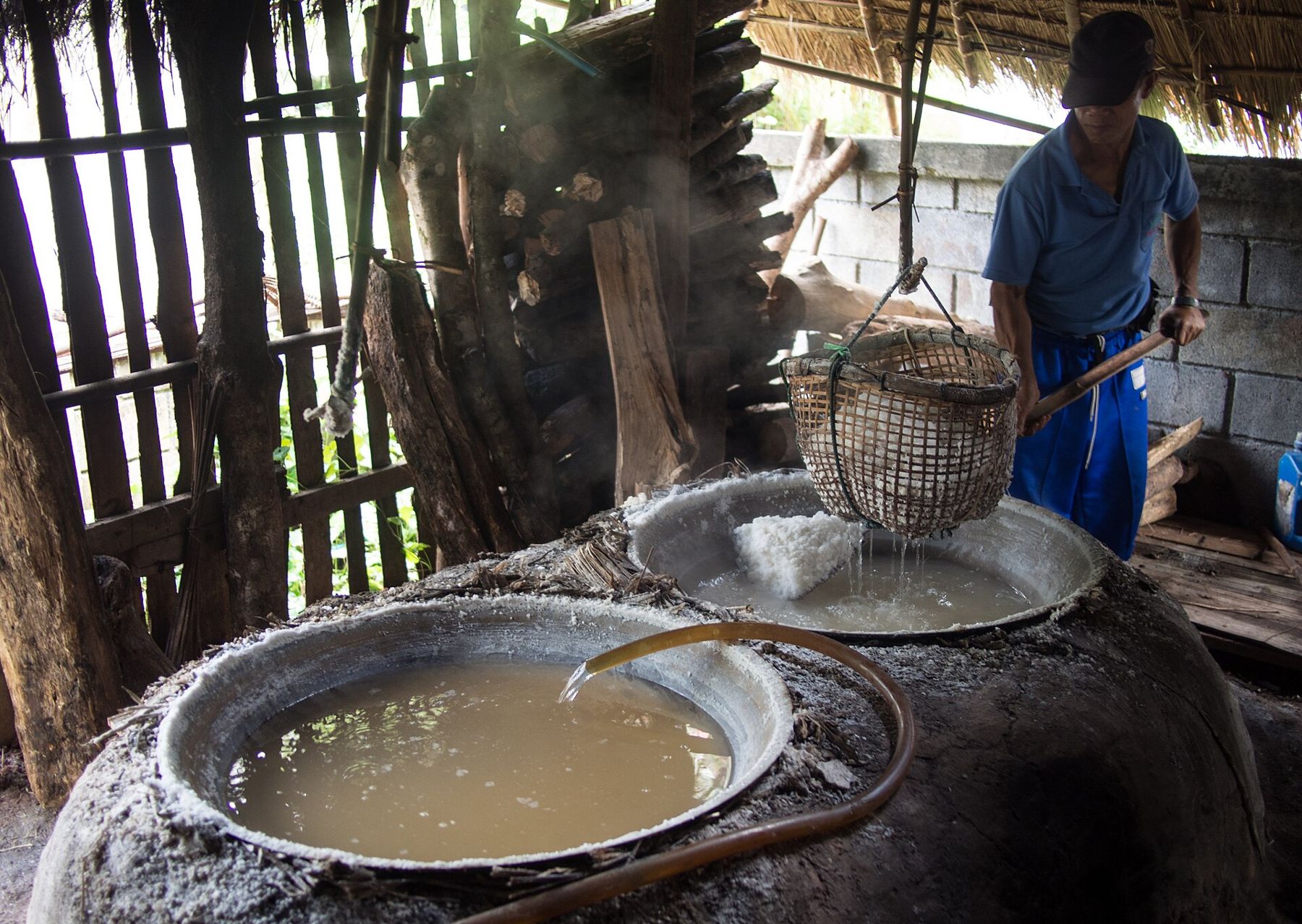
The method is plain and labour-heavy. Brine is drawn from the well and carried or piped to a boiling shed, a low wooden or bamboo building with a long earthen stove inside. Large metal pans sit set into the top of the stove, and wood fires burn underneath. The brine is poured in and boiled for hours.
As the water steams off, salt crystals form and settle. Workers rake the wet salt out and pile it into woven baskets hung above the pans, where it drains. The liquid that drips through falls back into the pan, and the drained salt is then dried and bagged.
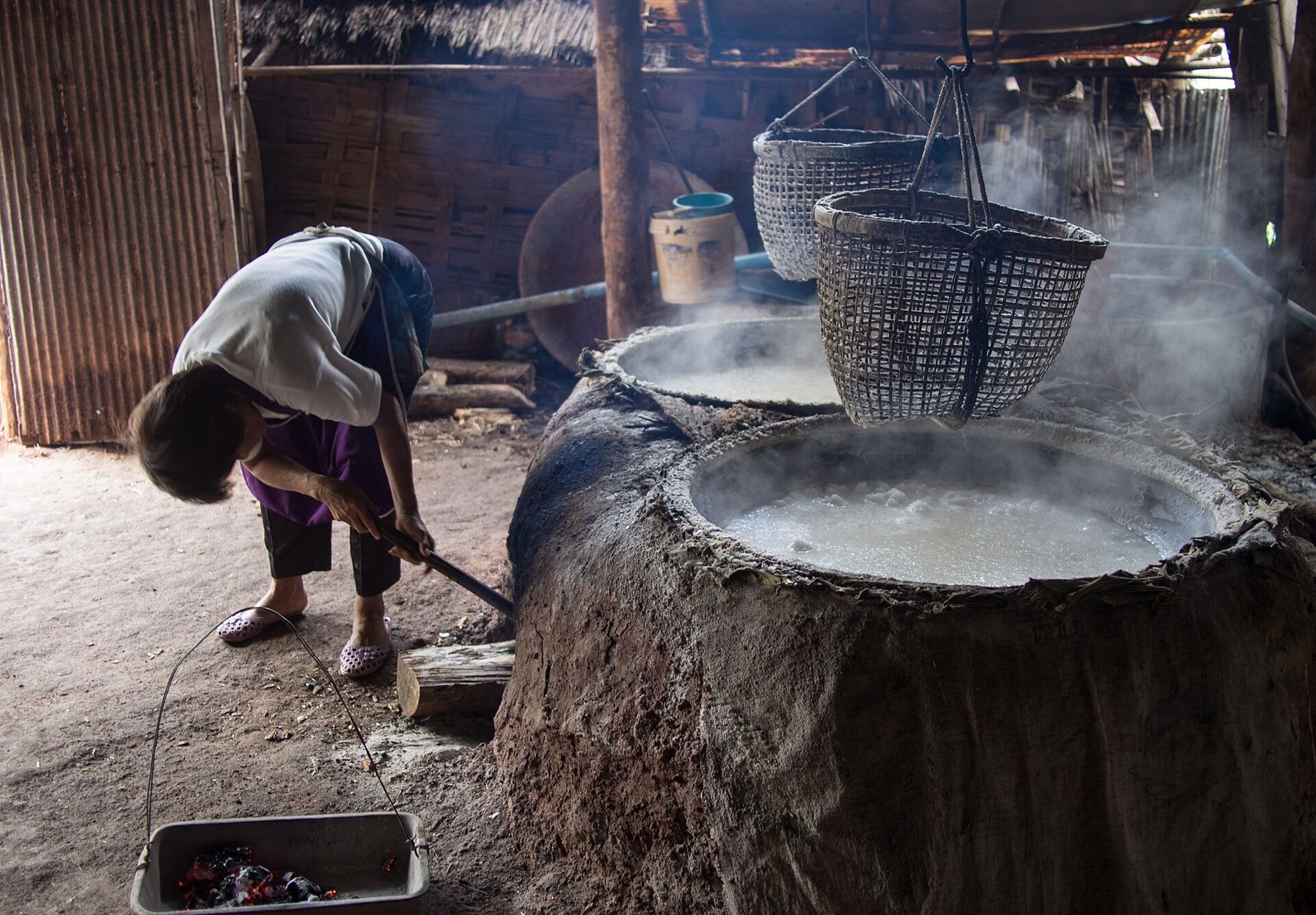
The cycle repeats through the day. While one pan is being raked out, the next is filled with fresh brine, so the sheds are rarely quiet during the working season. Inside, the air is thick with steam and wood smoke, and the light falls in shafts through gaps in the walls.
Inside, the air is thick with steam and wood smoke, and the light falls in shafts through gaps in the walls.
Iodine is often added to the finished salt, as it is across Thailand, though you may also find plain mountain salt for sale. Either way, it tastes clean and slightly mineral. Some local products use it, and it is a light, useful souvenir.
The village and its season
Bo Kluea Tai is a working village rather than a museum. Houses, small temples and gardens line the stream, and people carry on with daily life around the boiling sheds. Walk slowly, keep out of private yards, and ask before photographing anyone at work. A smile and a nod go a long way.
Salt making follows the weather. In the dry months the work runs steadily. In the heart of the rainy season the brine can become diluted and firewood harder to keep dry, and production tends to slow or pause. The exact pattern varies from year to year, so if seeing the pans in use matters to you, ask in Nan town before you set off.
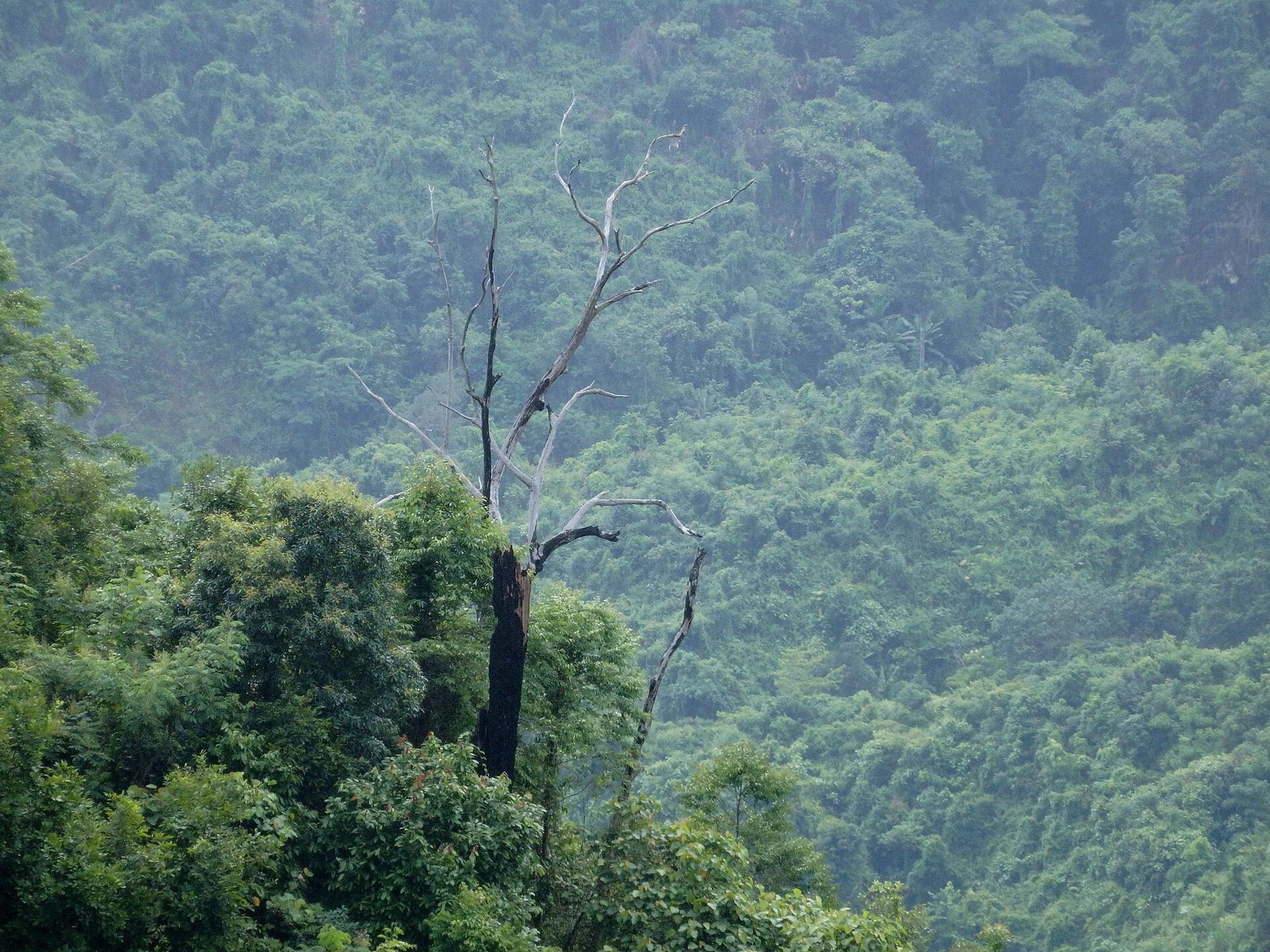
Spend a little time in the lanes away from the sheds. Firewood is stacked under eaves, baskets dry in the sun, and the stream runs clear over stones beside the houses. In the late afternoon smoke from the stoves drifts across the valley, and the hills above turn dark against the sky. Staying a night lets you see the village at its calmest, before the day's visitors arrive and after they have gone.
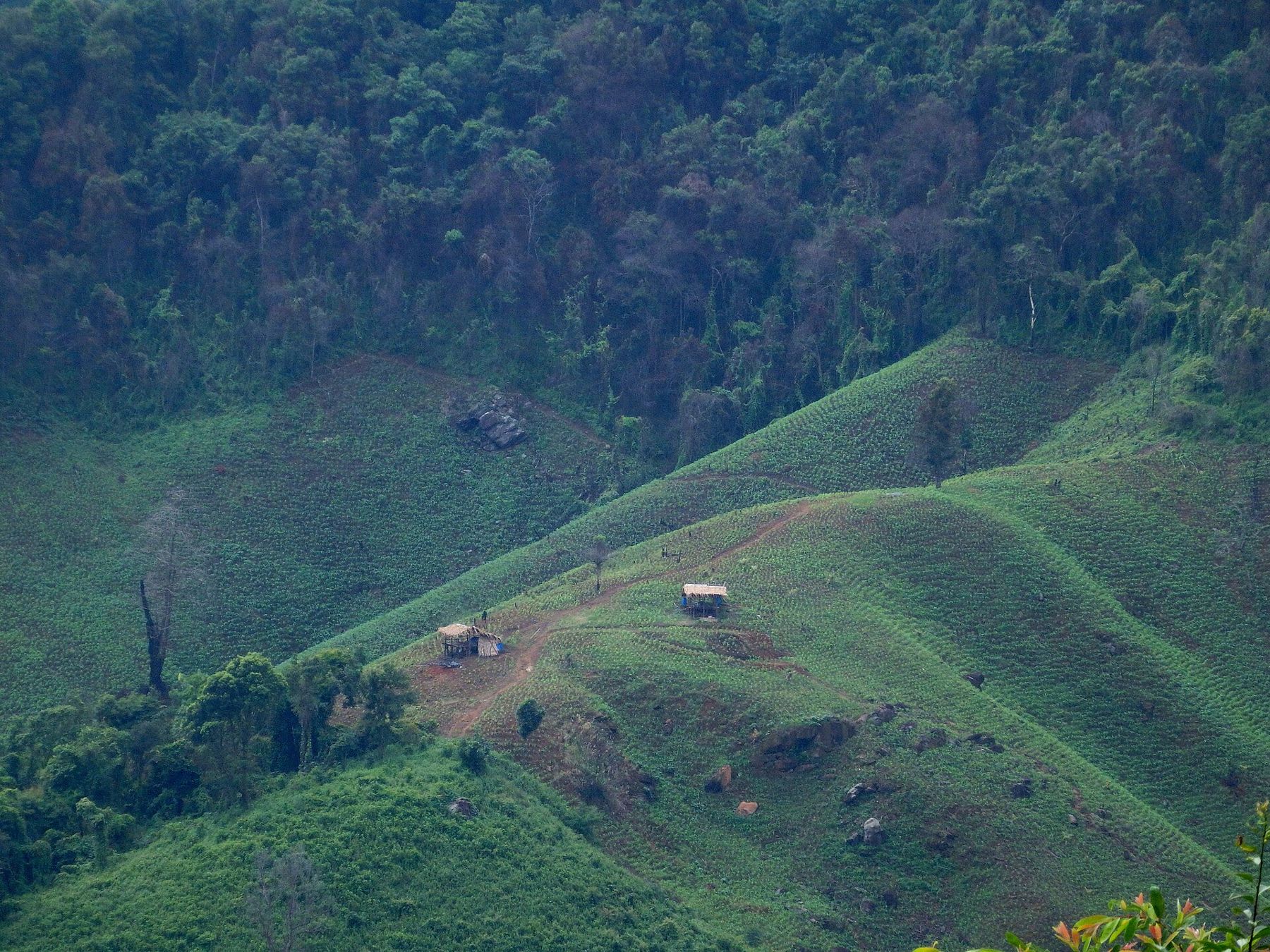
The wider district is mountainous and green, with small villages along the streams and fields cut into the slopes. Nearby, Sapan, a village beside a clear stream, makes a quiet second stop, and the hills north of Bo Kluea run on towards Khun Nan and the border ridges.
The road over the mountains
There are two common ways to reach Bo Kluea from Nan town. One heads east and north through the hills by way of Santi Suk district. The other runs north to Pua and then crosses the range through Doi Phu Kha National Park. Many travellers go one way and return the other, making a loop that suits two days better than one.
Both roads are paved but steep and winding, with many tight bends and long climbs. If you are prone to car sickness, sit in front, look ahead and take something before you leave. Drive in a low gear on descents. Fuel up in the larger towns, as stations are few in the mountains.
Most visitors drive or hire a vehicle with a driver in Nan town.
The cool season, roughly November to February, is the easiest time. Roads are dry, mornings are crisp, and the salt sheds are usually busy. The valley can be cold at night, and mist often fills it at dawn. The hot season from March to May brings haze and heat, and views from the road can be poor. The rainy season turns the hills a vivid green, but the drive is harder and salt making may slow.
- Allow a full day for the round trip at the very least, or stay a night.
- Carry small cash; there are few banks or machines in the district.
- Bring a light jacket for the evening, even in the hot months.
Back in Nan, the province's history makes more sense after the trip. The salt trade helped pay for the town, and the Nan National Museum tells the wider story of the old kingdom that grew up in this valley.
Before: Sao Din Na Noi · Next: Wat Nong Bua · Same topic: Pua, Wat Ton Laeng, Wat Phra That Bueng Sakat · all notes
Images: Tankura, CC BY 3.0; mohigan, CC BY-SA 3.0; Takeaway, CC BY-SA 3.0; Takeaway, CC BY-SA 3.0; mohigan, CC BY-SA 3.0; mohigan, CC BY-SA 3.0.


