Villages, salt and rice
Pua and the rice terraces of the north
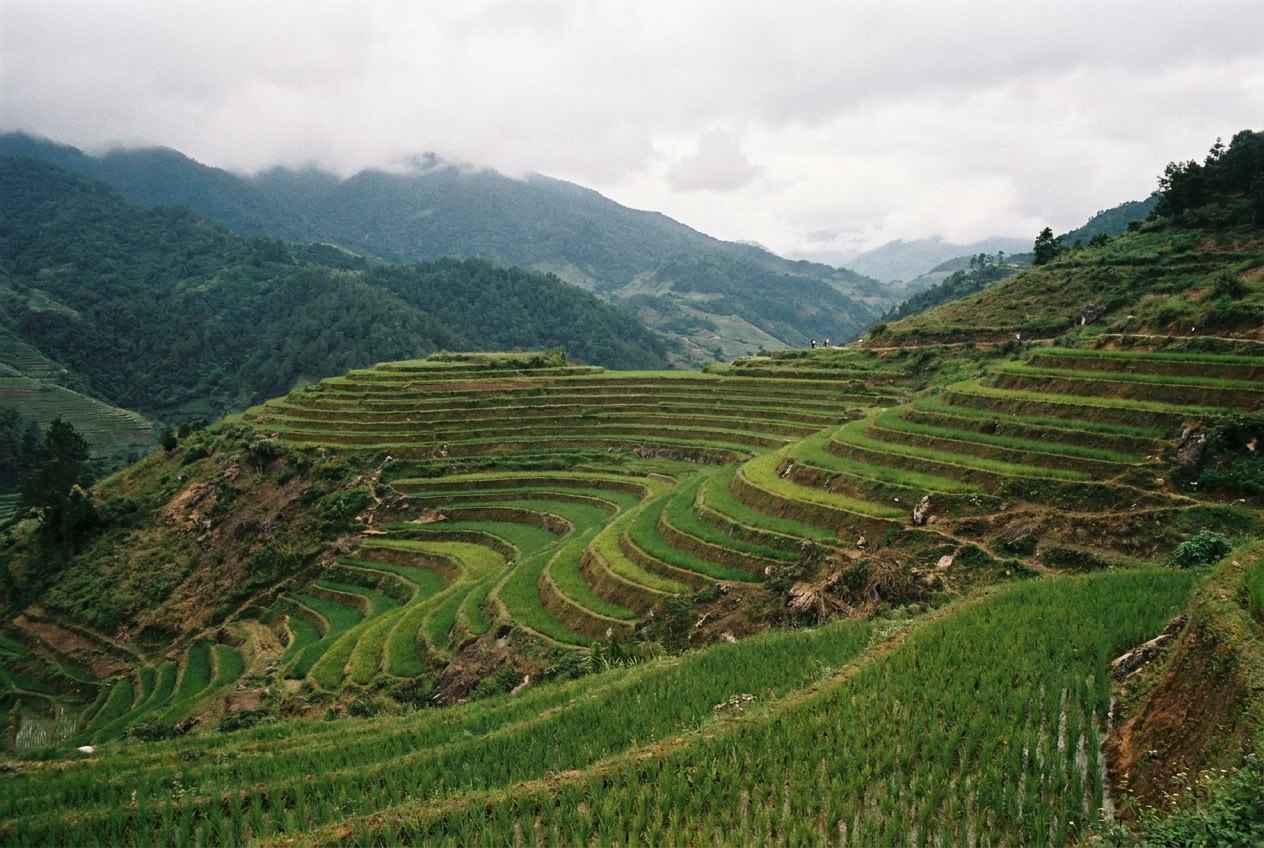
North of Nan town, the valley narrows and the hills close in. Around Pua, rice climbs the slopes in terraces, green in the rains and gold at harvest.
- Getting there
- By road north from Nan town
- Bring
- Rain jacket, sun hat, water
- Dress and manners
- Field edges are narrow and muddy. Wear shoes you can get wet, keep to paths, and never walk through planted rice.
- From the old town
- About an hour north by road
Pua is a district in the north of Nan province, where the broad valley of the Nan River gives way to steep hills. Its main town is a busy market centre, but the reason most visitors come is the countryside around it: rice fields on the valley floor and terraces climbing the slopes above, with the mountains of Doi Phu Kha National Park rising behind.
The landscape changes with the seasons. In the rains, the fields are vivid green. At harvest they turn gold. In the dry months they rest. Each season has its own reason to come.
The valley and the town
Pua town lies on the main road north from Nan, and it is the gateway to the mountains. Roads branch from here into the hills: east over Doi Phu Kha towards Bo Kluea, and into smaller valleys where villages and fields lie.
The district has a mix of people. Tai Lue communities are well established here, with their own temples, dialect and weaving, and upland peoples live in villages on the higher slopes.
Terraces on the slopes
Where the valley floor runs out, farmers have shaped the slopes into terraces: narrow, level fields held up by earth banks, stepping up the hillside. Water is led down from one terrace to the next through small channels, so every field gets its share.
The terraces around Pua are not on the vast scale of those in some other parts of Asia. They are smaller and scattered, tucked into valleys and following the shape of the hills. That makes them feel like part of working farms rather than a showpiece, which they are.
Green in the rains
Rice planting follows the rains, which usually arrive around May or June. Fields are flooded, ploughed and planted, and young shoots turn the terraces a bright green. Through the middle of the rainy season the rice grows tall and the colour deepens.
This is the season many people consider the most beautiful, with clouds drifting over the ridges and the fields shining after a shower. It is also the season when the roads are hardest. Steep, winding hill roads can be muddy and slippery, and landslides happen. Drive with great care and avoid the hill roads after dark.
Also in Nan: Tai Lue weaving and Nan cloth
Gold at harvest
As the rains end, the rice ripens and the fields turn from green to gold. Harvest usually falls in the late rainy season and early cool season, roughly October and November, though timing varies with altitude, weather and the variety grown.
Rice from these fields is mostly grown for the family and the village rather than for sale far away. Many households keep their own varieties, including sticky rice, the staple of northern meals, and seed is saved from one year to the next.
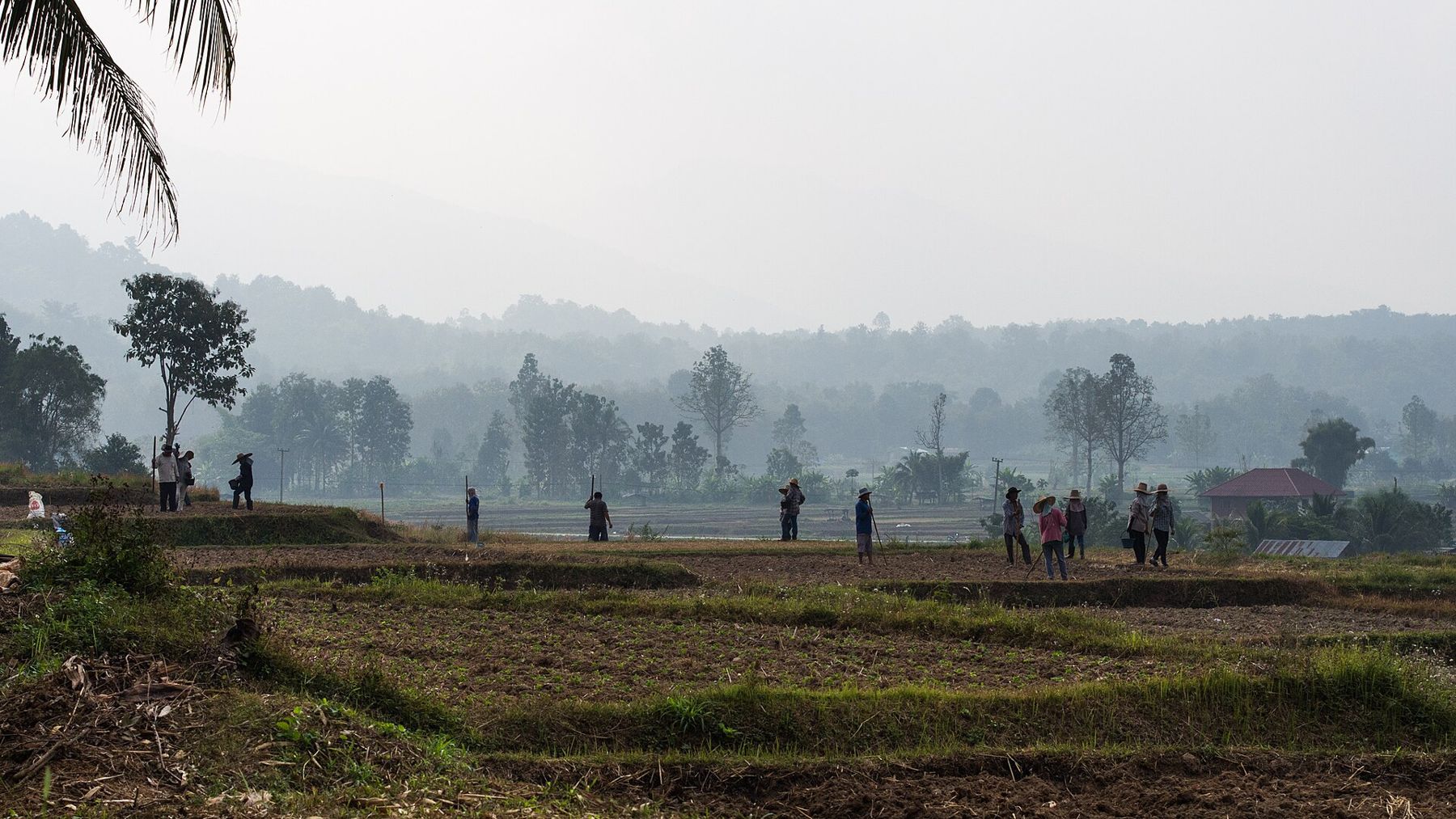
Harvest is a busy time. Rice is cut, threshed and dried, and the work involves whole families. Watch from the edges, do not get in the way, and ask before taking photographs of people at work.
After harvest, the fields lie bare through the cool and hot seasons, and the landscape becomes browner and drier. Views from the hills are clearer in the cool season, but by the hot season smoke haze often hides the distance.
The road into the hills
Many of the best views of the terraces come from the roads that climb out of the valley. As you gain height, the fields below open out into a pattern of curved banks and small plots, with villages scattered among them. Pull over only where it is safe, well off the road and away from bends, and watch for trucks and motorbikes coming down.
The hill roads are steep and winding. Use a low gear on descents, take your time on the bends, and be ready for slow farm vehicles around every corner. In the rains, mud and loose gravel make the surface slippery, so drive with great care.
Light changes the scene through the day. Early morning brings mist in the valleys and soft colours on the fields. Late afternoon light runs low across the terraces and picks out each bank and channel. The middle of the day is flatter and hotter, a good time to rest in town.
Being a good visitor
The terraces are farms, not a park. A few simple rules help.
- Keep to roads and paths along the edges of fields.
- Never walk through growing rice or on terrace banks that might collapse.
- Do not fly drones over villages or people without permission.
- Leave gates and water channels as you find them.
Around Pua
Pua makes a good base for exploring the north of the province. The Tai Lue villages of the district weave cloth on looms under their houses, and you can learn about Tai Lue weaving before or after a drive through the fields. East of town the road climbs steeply into Doi Phu Kha, where cold mornings and mist reward an early start.
Further on, the road over the mountains leads to the salt wells of Bo Kluea. Many travellers make a loop from Nan town north to Pua, over the mountains to Bo Kluea, and back by another road.
Back in Nan, the murals of Wat Phumin show scenes of village life from long ago, and they make an interesting comparison with the fields you have just seen.
Before: Khun Nan National Park · Next: Nan · Same topic: Bo Kluea, Wat Ton Laeng, Wat Phra That Bueng Sakat
Images: Takeaway, CC BY-SA 3.0.
