Temples of the old town
Wat Suan Tan and its tall prang
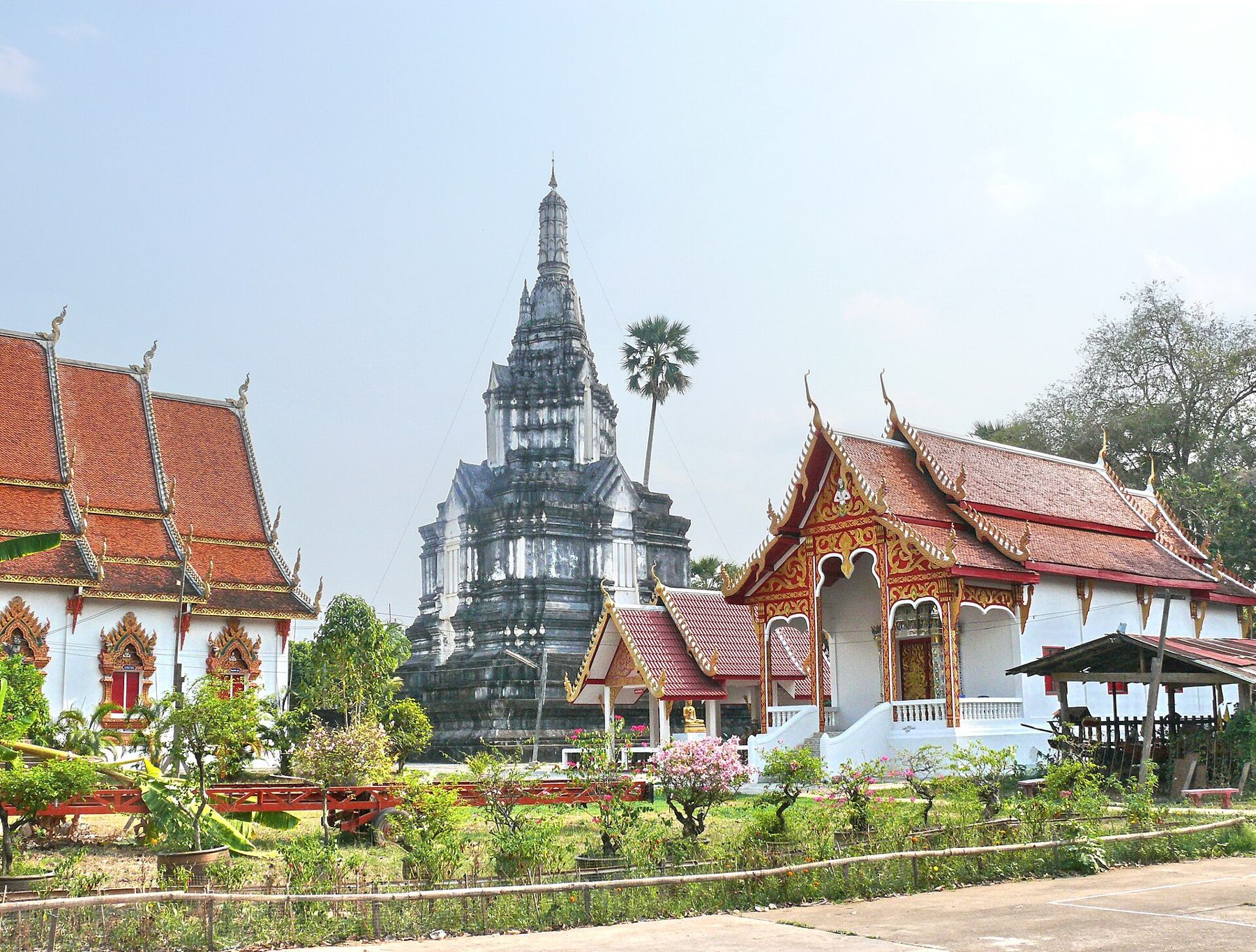
In the north-west corner of the old town, a grey spire with an unusual crown rises over sugar palms, and a large bronze Buddha sits in the hall below it.
- Getting there
- Short walk or ride from the centre
- Bring
- Shoulder cover, slip-on shoes, small change for offerings
- Dress and manners
- Cover shoulders and knees, take off shoes before entering the halls, and keep your feet pointed away from the Buddha images when you sit.
- From the old town
- Ten to fifteen minutes' walk north-west
Most temples in Nan announce themselves with a bell-shaped chedi, gilded or whitewashed, the form shared across the old kingdoms of the north. Wat Suan Tan does something different. Its tallest structure is a dark, weathered spire whose top is shaped like a corn cob, the outline usually called a prang. You see it from the lanes around the temple well before you reach the gate, a grey finger against the sky in a town of white and gold.
The temple sits inside the north-west part of the old town, a short distance from the main temple cluster but quieter than any of it. It is a working monastery with monks in residence, a school nearby and a compound that fills up only on holy days. For a visitor, it offers one of the most distinctive outlines in Nan and one of its most respected Buddha images, with very little crowding.
A garden of sugar palms
The name is usually explained as "garden of sugar palms". The tall, fan-leaved palms that still stand around the grounds make that easy to believe, and local tradition holds that the site was once a palm garden before it became a temple. Whether or not that story is exact, the palms remain part of the scene, rising beside the spire and giving the compound a slightly different silhouette from the temples around the market streets.
Inside the walls you find the usual parts of a northern Thai monastery: an assembly hall for the main image, an ordination hall marked by boundary stones, monks' quarters, and smaller pavilions for gatherings and merit-making. Flower beds and potted plants fill the gaps between buildings. On ordinary weekdays the place is calm, and the sound you hear most is a broom on the paving.
The prang-topped chedi
The great spire stands on a broad, stepped base, with niches and smaller corner towers around its middle section, and then narrows into the rounded, ribbed crown that gives the temple its reputation. It is often described as around forty metres tall, which makes it one of the taller religious structures in town. Its surface has darkened to grey and black with age and weather, and patches of plaster show the repairs of different periods.
The prang form is more often linked with central Thailand and, further back, with Khmer temple towers, while the north generally preferred the bell-shaped chedi. Exactly how and when this crown came to Nan is not settled, and the structure has been repaired and reshaped more than once. What you can say with confidence is that the combination of a northern base and a prang-like top is unusual in the province, and that is why people make the short trip to see it.
Walk around the spire slowly. The proportions change as you move: from the street it looks slender, while from the courtyard close to its base it feels massive and heavy. The best light falls on it early in the morning and in the late afternoon, when the grey surface takes on warmer tones.
The bronze Buddha in the hall
The main hall holds a large seated bronze Buddha image known as Phra Chao Thong Thip, which is deeply revered in Nan. Local tradition holds that it was cast in the fifteenth century, in the period when Nan came under the influence of the Lanna kingdom based at Chiang Mai, and the image is often linked with the Lanna king Tilokarat. Dates and attributions for images of this age are hard to fix, so treat the story as tradition rather than record.
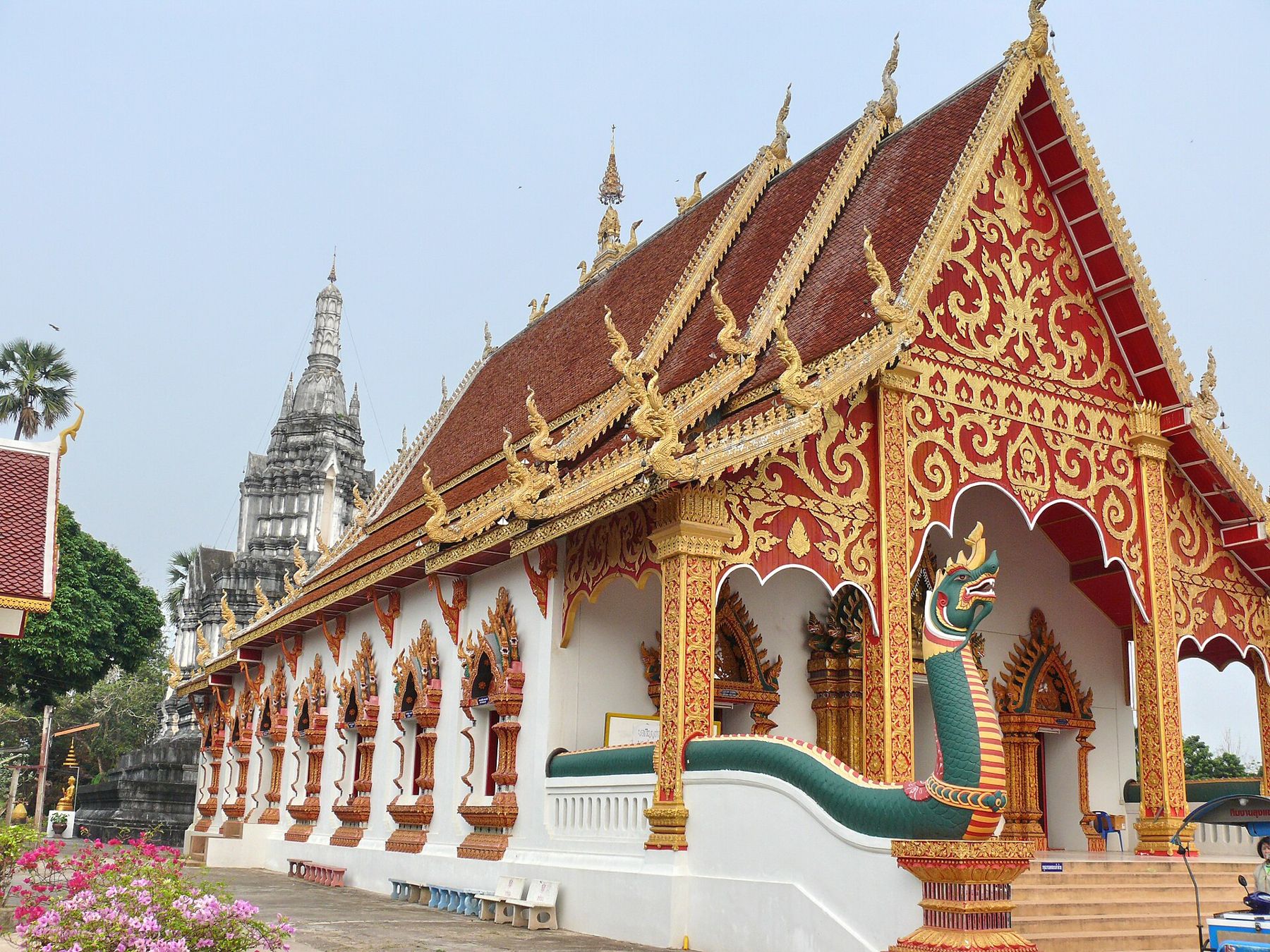
The hall itself has been rebuilt in a richly decorated style, with red and gold gables, carved bargeboards and naga serpents running down the stair rails at the entrance. Inside, the light is softer and the image sits at the far end, raised above the floor. People come to bow three times, light incense and leave flowers.
Also in Nan: Wat Ming Mueang and the city pillar
If you go in, enter quietly and sit with your feet tucked behind you. It is fine to look and, in most cases, to take a photograph from a respectful distance, but do not pose with your back to the image or climb onto any platform. If a ceremony is under way, wait outside or watch from the back.
The scripture hall and smaller buildings
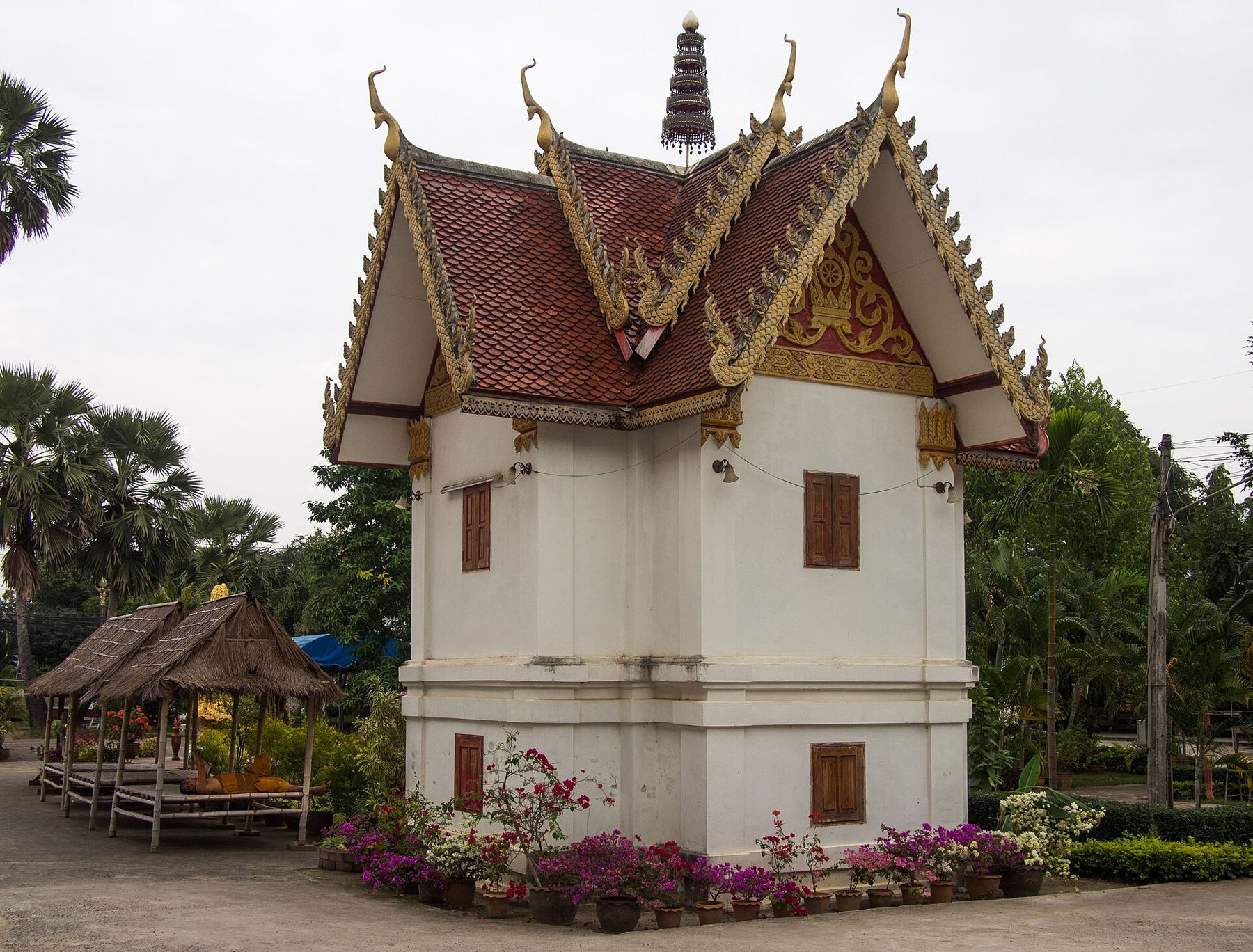
Among the smaller buildings is a ho trai, a hall for keeping Buddhist scriptures. In older monasteries these halls were often raised or set apart to protect palm-leaf manuscripts from damp, insects and fire. The one here is a compact, white, two-storey building with a steep, layered roof, gilded finials and a tall spire at the crest. It is one of the neater pieces of temple architecture in town and easy to overlook if you head straight for the big spire.
Look also at the low pavilions and benches near the gate, where people sit in the shade after morning offerings. They give a sense of how a neighbourhood temple works day to day: a place for meetings, rest, festivals and funerals as much as for worship.
Fitting it into a walk
Wat Suan Tan is easy to combine with a slow loop of the old town. Start at the cluster around the museum, where Wat Phumin and its murals and the elephant-supported chedi of Chang Kham stand close together, then walk or cycle north-west through the residential lanes. The streets here are quiet, with wooden houses, small gardens and the occasional shrine at a corner.
From Wat Suan Tan you can head back towards the centre via the older streets of town, or continue to the river. If you want height and a wide view after the closeness of the lanes, the hilltop Buddha at Wat Phra That Khao Noi looks across the valley, though it is a separate trip by road.
- The grounds are generally open from early morning until evening; the halls may be locked at quiet times of day.
- Entry is normally free. A donation box sits inside most halls, and a small gift is welcome but never required.
- Holy days and festivals bring crowds, music and food stalls; these are good times to see the temple in use, but the halls can be busy.
- Midday in the hot months is harsh, with little shade near the spire. Morning or late afternoon is kinder.
- Times and arrangements can change with ceremonies and repairs, so ask at the temple or in town if a hall is closed when you arrive.
A visit takes from twenty minutes to an hour, depending on how long you sit. It is not a grand set piece, but the outline of that grey spire among the palms stays with you long after the brighter temples blur together.
Before: Nan · Next: Wat Ton Laeng · Same topic: Wat Phumin, Wat Phra That Chae Haeng, Wat Phra That Chang Kham, Wat Ming Mueang, Wat Phra That Khao Noi, Wat Phaya Wat
Images: Ellnik, CC BY-SA 3.0; Ellnik, CC BY-SA 3.0; Takeaway, CC BY-SA 3.0.


